The Hidden Dangers of Using Extension Cords for Permanent Holiday Heating Solutions
Allred
Running a 1500-watt space heater on a standard cord creates an invisible fire hazard. See why these temporary setups fail and when to install a permanent electrical solution.
The Shocking Reality Behind Winter Home Heating Fires
Space heaters account for more than 40 percent of home heating fires, a staggering statistic that becomes even more alarming when you realize how many of these incidents are entirely preventable. As the November temperature drop and holiday prep season arrives in Auburn, our team at Allred Heating Cooling Electric frequently sees homeowners dealing with the hidden dangers of using extension cords for permanent holiday heating solutions. When a specific room in your house feels unusually cold, the temptation is strong to grab a standard extension cord from the garage, plug in a 1500-watt space heater, and leave it running behind the tree or under a drafty window.
This common scenario forces a critical decision point for many homeowners. You must choose between relying on temporary, heavily burdened electrical cords or addressing the root cause of the cold spot with a permanent, safe solution. The choice to use an extension cord for weeks on end creates an invisible fire hazard inside your walls and along your baseboards. The cord slowly degrades under the intense electrical demand, often showing no outward signs of failure until it is too late.
Rather than relying on dangerous temporary workarounds, investing in well-maintained central HVAC systems and scheduling your seasonal Auburn HVAC maintenance provides a much safer, more reliable way to keep your home comfortable.
Understanding the Threat of a 1500-Watt Continuous Load
To understand why temporary heating setups are so dangerous, you first need to understand how electricity behaves when it flows for extended periods. The core issue revolves around a technical concept known as a "continuous load."
What Defines a Continuous Load?
In residential electrical systems, a continuous load is defined as any electrical draw that lasts for longer than three hours without interruption. When an appliance runs continuously, it generates a steady, unyielding amount of heat within the copper wiring of your home and any cords connected to it. A typical household space heater operates as a massive 1500-watt continuous load. At 120 volts, this equates to pulling a constant 12.5 amps of electrical current through the wire.
The Difference Between High-Draw and Continuous-Draw
Many homeowners mistakenly believe that if an extension cord can power a microwave or a vacuum cleaner, it can easily handle a space heater. This is a dangerous misconception. While a microwave might draw 1500 watts, it only does so for a few minutes at a time. The wiring barely has a chance to warm up before the cycle ends and the wire cools down. A space heater, on the other hand, runs for hours, pushing standard household wiring and temporary cords to their absolute thermal limits.
| Appliance Type | Typical Amperage Draw | Average Duration of Use | Heat Impact on Wiring |
|---|---|---|---|
| Microwave Oven | 12 to 15 Amps | 2 to 5 minutes | Minimal heat buildup; wire cools quickly. |
| Toaster | 10 to 12 Amps | 3 to 4 minutes | Temporary warming; no sustained thermal stress. |
| Space Heater | 12.5 Amps | 3 to 8+ hours | Severe continuous heat; degrades insulation over time. |
When you force a 1500-watt continuous load through a standard extension cord that is not rated for sustained high-amperage transfer, the cord essentially acts as a resistor. It generates sustained heat that the plastic insulation was never engineered to withstand.

Why Standard Extension Cords Melt Before the Breaker Trips
One of the most common questions homeowners ask is why their circuit breaker doesn't simply trip and shut off the power before a fire starts. The answer lies in the physical mechanics of thermal breakdown and the specific limitations of standard household extension cords.
The Danger of Wire Gauge Mismatches
Electrical wire is measured by its gauge (thickness). The lower the gauge number, the thicker the wire, and the more electrical current it can safely carry. Most standard household extension cords—the ones you buy at the hardware store for lamps or holiday lights—are 16-gauge or 14-gauge wire. These thin wires are completely inadequate for a 1500-watt continuous load. When you push 12.5 amps through a thin 16-gauge cord, the wire physically cannot pass the current efficiently. This creates severe electrical friction, which instantly translates into heat.
The Silent Process of Thermal Breakdown
This heat does not cause an immediate explosion. Instead, it triggers an invisible thermal breakdown process. Over weeks of continuous winter use, the heat slowly bakes the plastic insulation surrounding the copper wire inside the extension cord. The plastic becomes brittle, discolors, and eventually begins to melt. Because this happens inside the cord or behind furniture, you rarely see the danger developing.
Why the Circuit Breaker Fails to Protect You
Your home's circuit breakers are designed to trip when the total amperage drawn on a circuit exceeds the breaker's rating (usually 15 or 20 amps). If your space heater is pulling 12.5 amps, it is technically staying just under the 15-amp limit of a standard household breaker. The breaker only monitors the volume of electricity flowing through the panel; it does not monitor the temperature of an extension cord plugged into the wall. As the cord melts and creates localized resistance, extreme heat builds up without ever triggering the breaker to trip. This localized melting often leads to hidden shorts inside your walls, which is why it is so important to know how to safely trace electrical shorts before they cause catastrophic damage.
The Compounding Danger of Holiday Lighting and Supplemental Heat
The risk of electrical fires skyrockets during the late fall and winter months, largely due to the sudden combination of seasonal decorating and the need for supplemental warmth. At Allred Heating Cooling Electric, our electricians see a massive spike in service calls for scorched outlets exactly when holiday lighting and space heaters overlap.
When you combine these two elements on a single temporary setup, you push your home's wiring past its breaking point. Here is exactly how this compounding danger unfolds:
- The Initial Circuit Load: A standard living room circuit is already carrying a base load. Your television, lamps, internet router, and entertainment center might be drawing 3 to 4 amps constantly.
- The Space Heater Addition: When the November temperature drop hits, you plug in a space heater to warm up the room. This instantly adds 12.5 amps to the circuit. If you are on a 15-amp circuit, you are already maxed out or slightly overloaded, stressing the wiring inside your walls.
- Daisy-Chaining Holiday Lights: To reach a cold spot near a window, homeowners often daisy-chain power strips or plug multiple extension cords together. They then plug their holiday window lights or tree lights into the same power strip as the space heater. This adds even more continuous amperage to a setup that is already failing.
- The Unattended Overnight Risk: The ultimate tipping point occurs when these overloaded temporary setups are left running overnight. Extension cords are legally and functionally designed for temporary use only—meaning you plug something in, use it while you are present, and unplug it. Using them as a permanent seasonal installation while you sleep removes your ability to smell melting plastic or see a sparking outlet before a fire catches.
By treating extension cords as permanent infrastructure, you bypass all the safety mechanisms built into your home's hardwired electrical system.
Identifying Cold Spots: Why Homeowners Resort to Dangerous Heating
People do not use space heaters and extension cords because they want to create fire hazards; they use them because they are uncomfortable. Understanding why your home has severe cold spots is the first step toward finding a safe, permanent solution.
The Root Cause of Winter Discomfort
In regions like Auburn WA, where damp, chilly November lows hover in the 30s and 40s, a failing primary heating system quickly makes specific rooms unbearable. When a central furnace struggles to push warm air to the furthest bedrooms, or when ductwork is severely unbalanced, homeowners resort to desperate measures to stay warm. Ignoring a struggling furnace almost always leads to the unsafe deployment of space heaters during sudden cold snaps.
The Importance of Reliable Central Heating
Reliable central heating is not just about comfort; it is a critical safety issue, especially for vulnerable household members like infants or the elderly who cannot regulate their body temperature easily. When the primary system fails, the instinct is to grab whatever heating element is available. In our years of serving Auburn homes, we often see how ignoring early warning signs leads to emergency situations. For example, one local homeowner reached out to our team when their furnace quit working entirely. One of our technicians thoroughly checked the system and found cracked heat exchangers leaking dangerous carbon monoxide. We safely replaced the furnace, which not only resolved the severe safety hazards but also dramatically improved the household's allergy symptoms.
Choosing Professional Diagnostics Over Workarounds
Positioning professional diagnostics and repair as your primary strategy is the only way to permanently eliminate cold spots. Rather than risking an electrical fire with a 1500-watt continuous load on a flimsy cord, bringing in an expert for professional HVAC repair in Auburn ensures that warm air actually reaches every corner of your house safely and efficiently.
Spotting the Warning Signs of Electrical Thermal Breakdown
If you have been using a space heater on an extension cord or power strip, your electrical system may already be showing signs of distress. Thermal breakdown happens slowly, but it leaves physical clues. Educating yourself on these visual and physical signs can help you catch a dangerous situation before it escalates.
Based on the hazardous setups our team encounters during winter emergency calls, we highly recommend checking your outlets and temporary heating setups immediately for the following warning signs:
- Discolored or scorched wall outlets: If the plastic faceplate of your wall outlet is turning brown, yellow, or black, the wiring behind it is actively overheating and melting.
- Warm-to-the-touch cords and plugs: While an appliance might get warm, the cord supplying it power should always remain cool room temperature. If the extension cord or the plug itself feels warm or hot, it is carrying too much current.
- Melted plastic or burning odors: A faint, fishy, or chemical burning smell near an outlet is a massive red flag. This is the distinct odor of wire insulation and outlet housing melting away.
- Flickering lights when the heater turns on: If your room lights dim or flicker every time the space heater's thermostat kicks on, the appliance is drawing too much power for that specific circuit to handle safely.
- Frequently tripping breakers: A tripped breaker is your electrical panel doing its job to prevent a fire. Never just flip a breaker back on repeatedly without investigating what caused the overload in the first place.
Permanent Solutions for Safe Winter Heating
Safety should never be compromised for convenience, especially during the busy holiday season. If you are currently relying on extension cords to keep your home warm, it is time to transition to permanent, professionally installed solutions.
Upgrading Your Electrical Infrastructure
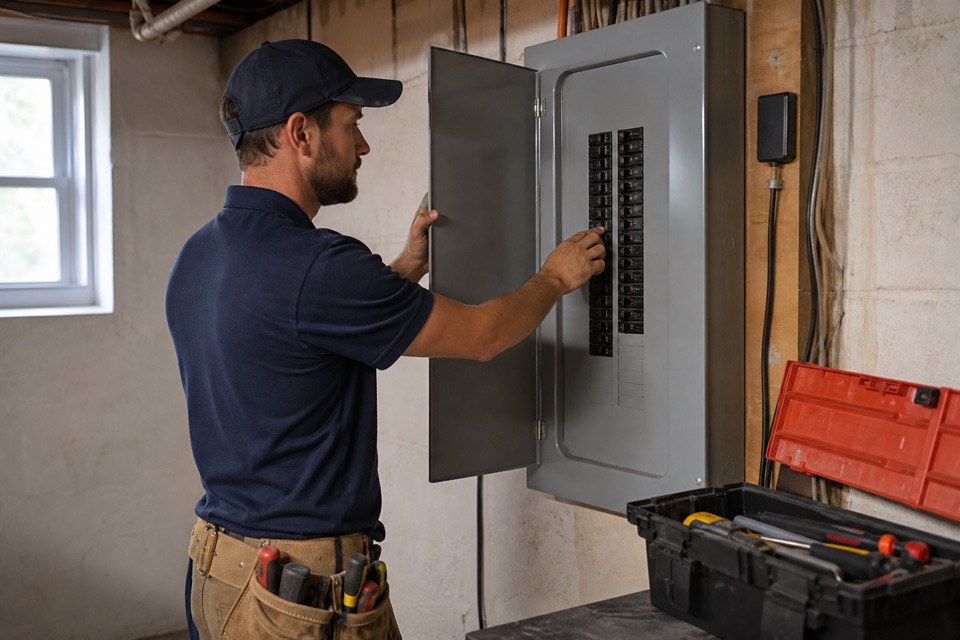
If supplemental heat is absolutely necessary for a specific room—such as a detached garage, a basement workshop, or a sunroom—the only safe way to power it is through proper electrical infrastructure. You must hire a licensed professional electrician to install a dedicated 20-amp circuit specifically for that heating unit. A dedicated circuit ensures that the heavy continuous load of the heater does not share wiring with your holiday lights, television, or other household appliances, eliminating the risk of an overload.
Optimizing Your Central Heating System
The most effective way to eliminate the need for dangerous space heaters is to ensure your primary heating system is functioning flawlessly. Invest in routine maintenance for your central HVAC system before the deep winter freeze sets in. A professional tune-up ensures that your blower motor is operating at peak capacity, your filters are clean, and your ductwork is distributing heat evenly throughout the entire house.
Exploring Energy-Efficient Upgrades
If your current furnace or heat pump is simply too old to keep up with the Auburn WA winter climate, consider upgrading to a modern, energy-efficient heating solution. Many modern heat pump systems offer exceptional zoning capabilities, allowing you to direct extra warmth to specific rooms without using portable heaters. Furthermore, upgrading to high-efficiency equipment may qualify you for general utility incentives or federal tax credits, making a permanent, safe solution more accessible than ever. Always verify current program details with your local utility provider or a tax professional.
Protect Your Home from Invisible Electrical Hazards This Winter
Understanding the thermal dangers of high-wattage continuous loads is the very first step in protecting your home and your family. The convenience of a temporary extension cord is never worth the invisible fire hazard it creates behind your walls and under your holiday decorations.
As the November temperature drop and holiday prep season accelerates, take a proactive stance on your home's safety. Don't wait for a tripped breaker, a flickering light, or a melted cord to address your winter heating needs. Reach out to local experts to ensure your central heating and electrical systems are safely equipped for the season, giving you the peace of mind that comes with a warm, secure home.
Frequently Asked Questions
Why do extension cords melt with space heaters?
Extension cords melt with space heaters because they are typically made of thin, 14-gauge or 16-gauge wire that cannot handle the 12.5-amp continuous electrical draw of a 1500-watt heater. When too much current is forced through a thin wire, it creates severe electrical resistance. This resistance generates intense, sustained heat that slowly bakes and melts the plastic insulation surrounding the wire, eventually leading to exposed copper and a severe fire hazard.
Can I plug a space heater into a heavy duty extension cord?
While a thick, 12-gauge heavy-duty extension cord is better equipped to handle higher amperage than a standard cord, it is still not recommended for space heaters. Appliance manufacturers and fire safety organizations strongly advise plugging space heaters directly into a wall outlet. Even heavy-duty cords introduce additional connection points where resistance and heat can build up over hours of continuous use.
Is it safe to leave a space heater on all night?
No, it is never safe to leave a portable space heater running unattended or while you are sleeping. If a malfunction occurs, a cord begins to melt, or the heater is accidentally knocked over by a pet, you will not be awake to respond to the emergency. Always turn off and unplug space heaters when you leave the room or go to bed.
Can you run a space heater on a surge protector?
You should never plug a space heater into a surge protector or a power strip. Surge protectors are designed for low-amperage electronics like computers and televisions, not for the massive continuous load of a heating element. The high electrical draw of a space heater will quickly overheat the internal components of the power strip, causing it to melt and potentially catch fire.
What defines a continuous load in residential electrical systems?
A continuous load is defined as any electrical draw where the maximum current is expected to continue for three hours or more. Because the electricity flows without interruption, the wiring does not have a chance to cool down. Electrical codes require that circuits handling continuous loads be sized larger than normal to safely manage the sustained heat generation.
How does damp winter weather impact the performance of central heating?
Damp, chilly winter weather makes the air inside your home feel colder and more penetrating, forcing your central heating system to work much harder to maintain a comfortable temperature. If your furnace is aging or poorly maintained, it may struggle to overcome the heat loss in drafty areas of the house. This performance drop often leads to uneven heating and the dreaded cold spots that tempt homeowners to use dangerous temporary space heaters.
Related Articles
Ready to Get Started?
Whether you need a repair, maintenance, or a new installation, our expert team is here to help.