
The Physics of Heat Transfer: Why Your Heat Pump Runs Constantly at 35 Degrees
Trust Allred
Hearing your heating system run continuously during a November cold snap often causes panic. This breakdown explains why low-and-slow operation at 35 degrees means peak efficiency.
The Late-Fall Chill: When Continuous Operation Causes Homeowner Panic
November pre-winter cold snaps are officially here, and as the temperature drops, our team at Allred Heating Cooling Electric fields dozens of calls from Auburn homeowners questioning the physics of heat transfer: why your heat pump runs constantly at 35 degrees. It is a common source of anxiety for homeowners experiencing their first late-fall chill with a modern heating system. You hear the outdoor unit humming for hours without shutting off, the air coming from the vents feels warm but not scorching hot, and you immediately wonder if the system is broken or if your next electricity bill is going to be astronomical.
If you are concerned about your system's performance, reaching out for professional HVAC repair services is always a smart move. However, before you make that call, it helps to understand exactly what your system is doing. The short answer is that this continuous operation is not a malfunction. Deciding whether your system is failing or simply doing its job requires a basic understanding of modern thermodynamics. What feels like a system struggling to keep up is actually a highly engineered machine operating at peak efficiency.
The Thermodynamics of Ambient Heat Extraction
To understand why your system behaves this way, we have to look at how heat energy actually works. Human beings feel cold when the temperature drops to a 35°F ambient outdoor temperature, but in the realm of physics, "cold" is entirely relative. Absolute zero—the point where all heat energy stops existing—is -459.67°F. That means even on a freezing late-fall morning, the outdoor air contains a massive amount of thermal energy. Your heat pump does not burn fuel to create heat; it uses electricity to capture this existing ambient heat and move it inside your home.
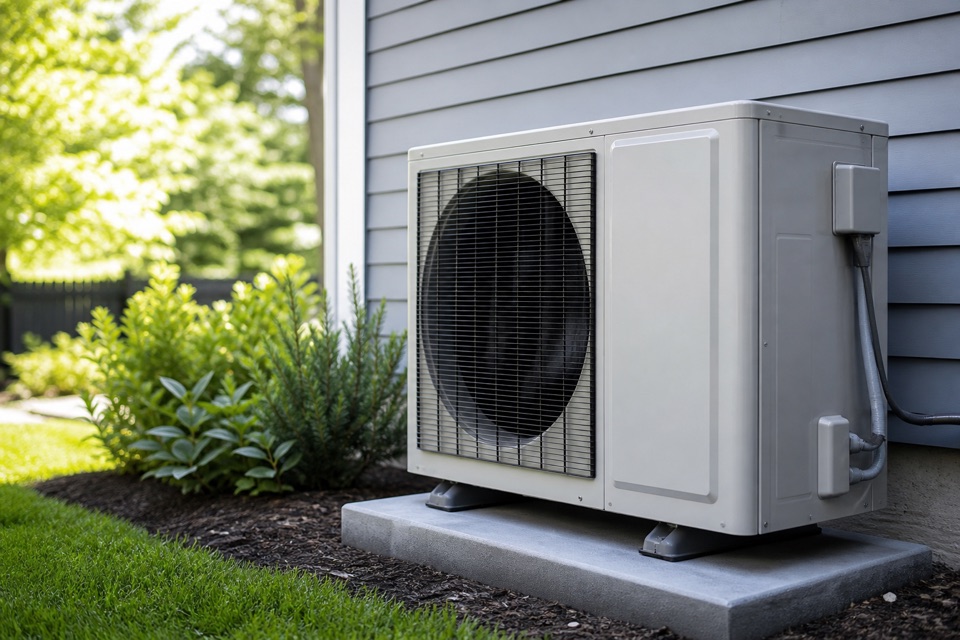
This principle is the foundation of modern Air Conditioning & Heat Pump Systems. By continuously running a specialized chemical cycle, the system acts like a thermal sponge, soaking up the heat energy that is readily available in the cold outdoor air, compressing it to increase its temperature, and releasing it indoors.
How Refrigerants Defy Freezing Temperatures
The secret to ambient heat extraction lies in the chemical refrigerants flowing through your system's copper lines. We are used to water, which freezes at 32°F and boils at 212°F. Modern refrigerants operate on a completely different scale. They have boiling points that sit well below zero degrees Fahrenheit. Because their boiling point is so low, the liquid refrigerant passing through your outdoor coil remains extremely cold—often much colder than the 35°F air blowing across it.
Heat always naturally flows from a warmer space to a colder space. Because the refrigerant is colder than the outdoor air, the heat from the air transfers into the liquid refrigerant. This causes the refrigerant to boil and turn into a warm gas. The system's compressor then squeezes this gas, driving its temperature up significantly before sending it to the indoor coil to warm your home. This continuous cycle of phase changes requires steady, ongoing operation to capture enough heat to keep your indoor climate comfortable.
| Substance | Boiling Point | Role in Heating Process |
|---|---|---|
| Water | 212°F | Standard baseline for human temperature perception. |
| Modern Refrigerant | -50°F (approximate) | Stays colder than winter air to absorb ambient thermal energy. |
| Outdoor Air (Winter) | 35°F | Acts as the heat source, transferring energy to the colder refrigerant. |
| Compressed Gas | 120°F+ | Delivers concentrated heat energy to the indoor living space. |

Variable-Speed Compressors vs. Traditional On/Off Furnaces
Most homeowners are used to the behavior of traditional gas furnaces or older single-stage heating systems. These older systems operate on a binary cycle: they are either running at 100% capacity, blasting hot air into the home, or they are completely turned off. When a November pre-winter cold snap hits, a traditional furnace will turn on, heat the house rapidly, shut off, and wait for the temperature to drop again before repeating the cycle.
Modern variable-speed heat pumps use inverter technology, which fundamentally changes this behavior. Instead of acting like a simple light switch, an inverter-driven compressor acts like the accelerator pedal in a car. It can ramp up to 100% capacity if you need to heat the house quickly, but it can also dial itself down to 25% or 30% capacity to gently maintain the desired temperature. When the temperature hovers around freezing, the system calculates that running continuously at a very low speed is the most efficient way to replace the heat your home is losing through the walls and windows.
The Energy Efficiency of 'Low and Slow' Heating
It seems counterintuitive, but running constantly at a low speed uses significantly less electricity than constantly starting and stopping. Think about driving a car on the highway. Cruising at a steady 55 miles per hour yields great gas mileage. Stop-and-go city traffic, where you are constantly accelerating from a dead stop, burns much more fuel. The same physics apply to electrical motors.
- Eliminating startup surges: Every time a single-stage compressor turns on, it requires a massive jolt of electricity to overcome inertia. Continuous operation avoids this repeated power draw.
- Even temperature distribution: Low and slow heating prevents the uncomfortable temperature swings associated with older furnaces, keeping your home at a steady, precise temperature.
- Eliminating cold drafts: Because the system never shuts off completely, the air in your home is constantly circulating, preventing cold spots from forming in distant rooms.
Navigating High Moisture and Near-Freezing Conditions
Temperature is only half the equation when it comes to understanding your heating system's behavior. Atmospheric moisture drastically changes how the equipment operates. In our years of servicing the Auburn area, our technicians at Allred Heating Cooling Electric have found that Auburn and the broader Pacific Northwest frequently experience winter temperatures hovering right around 35 degrees with high moisture—and this is the exact climate profile that triggers the continuous operation you are noticing.
When the outdoor temperature is 35°F, the refrigerant inside the outdoor coil has to be even colder (often in the 20s) to absorb heat. Because the coil drops below the freezing point of water, any moisture in the damp winter air immediately condenses and freezes upon contact with the metal fins. The combination of a 35°F ambient outdoor temperature and high relative humidity means your outdoor unit is constantly battling frost accumulation.
To compensate for this environmental challenge, the system has to work slightly harder and run longer. Frost acts as an insulator, making it more difficult for the coil to absorb heat from the air. By running continuously, the variable-speed compressor ensures that it can still extract enough thermal energy to keep your home warm, even as a thin layer of frost begins to form on the equipment.
Understanding the Defrost Cycle During Continuous Operation
Because frost accumulation is inevitable in cold, damp weather, your system is equipped with an automated self-cleaning feature known as the defrost cycle. When our technicians are dispatched during a November pre-winter cold snap, we frequently discover that what a homeowner suspects is a breakdown is just a normal defrost cycle. When the system detects that frost is impeding heat transfer, it temporarily reverses its operation. A reversing valve shifts, sending the hot compressed refrigerant back outside to melt the ice off the outdoor coil.
During this brief period, the system is technically in air conditioning mode, drawing heat from inside your home to melt the outdoor ice. To prevent cold air from blasting through your vents, the system will automatically engage its auxiliary heat strips. This is a completely normal, temporary shift in operation. If you notice strange behaviors during a November pre-winter cold snap, you might even wonder why your heat pump might feel like it's blowing cool air when it's freezing outside. The answer is almost always the defrost cycle.
Signs Your Defrost Cycle is Working Correctly
Homeowners often mistake a normal defrost cycle for a mechanical breakdown. Here is what you can expect to see and hear when the system is properly maintaining itself:
- A sudden whooshing sound: This is the reversing valve shifting the flow of pressurized refrigerant.
- Steam rising from the outdoor unit: As the hot refrigerant melts the frost, the water evaporates into steam. This is not smoke, and the unit is not on fire.
- Temporary shifts in airflow: The indoor fan may slow down or stop briefly, or you may feel a slight drop in the air temperature coming from the registers.
- Water pooling beneath the unit: The melted frost drains away from the base of the equipment.
When Continuous Running Actually Indicates a Problem
While our team will tell you continuous operation at a 35°F ambient outdoor temperature is generally a sign of high efficiency, there are boundaries between normal behavior and actual mechanical failure. If your system is running constantly but your home is getting progressively colder, that is a clear signal that the equipment requires professional attention.
One common culprit we see on local service calls is a severely dirty air filter. If the filter is clogged with dust and pet hair, the system cannot pull enough indoor air across the indoor coil to heat it. The compressor will run endlessly trying to satisfy the thermostat, but the lack of airflow prevents the heat transfer from completing. Similarly, low refrigerant levels (due to a leak) will force the system to run non-stop because it lacks the chemical capacity to move enough heat. Scheduling routine system tune-ups helps prevent these issues before the heavy winter weather arrives.
Red Flags to Watch For
If you notice any of the following symptoms alongside continuous operation, it is time to turn the system off and seek professional assistance:
- Solid ice encasing the unit: A light layer of frost is normal. A solid block of thick ice that looks like a glacier means the defrost control board or reversing valve has failed.
- Unusual mechanical noises: Grinding, screeching, or heavy metal-on-metal banging points to a failing compressor or fan motor.
- The thermostat never reaches the set point: If you set the temperature to 68°F and the house drops to 62°F despite the system running for eight hours, the equipment is no longer successfully moving heat.
Empowering Homeowners: Education Over Unnecessary Service Calls
Understanding the physics of heat transfer transforms a stressful situation into peace of mind. Many emergency dispatches our crew handles early in the winter season result in a technician arriving at a home, testing the equipment, and simply confirming that the system is running perfectly. The Allred Way emphasizes transparent homeowner education, saving customers from paying for unnecessary emergency dispatches when their system is actually operating exactly as designed.
By knowing your specific system's baseline behavior during November pre-winter cold snaps, you can make informed decisions about your home comfort. You learn to recognize the difference between the quiet, steady hum of an inverter compressor saving energy, and the struggling sounds of a system that needs help. This knowledge allows you to focus on proactive, scheduled care rather than reactive panic. When you actually need Auburn HVAC repair, we are here—but our goal is to ensure you only call for help when it is truly needed.
Frequently Asked Questions About Cold Weather Heat Pump Operation
Is it normal for a heat pump to run constantly in cold weather?
Yes, it is entirely normal for modern variable-speed systems to run constantly when temperatures drop. These systems are designed to operate continuously at a lower capacity to maintain your indoor temperature. This "low and slow" approach is highly efficient and prevents the energy spikes associated with traditional systems turning on and off.
At what temperature does a heat pump struggle to heat?
Modern cold-climate systems can successfully extract heat in temperatures well below zero degrees Fahrenheit. However, as the temperature drops below freezing, the system has to work harder to extract the remaining thermal energy. When the outdoor temperature falls below 30°F, many systems will occasionally supplement their operation with auxiliary electric heat strips to keep the home comfortable.
How long should a heat pump run in winter?
During mild weather, it may cycle on and off like a traditional furnace. However, when temperatures hover near or below freezing, it is perfectly normal for the system to run for several hours at a time, or even continuously throughout the day and night. As long as the indoor temperature matches your thermostat setting, the long run times are a sign of efficient operation.
Why is my heat pump running but not heating?
If the system is running constantly but the indoor temperature is dropping, you likely have an airflow restriction, a refrigerant leak, or a mechanical failure. A clogged air filter is the most common cause, as it prevents the system from distributing the heat it has collected. If changing the filter does not resolve the issue, the system requires professional diagnostics.
Does running continuously at 35 degrees use more electricity than cycling?
No, running continuously at a low speed generally uses less electricity than frequent cycling. The highest energy consumption occurs during the startup surge when the compressor first turns on. By running continuously at 25% or 30% capacity, variable-speed systems avoid these heavy electrical surges and operate much more efficiently.
Will high humidity at near-freezing temperatures affect my heat pump's performance?
Yes, high humidity combined with temperatures around 35°F creates the perfect environment for rapid frost accumulation on the outdoor coil. The system will compensate by running longer to extract heat through the frost layer, and it will trigger frequent defrost cycles to melt the ice away. This is normal behavior for damp, cold climates in the Pacific Northwest.
Rest Easy Knowing Your System is Engineered for the Cold
When the November pre-winter cold snaps arrive, hearing your heating system run for hours on end does not have to be a source of stress. Continuous running at near-freezing temperatures is a hallmark of an advanced, highly efficient machine doing exactly what it was engineered to do. By leveraging the physics of chemical refrigerants and ambient heat extraction, your system keeps your home comfortable while minimizing electrical surges.
As you tackle your holiday-season home prep, rest easy knowing that this behavior is saving you energy and preventing unnecessary wear and tear on the compressor components. Understanding these thermodynamic principles saves you from the worry of an unnecessary service call. If you do notice red flags, or if you simply want to ensure your system is fully prepared for the heavy winter workload ahead, scheduling routine seasonal care is the best way to maintain that peace of mind.
Related Articles

Ready to Get Started?
Whether you need a repair, maintenance, or a new installation, our expert team is here to help.