AC Installation Standards: What to Expect During a Professional Replacement
Trust Allred
Understanding Baseline Requirements for a New Cooling System
When you start looking up home maintenance tips and troubleshooting for a struggling air conditioner, you eventually realize that no amount of repairs will save a failing system. That realization brings you to a critical decision point: selecting a contractor to replace your unit. Evaluating HVAC contractors without a technical background can feel overwhelming. Many homeowners assume that replacing an air conditioner is a straightforward appliance swap, much like plugging in a new refrigerator. The reality is far more complex. To help you navigate this process, we recommend reviewing a comprehensive guide to HVAC services.
A successful replacement requires strict adherence to industry benchmarks and standard professional service requirements. Knowing exactly what to expect empowers you to make informed, confident decisions rather than relying solely on a salesperson's promises. When you understand the baseline requirements for a new cooling system, you can easily separate meticulous professionals from technicians looking to cut corners.
The Hidden Complexity of HVAC Replacement
Your central air conditioner is not a standalone appliance; it is a vital component of your home's broader respiratory system. It interacts directly with your ductwork, electrical panel, insulation, and indoor air quality. Because of this interconnected nature, a professional installation must account for every variable. If a contractor simply looks at the sticker on your old outdoor unit and orders a matching size, they are skipping essential diagnostic steps.
Professional service providers follow a rigid, documented process. This process ensures that the new equipment operates safely, meets local building codes, and delivers the energy efficiency you are paying for. By familiarizing yourself with these standard professional service requirements, you protect your investment and ensure your home remains comfortable for the next decade or more.
Pre-Installation: The Importance of Load Calculations
The foundation of any successful AC replacement happens long before the new equipment arrives at your home. The most critical pre-installation step is determining the exact cooling capacity your home requires. Historically, many installers used a basic "rule of thumb" based solely on your home's square footage. This outdated method is no longer acceptable in the HVAC industry.
With Pacific Northwest summers becoming increasingly warm and extreme heat events rising, precise, updated load calculations are critical to ensure your system can handle modern peak demands. Relying on historical, cooler-climate assumptions often leaves homes drastically under-cooled during August heat waves.
Why the Manual J Calculation is Non-Negotiable
A professional contractor will insist on performing a Manual J load calculation. This is a detailed mathematical assessment that determines exactly how much heat your home gains during the day. The calculation factors in dozens of variables, including your home's orientation to the sun, the quality of your insulation, the number and type of windows, ceiling heights, and even the heat generated by your appliances.
If a contractor skips the Manual J calculation and installs an improperly sized unit, the consequences are severe. An oversized unit will "short-cycle," turning on and off rapidly. This prevents the system from running long enough to remove humidity from the air, leaving your home feeling cold but clammy. Short-cycling also causes excessive wear on the compressor, drastically reducing the system's lifespan. Conversely, an undersized unit will run continuously, driving up your utility bills while failing to reach your target temperature.
The Financial Impact of Proper Sizing
Modern building materials, such as advanced weatherstripping and energy-efficient windows, trap heat much better than older materials. If you have upgraded your home's envelope since your last AC installation, your cooling demands have changed. According to Department of Energy standards, proper sizing and installation can improve system efficiency by up to 30%. Meeting standard professional service requirements during the sizing phase directly translates to lower monthly utility bills and a longer lifespan for your equipment.
Navigating Equipment Selection and Efficiency Ratings
Once the load calculation determines the correct size, the next step is selecting the equipment. Modern air conditioners are subject to strict efficiency standards, and understanding these ratings helps you evaluate contractor recommendations based on objective data rather than sales pressure.
If you need help evaluating your options, choosing the right HVAC system requires balancing upfront costs with long-term energy savings.
Decoding SEER2 Ratings
You will frequently see the term SEER (Seasonal Energy Efficiency Ratio) when shopping for a new AC. Recently, the industry transitioned to a more stringent testing standard known as SEER2. The SEER2 rating measures how efficiently an air conditioner operates over an entire cooling season. The testing conditions for SEER2 more accurately reflect real-world ductwork pressures, providing a much more realistic picture of the unit's performance.
Higher SEER2 ratings indicate greater energy efficiency. However, the highest efficiency unit is not automatically the best choice for every home. A professional contractor will help you weigh the initial purchase price against the projected energy savings over the unit's lifespan, factoring in local utility rates and Washington State Energy Code requirements.
The Science of Equipment Matching
One thing we see often is homeowners replacing the outdoor condenser unit while leaving an older indoor evaporator coil in place to save money. This is a critical mistake. Modern air conditioners are engineered as matched systems. The outdoor unit and the indoor coil must be designed to work together to achieve the advertised SEER2 rating.
| Installation Approach | Efficiency Impact | Long-Term Reliability |
|---|---|---|
| Matched System (New Coil + Condenser) | Achieves full advertised SEER2 rating | Maximum lifespan, fully covered by warranty |
| Mismatched System (Old Coil + New Condenser) | Loses up to 20% of rated efficiency | High risk of compressor failure and voided warranties |
Meeting standard professional service requirements means installing a fully matched system. This guarantees optimal performance, proper humidity control, and ensures that the manufacturer will honor the equipment warranty.
Homeowner Preparation: Setting the Stage for Success
Installation day involves moving heavy equipment, handling refrigerants, and working with high-voltage electricity. While the technicians handle the heavy lifting, your preparation plays a significant role in how smoothly the day goes. Providing a clear, safe work environment allows the installation team to focus entirely on the technical precision required for the job.
Your Pre-Installation Checklist
- Clear pathways to work zones: Technicians will need to carry bulky equipment through your home. Clear hallways, staircases, and the area around your indoor furnace or air handler. Ensure there is at least a three-foot clearance around the outdoor unit location as well.
- Secure pets and children: Installation involves open doors, loud noises, and hazardous materials. Keep pets secured in a separate room or at a daycare facility to ensure their safety and prevent them from escaping.
- Provide electrical panel access: The installation crew will need to turn off the power to your HVAC system. Ensure your main electrical panel is easily accessible, as installers will need to verify the breakers and potentially upgrade them to handle the new equipment.
- Review local code requirements: Confirm that the contractor has pulled the necessary municipal permits. Professional companies handle this paperwork for you, ensuring the installation complies with all safety and energy codes.
- Protect delicate items: Remove fragile decorations, picture frames, and small furniture from the pathways the technicians will use. While professionals use drop cloths, removing obstacles prevents accidental damage.
Taking these simple steps ensures the team can adhere to standard professional service requirements without unnecessary delays or safety hazards.
The Installation Day Timeline: From Removal to Setup
Knowing the timeline of installation day eliminates surprises and helps you track the progress of the work. A standard replacement typically takes a full day, ranging from 8 to 10 hours, depending on the complexity of your home's infrastructure.
If your system has completely failed during a heat wave, finding an urgent cooling solution becomes the top priority. However, even expedited installations must follow these critical phases.
Phase 1: Safe Decommissioning and Removal
- System shutdown and safety checks: The technicians begin by shutting off all power to the existing HVAC system at the breaker panel.
- Refrigerant recovery: It is illegal and environmentally harmful to vent old refrigerant into the atmosphere. The technicians use specialized recovery machines to safely extract and contain the old chemical coolant.
- Equipment extraction: The old outdoor condenser and indoor evaporator coil are disconnected, carefully removed from the property, and loaded onto the truck for proper recycling.
Phase 2: Setting the New Infrastructure
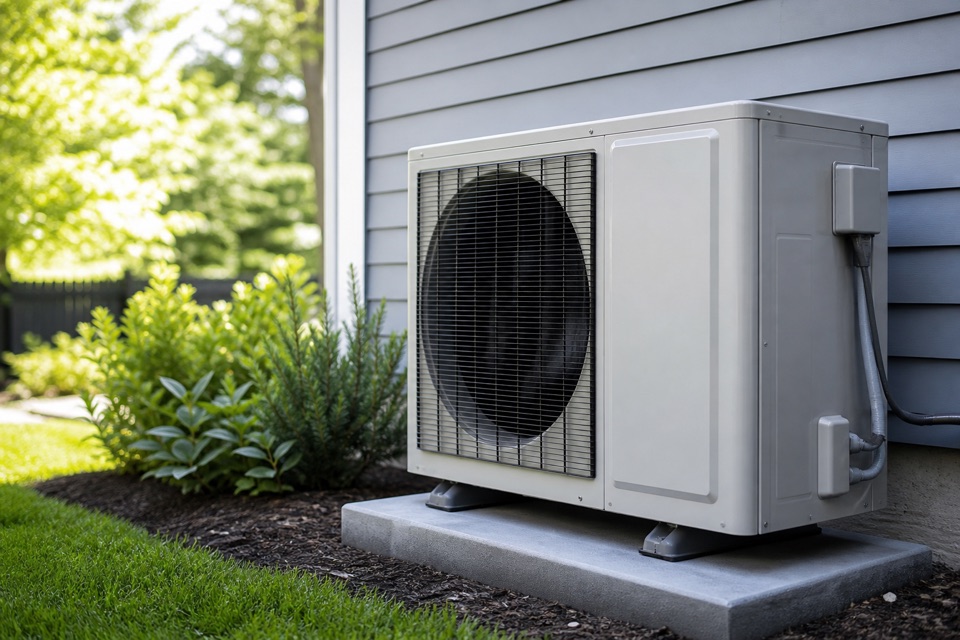
- Pad preparation: The outdoor staging area is prepared. If the old concrete or composite pad has sunk or degraded, the technicians will level the ground and install a new, vibration-absorbing pad. A perfectly level condenser is critical for the compressor's oil lubrication.
- Placing the condenser: The new outdoor unit is secured to the pad. Technicians ensure proper clearances from walls and foliage to guarantee adequate airflow.
Phase 3: Indoor Integration and Electrical Work
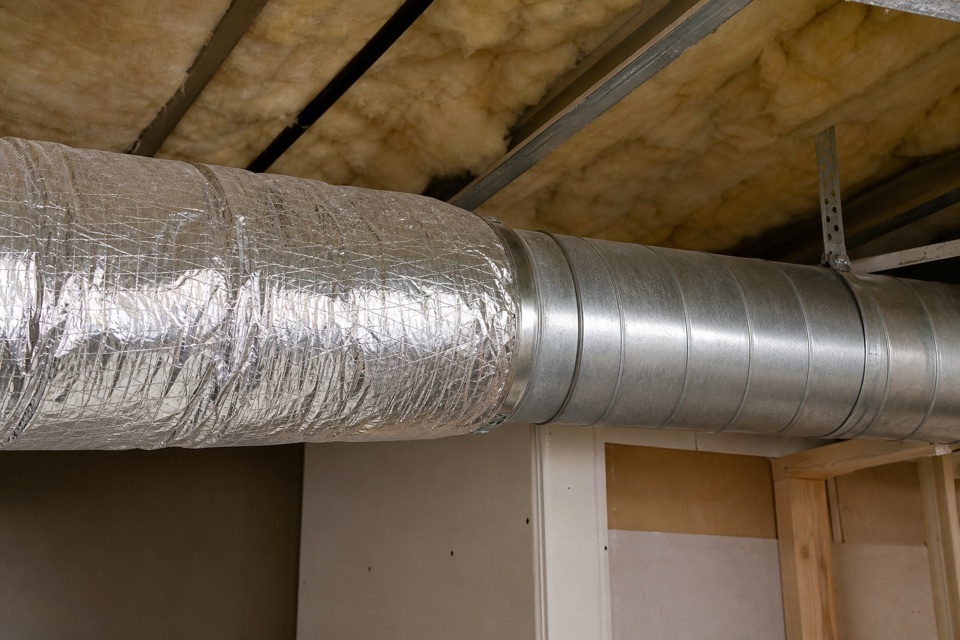
- Indoor coil installation: The new evaporator coil is fitted into the plenum above your furnace or air handler. This often requires custom sheet metal work to ensure an airtight seal, preventing conditioned air from escaping into your attic or basement.
- Electrical updates: The high-voltage wiring is connected to the outdoor disconnect box, and the low-voltage thermostat wire is routed. Because modern systems can draw different electrical loads, the breaker panel is often inspected and updated. One local homeowner recently scheduled a new air conditioning system installation and noted an existing issue with a tripping breaker panel. The technicians not only installed the new AC system but also fixed the underlying electrical panel issue, ensuring the home had reliable cooling and a properly functioning, safe electrical setup.
- Brazing the line set: The copper refrigerant lines connecting the indoor and outdoor units are welded together. Professional installers flow nitrogen through the pipes during brazing to prevent oxidation buildup inside the lines, which can ruin a new compressor.

System Commissioning and Airflow Testing
The physical placement of the equipment is only half the job. The final, and arguably most important, step of a professional installation is system commissioning. This is the process of verifying that the newly installed unit operates exactly to the manufacturer's specifications. Skipping these validation steps is a massive red flag for substandard service.
By prioritizing an efficient AC installation, contractors ensure your system delivers the exact cooling capacity you paid for.
Validating Manufacturer Specifications
Commissioning involves a series of highly technical tests. First, the technicians pull a deep vacuum on the refrigerant lines to remove all moisture and non-condensable gases. Moisture inside a refrigerant line creates acid that will eventually destroy the compressor. Once the vacuum holds, the system is charged with refrigerant.
Proper refrigerant charging is an exact science. Technicians use digital gauges to measure superheat and subcooling, ensuring the refrigerant levels match the manufacturer's exact targets. Next, they perform airflow testing. They measure the static pressure inside the ductwork to confirm the blower motor is moving the correct volume of air across the indoor coil. If the airflow is too low, the coil will freeze; if it is too high, the system won't remove enough humidity.
The Post-Installation Debrief
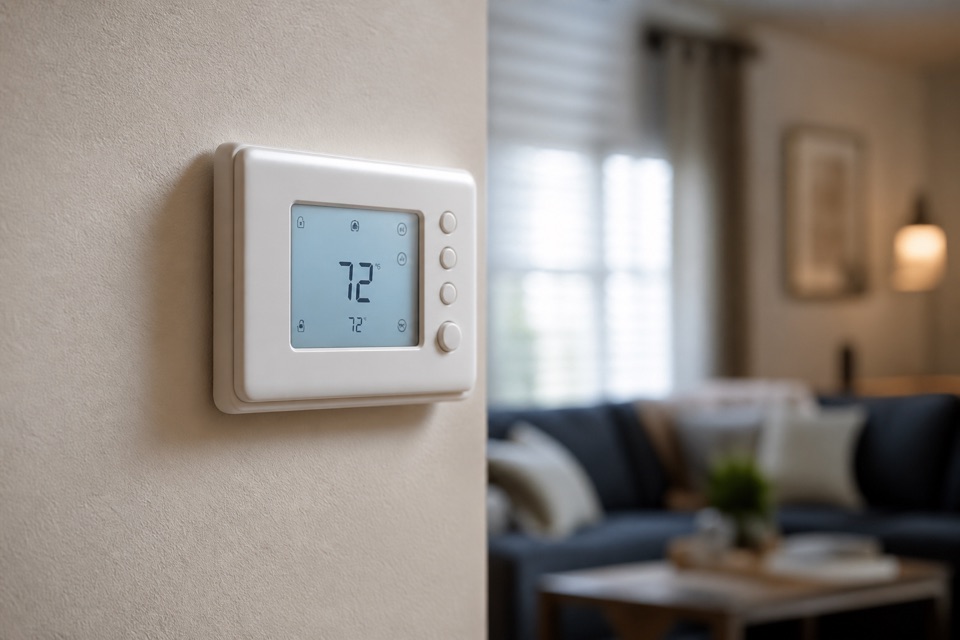
Allred Heating Cooling Electric LLC's commitment to thorough system commissioning includes transparent debriefings, ensuring clients fully understand their new system before the technicians leave the driveway. A professional installer will walk you through the operation of your new thermostat, explain how to change the air filters, and discuss the warranty requirements.
For example, during a recent routine service visit for a furnace and AC, an Allred technician named Bill performed the necessary work, clearly explained the process, and provided a thorough debrief, leaving the homeowner with well-maintained equipment and a clear understanding of the service performed. This level of communication is a hallmark of standard professional service requirements.
Common Questions About the AC Replacement Process
What happens during an AC installation?
The process begins with the safe removal of your old equipment and the recovery of existing refrigerant. Next, the new indoor coil and outdoor condenser are placed, connected via copper line sets, and sealed to your ductwork. Finally, the system is rigorously tested and commissioned to ensure it meets manufacturer specifications and local building codes.
How long does it take to install a new AC unit?
A standard replacement typically takes a full day, usually between 8 and 10 hours. However, complex installations requiring extensive ductwork modifications, custom sheet metal fabrication, or electrical panel upgrades may extend the timeline into a second day. Your contractor should provide a clear schedule before work begins.
How do I prepare my home for AC installation?
You can prepare by clearing pathways to both the indoor equipment (furnace or air handler) and the outdoor condenser location. Ensure the main electrical panel is easily accessible so technicians can safely turn off the power. Additionally, keep pets secured away from the work zones to ensure their safety and prevent interruptions.
What should I look for in an HVAC contractor?
Look for a contractor who insists on performing a new Manual J load calculation rather than guessing the size based on square footage. They should provide a transparent explanation of their commissioning and testing process. Proper licensing, insurance, and a deep knowledge of local energy codes are also non-negotiable requirements.
Why is a new load calculation necessary for a replacement AC?
Changes in your home's insulation, upgraded windows, or shifts in the regional climate can significantly alter your cooling demands. Assuming the old unit's size was correct often leads to inefficiencies, short-cycling, or inadequate cooling. A new calculation guarantees the new system is perfectly matched to your home's current thermal profile.
Ensuring Long-Term Comfort and System Health
A meticulous installation process is the absolute foundation of your new air conditioner's lifespan. Even the most expensive, high-efficiency equipment will fail prematurely if it is sized incorrectly, paired with an incompatible indoor coil, or improperly charged with refrigerant. Knowing these objective standards protects your investment and helps you filter out contractors who cut corners.
Once your new system is installed to standard professional service requirements, the best way to protect it is through consistent upkeep. Just like a new vehicle requires oil changes, your AC needs regular check-ups to maintain its efficiency and validate the manufacturer's warranty. We encourage you to explore annual HVAC maintenance plans to keep your newly installed system running at peak performance year after year. A clear, well-structured technical approach to both installation and ongoing care guarantees your home will stay comfortable through the hottest days of summer.
Ready to Get Started?
Whether you need a repair, maintenance, or a new installation, our expert team is here to help.