AC Repair Options Comparisons for Homeowners: Evaluating Professional Service Providers
Trust Allred
Navigating AC Breakdowns: The Challenge of Choosing the Right Professional
A sudden loss of cooling immediately creates stress and urgency, making objective AC repair options comparisons for homeowners incredibly difficult when the house is rapidly heating up. That strange noise from your outdoor compressor or the sudden flow of warm air from your vents rarely happens at a convenient time. Your first instinct is likely to call the first company that appears in a search result just to get the cold air flowing again. However, the most critical decision happens before the repair even begins: choosing the right type of contractor for the job.
For comprehensive guidance, explore our guide to HVAC services or learn more about professional AC repair services.
At Our Company, we frequently see homeowners struggle to sift through competing marketing claims when a system fails. Every company promises fast, reliable service, but not every company operates with the same technical scope or licensing. When evaluating professional service providers, it is important to look beyond the basic advertisements and understand the fundamental differences between available service models. Making the wrong choice can lead to a surface-level fix that leaves the root cause entirely unaddressed.
The Rush to Find Relief
When the indoor temperature climbs toward 85 degrees, patience runs thin. This urgency often pushes homeowners to skip the vetting process entirely. Unfortunately, rushing this decision frequently results in hiring a technician who is only equipped to handle a narrow subset of mechanical issues. If the underlying cause of your cooling failure is complex, a narrowly focused technician will eventually hit a wall, halting the repair process and leaving you stranded in the heat while you search for a second contractor.
Understanding the actual mechanics of how your cooling equipment operates is the first step in making an informed decision. By recognizing that modern air conditioners are highly complex machines deeply tied to your home's infrastructure, you can begin evaluating professional service providers based on their actual diagnostic capabilities rather than just their response times.
Understanding the True Nature of Air Conditioning Failures
In our experience serving the local area, our team typically sees that most homeowners assume when an air conditioner stops blowing cold air, the problem is strictly mechanical—perhaps a refrigerant leak, a frozen evaporator coil, or a seized fan motor. While these issues do occur, the reality is that modern cooling systems are deeply integrated with your home's primary electrical panel. They draw significant amperage and rely on a complex network of breakers, fuses, and high-voltage wiring to operate safely.
According to the Department of Energy, a large percentage of common cooling failures actually involve blown fuses, bad capacitors, or tripped breakers rather than purely mechanical faults. When an air conditioner repeatedly trips a breaker, the breaker itself is doing its job by protecting your home from an electrical overload. The underlying problem could be a failing compressor drawing too much power, or it could be a degraded electrical panel that can no longer handle the required load.
The Danger of Misdiagnosis
Misdiagnosing an electrical issue as a purely mechanical one can lead to repeated breakdowns and wasted money. If a technician simply resets a breaker or replaces a fuse without investigating the electrical draw at the main panel, the system will inevitably fail again. This cycle of temporary fixes is exactly why evaluating professional service providers based on their diagnostic thoroughness is so critical.
Homeowners need to look beyond basic mechanical fixes when diagnosing the root cause of a failure. If you are troubleshooting common homeowner AC questions, you will quickly find that many symptoms point back to the electrical supply. A system that clicks but fails to start, a unit that hums loudly before shutting down, or a thermostat that frequently goes blank are all indicators of electrical interference. Resolving these requires a technician who understands both the refrigeration cycle and residential electrical codes.
Options Comparisons for Homeowners: Niche AC Techs vs. Comprehensive Firms
When you begin evaluating professional service providers, you will generally encounter two distinct business models: niche AC specialists and comprehensive firms that handle both HVAC and electrical systems. Understanding the operational differences between these two models is the core of making a smart hiring decision.
Niche specialists focus strictly on the mechanical components of the cooling system. They are highly trained in handling refrigerants, cleaning coils, and replacing fan motors. However, they often lack the licensing or formal training required to legally open and service a home's main electrical panel. If your cooling failure traces back to a degraded breaker or a fault in the main wiring, a niche specialist must legally stop work and advise you to hire a separate electrician.
Comprehensive firms offer dual expertise. By maintaining comprehensive HVAC and electrical expertise under one roof, these consolidated firms reduce safety hazards and diagnostic delays. They have the legal authority and technical training to resolve both the mechanical fault inside the air conditioning unit and the underlying electrical fault at the main panel. This consolidated service model drastically reduces the operational risk of having to hire a second contractor mid-repair.
Real-World Impact of Dual Expertise
The value of this dual expertise becomes obvious during major system overhauls. One homeowner in the local area experienced this firsthand this past spring when they called Our Company because their existing system needed a complete replacement. Because they chose a comprehensive firm, our technicians were able to successfully install the new air conditioning system and immediately fix a tripping breaker panel during the exact same visit. There was no need to halt the installation or wait days for a separate electrician to arrive.
| Service Capability | Niche AC Specialists | Comprehensive HVAC & Electrical Firms |
|---|---|---|
| Mechanical Repairs (Coils, Refrigerant, Fans) | Yes – Fully capable | Yes – Fully capable |
| Main Electrical Panel Diagnostics | No – Generally unlicensed for main panel work | Yes – Legally licensed and trained |
| Resolution of Multi-System Failures | Requires halting work to hire a second contractor | Resolved internally during a single visit |
| Operational Risk for Homeowner | High – Risk of diagnostic delays and dual dispatch fees | Low – Streamlined diagnosis and single-point accountability |
Reviewing the true scope of work capabilities is a crucial step in evaluating professional service providers. A lower initial dispatch fee from a niche specialist can quickly become more expensive if you are forced to pay a second dispatch fee to an electrician just to finish the job.

The Hidden Risks of Hiring Narrowly Focused Specialists
The decision to hire a narrowly focused specialist carries hidden risks that go beyond mere inconvenience. When you are evaluating professional service providers, it is vital to understand the specific safety and efficiency hazards associated with segmented repairs. The most significant risk occurs when a technician attempts to diagnose a problem that sits just outside their legal or technical scope.
When an AC failure stems from the electrical panel, a narrowly focused HVAC technician must halt work. This creates immediate diagnostic delays, forcing the homeowner to coordinate scheduling with a completely separate electrician. During the peak of summer, finding an available electrician on short notice is incredibly difficult, leaving your home without cooling for days.
The Domino Effect of Segmented Repairs
Electrical hazards: Segmented repairs drastically increase the risk of electrical hazards. If an inexperienced or unlicensed technician attempts to perform panel work outside their designated scope just to get the system running, they can easily create dangerous arcing, overload circuits, or bypass critical safety mechanisms. The Department of Energy specifically recommends verifying comprehensive training to prevent these exact safety issues from occurring in residential properties.
Accountability gaps: Another major risk of hiring narrowly focused specialists is the loss of accountability. If the AC technician blames the electrical panel, and the electrician blames the AC unit's compressor, the homeowner is caught in the middle. You end up paying for Auburn HVAC repair visits and electrical diagnostic fees without actually getting the system fixed. A comprehensive firm like Our Company eliminates this finger-pointing by taking full responsibility for the entire diagnostic process, from the thermostat down to the main breaker.
How Sudden Regional Heatwaves Impact Your Hiring Decision
The theoretical risks of hiring the wrong contractor become harsh realities when extreme weather hits. Unexpected temperature spikes place immense, sustained strain on both your cooling equipment and the home's primary electrical grid. When an air conditioner runs non-stop to combat triple-digit heat, it draws maximum amperage for hours on end. This sustained draw is often the exact trigger that causes an older electrical panel to fail, creating a simultaneous HVAC and electrical emergency.
When uncharacteristic summer temperature spikes hit the Pacific Northwest, the resulting heatwaves in the Seattle/Auburn area cause sudden surges in demand and place immense stress on older residential electrical panels. During these peak heat events in the local area, our team at Our Company notices that service demand for contractors skyrockets. It becomes nearly impossible to quickly schedule two separate contractors for a single breakdown.
Mitigating Risk During Extreme Weather
Consolidated firms mitigate this severe logistical risk by resolving complex, multi-system failures in a single visit. Because they do not need to call in outside help to replace a burnt-out breaker or upgrade a dedicated circuit, they can restore your cooling much faster than a fragmented team of specialists.
We recently assisted a homeowner who experienced this exact scenario, arriving back at their house at 7 PM on the hottest day of the year to find the system completely unresponsive. Because they chose Our Company—a consolidated firm capable of immediate, multi-system diagnosis—our technician arrived, diagnosed the complex problem, and had the AC working again within an hour. If they had relied on a niche specialist who needed to defer to an electrician, they would have likely spent the entire night without cooling.
Evaluating professional service providers must always account for their ability to respond effectively during seasonal extremes. If a company cannot handle the electrical demands of a modern cooling system during a heatwave, they are not the right choice for reliable HVAC repair in Auburn.
Objective Criteria for Evaluating Professional Service Providers
To protect your home and ensure a lasting repair, you need a clear, actionable checklist for vetting contractors based on the frameworks discussed. Moving past the flashy advertisements and focusing on objective capabilities is the only way to ensure you are hiring a team equipped to handle complex failures.
- Verify dual-licensing capabilities: Look beyond basic marketing claims and focus on specific licensing. Ask directly if the company holds both HVAC and electrical licenses. This is the single most important factor in determining if they can legally open your main panel to diagnose power supply issues.
- Assess in-house expertise: Verify whether the company has the in-house expertise to manage full electrical panel integration. Do they sub-contract their electrical work, or are their technicians cross-trained? In-house expertise guarantees a smoother, faster diagnostic process without the need to wait for a third party to arrive.
- Evaluate emergency response logistics: Assess their diagnostic process and emergency response capabilities during peak seasons. Ask how they handle calls that require both mechanical and electrical troubleshooting. A company with a comprehensive model will confidently explain their single-visit resolution process.
- Analyze customer feedback for complex resolutions: Read customer reviews specifically looking for mentions of complex, multi-system problem resolution. Do not just look for "they were fast." Look for reviews that mention fixing breakers, upgrading wiring, or resolving persistent issues that other companies failed to fix.
- Check for manufacturer certifications: While evaluating professional service providers, ensure they are certified by major manufacturers. This indicates a higher level of ongoing training, ensuring they understand the specific electrical requirements of modern, high-efficiency cooling systems.
The bottom line: A thorough vetting process protects you from the hidden costs of segmented repairs. By demanding comprehensive expertise, you ensure that whoever arrives at your door is fully equipped to restore your comfort safely and legally.
Making an Informed Choice for Your Home's Cooling Needs
Navigating the stress of a broken air conditioner is difficult enough without the added burden of coordinating multiple contractors. A clear, unbiased comparison framework removes the guesswork from contractor selection, allowing you to focus on getting your home comfortable again. By understanding the deep connection between your cooling equipment and your electrical panel, you can see exactly why dual expertise matters.
Prioritizing comprehensive expertise ensures a safer, more efficient resolution to cooling failures, eliminating the diagnostic delays and safety hazards associated with narrowly focused specialists. Taking the time to evaluate options now prevents extended discomfort during the next major temperature spike. Explore professional service options that align with these objective criteria to ensure your home receives a clear, unbiased comparison framework that provides definitive criteria for when to choose one service model over the other.
Frequently Asked Questions
How do I choose an AC repair company?
Start by verifying that the company holds the proper licensing to handle both the mechanical and electrical aspects of your cooling system. A reliable company will be transparent about their diagnostic process and have a strong track record of resolving complex, multi-system failures. Always read reviews to see how they handle emergency situations during peak heatwaves before making your final decision.
Is it better to use a large HVAC company or an independent contractor?
The best choice depends entirely on the technical scope of the provider rather than just their size. Comprehensive firms with dual HVAC and electrical expertise are generally better equipped to handle complex failures safely in a single visit. Independent contractors can be excellent for basic mechanical maintenance, but they may lack the licensing required to address main electrical panel issues, leading to diagnostic delays.
Should I hire an electrician or an HVAC technician for my AC?
Ideally, you should hire a comprehensive firm that employs technicians trained in both disciplines. If your AC failure is caused by a tripped breaker or a faulty dedicated circuit, a standard HVAC technician will legally have to halt work. Hiring a consolidated service provider ensures that whether the fault is in the compressor or the main panel, it can be resolved immediately.
What should I look for in an HVAC contractor?
Look for a contractor who offers transparent diagnostic processes, dual-licensing capabilities, and a proven ability to respond during extreme weather events. It is essential that they do not rely on sub-contractors for basic electrical troubleshooting related to the cooling system. Furthermore, check for manufacturer certifications, which indicate a commitment to ongoing technical education.
Why do AC units often experience electrical failures during sudden heatwaves?
During extreme temperature spikes, cooling systems run continuously, drawing maximum electrical amperage for extended periods. This sustained power draw places immense stress on older residential electrical panels and breakers, often causing them to trip or fail entirely. The combination of an overworked compressor and an aging electrical grid frequently results in simultaneous mechanical and electrical faults.
How does an AC repair impact my home's electrical panel?
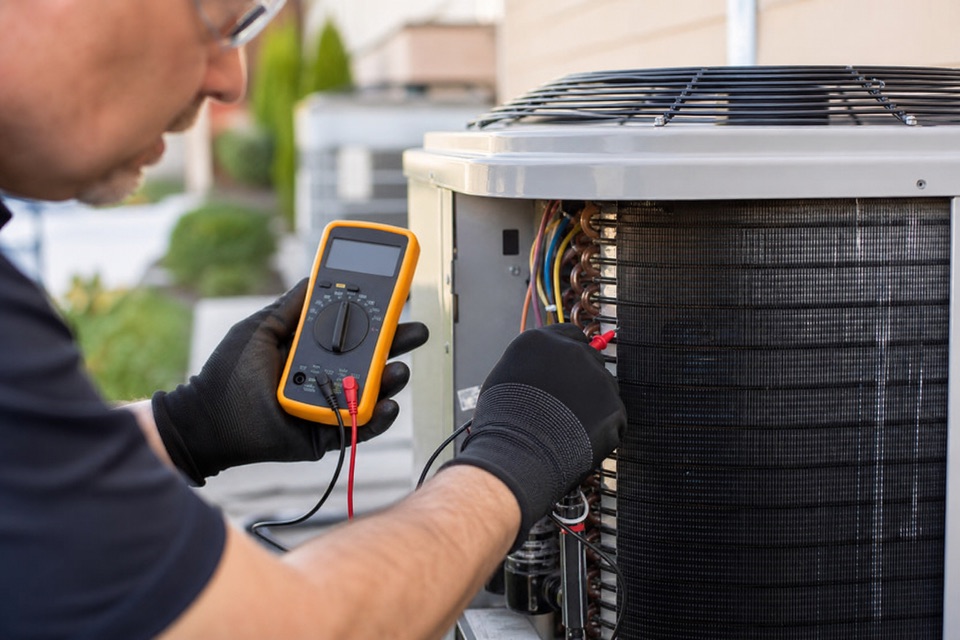
A proper AC repair often requires testing the voltage and amperage directly at the main electrical panel to ensure the unit is receiving clean, consistent power. If a compressor is failing, it can pull too much electricity, causing breakers to trip repeatedly to protect the home from electrical fires. Therefore, resolving an AC issue frequently involves upgrading or replacing specific components within the panel itself.
Related Articles
Ready to Get Started?
Whether you need a repair, maintenance, or a new installation, our expert team is here to help.