AC Repair: Troubleshooting Basics and Knowing When to Call a Professional
Trust Allred
Navigating Cooling Failures and Baseline Standards
The thermostat is set to 70°F, but the indoor temperature is climbing past 80°F, leaving you searching for home maintenance tips and troubleshooting strategies to get the cold air flowing again. Dealing with an underperforming cooling system right when temperatures begin to rise is incredibly frustrating. At Our Company, our team typically sees that the core decision point you face as a homeowner is evaluating whether the problem requires safe internal troubleshooting or the intervention of a specialized local expert.
To make the right call, it helps to rely on general professional service best practices rather than guesswork. Understanding the objective, standard-based boundaries between DIY checks and professional intervention protects both your equipment and your safety. Modern air conditioners are complex networks of high-voltage electrical components and pressurized chemical refrigerants. Knowing exactly what you can check safely—and what requires a certified technician—can save you from costly secondary damage. Before you dive into our comprehensive HVAC system FAQ or immediately book AC repair services, here is how you can navigate cooling failures safely and effectively.
The Impact of Prolonged Dormancy on System Startup
Air conditioning systems experience the highest rate of component failure during the first major heatwave of the season. This spike in breakdowns is rarely a coincidence; it is the direct result of sudden mechanical strain applied to a system after months of inactivity. In our years of serving the Auburn and Seattle areas, our technicians at Our Company know that air conditioning units typically sit completely unused from October through May. This prolonged dormancy creates unique vulnerabilities that often go unnoticed until you demand peak performance from the equipment.
We recently helped one local homeowner who experienced this firsthand when their air conditioner stopped working on the hottest day of the year. After they called us at 7:10 PM, one of our technicians arrived within ten minutes, diagnosed a dormancy-related failure, and fixed the problem within an hour. Rapid responses like this highlight why it is so important to understand what happens to your system over the winter.
During those idle months, outdoor condensing units are exposed to rain, wind, and fluctuating temperatures. Debris accumulates inside the cabinet, moisture promotes oxidation on electrical contacts, and pests often seek shelter near warm electrical components. When you finally switch the thermostat to "cool," the system has to overcome months of physical resistance to start up.
Common Dormancy Vulnerabilities
- Seized fan motors: The bearings inside the outdoor condenser fan motor require regular movement to stay lubricated. After eight months of sitting still, these bearings can dry out or rust, causing the motor to lock up when voltage is applied.
- Electrical contactor failure: The contactor is a mechanical relay that sends high voltage to the compressor. Moisture and insects can foul the contact pads over the winter, preventing a solid electrical connection and keeping the system from turning on.
- Capacitor degradation: Capacitors store energy to give motors a jump-start. Temperature swings during the off-season can cause the chemical paste inside them to break down, leading to a swollen or failed capacitor by springtime.
Safe Internal Troubleshooting: What Homeowners Can Check
Before assuming your system has suffered a catastrophic failure, there are several safe, accessible components you can inspect. Often, a pattern we see is that what appears to be a major mechanical breakdown is actually a minor operational hiccup. By following a strict set of general professional service best practices, you can rule out the basics without putting yourself or your equipment at risk. If these steps do not resolve the issue, it is a clear signal to spot common AC repair issues early and bring in a professional.
Step-by-Step Baseline Checks
- Verify power at the breaker panel: Air conditioners draw a massive amount of electrical current upon startup. Occasionally, a power surge or a momentary overload will cause the dedicated circuit breaker to trip. Check your main electrical panel and look for a breaker that has snapped to the middle position. Turn it fully off, then firmly back on. If it trips again immediately, stop—this indicates a serious electrical short.
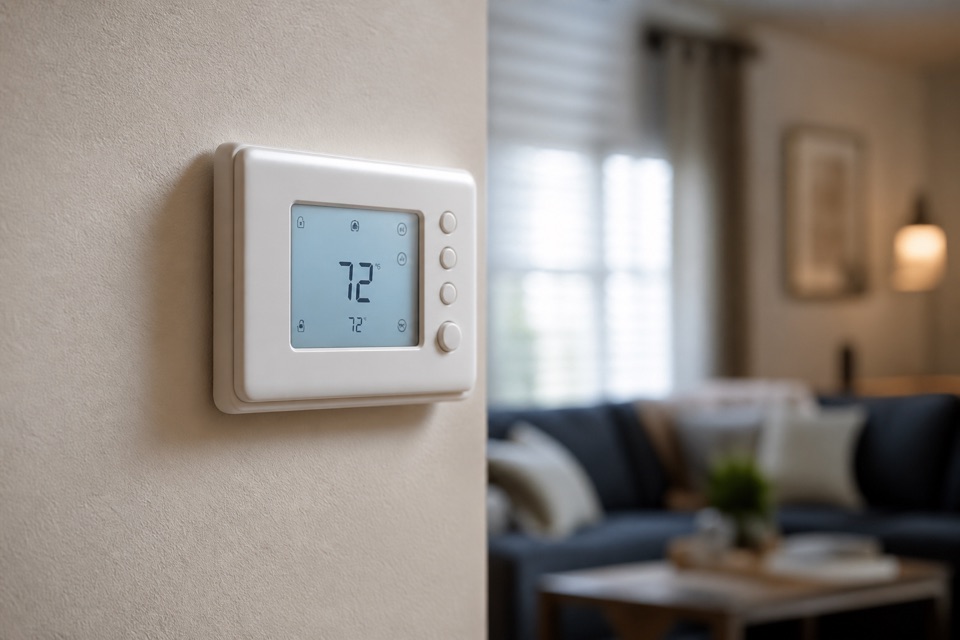
- Confirm thermostat communication: A blank thermostat screen usually means the batteries are dead or the low-voltage wire connecting it to the furnace has lost power. Replace the batteries if applicable. Ensure the system is set to "Cool" and the setpoint is at least five degrees below the current room temperature to force a cooling call.
- Inspect and replace the primary air filter: This is the single most important maintenance task for any homeowner. A severely clogged air filter starves the system of airflow. When the blower motor cannot pull enough warm air across the indoor evaporator coil, the coil's temperature drops rapidly, eventually freezing solid. Replacing a dirty filter restores baseline system efficiency and prevents the unit from suffocating.
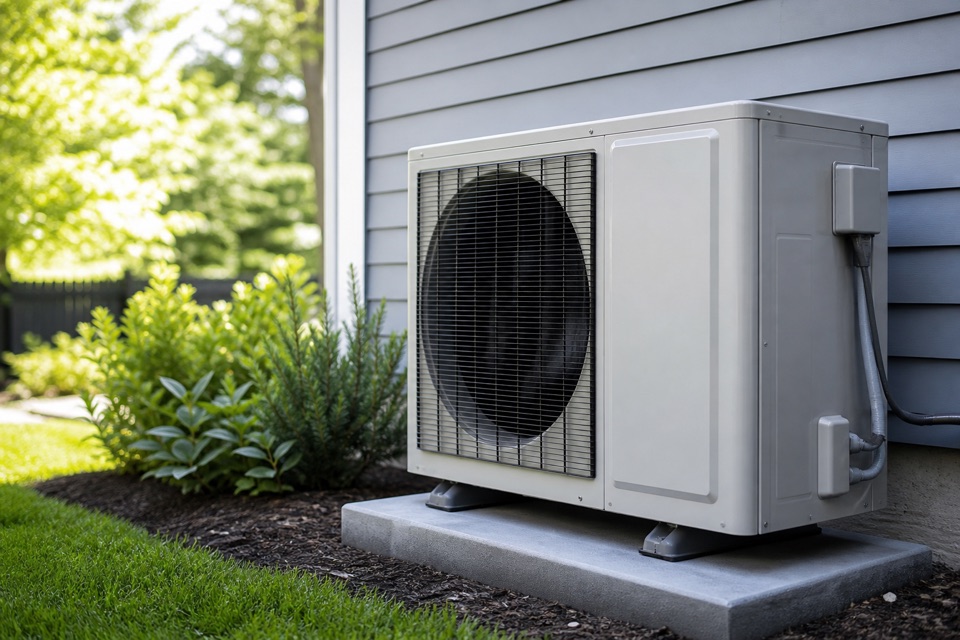
- Check the outdoor disconnect switch: Most outdoor units have a small gray box mounted on the exterior wall nearby. Ensure the switch is in the "ON" position or that the physical disconnect block is properly inserted.
Recognizing Complex Operational Challenges
Once you have ruled out the filter, the breaker, and the thermostat, any ongoing issues indicate a failure deeper within the system. Recognizing the symptoms of these complex challenges helps you communicate effectively with a technician and prevents you from running a damaged system into the ground.
In another instance, our dispatch team received an after-hours voicemail on a Friday summer evening when a customer's air conditioning unit stopped working entirely during a severe heatwave. We scheduled a technician for Saturday morning, who replaced a failing part, added necessary coolant, and swapped the furnace filters. Because the homeowner recognized the complex failure and stopped running the system, our technician was able to cool the house down before record-breaking high temperatures arrived.
Here are the primary symptoms that indicate a system failure beyond basic homeowner troubleshooting:
- Continuous running but blowing warm air: If the indoor fan is pushing air through the vents but the air is room temperature, the outdoor compressor has likely failed to start, or the system has lost its refrigerant charge.
- Visibly frozen evaporator coils: If you see a block of ice forming on the copper lines near your indoor unit, the system is suffering from a severe airflow restriction or low refrigerant pressure. Turn the system off immediately to let the ice melt and prevent the compressor from burning out.
- Intermittent power failures: If the system turns on for two minutes, shuts off, and turns back on repeatedly, this is known as "short cycling." It is often caused by safety switches tripping due to extreme pressure imbalances or an overheating compressor.
- Loud, unusual noises: A screeching sound typically points to a failing fan motor bearing, while a heavy buzzing or clicking near the outdoor unit usually indicates a struggling electrical contactor or a dying capacitor.
These symptoms require professional diagnostic evaluation. Continuing to run the system while experiencing these signs your air conditioner needs repair will almost certainly cause further mechanical damage.

The Boundary Between Safe Checks and Professional AC Repair
There is a distinct, objective boundary where safe homeowner troubleshooting ends and professional repair begins. This boundary is not just a suggestion; it is enforced by federal regulations, safety standards, and equipment warranties. Crossing this line can result in severe physical injury, environmental fines, and the voiding of your manufacturer's warranty.
The most critical legal boundary involves the chemical refrigerant that cools your home. Section 608 of the Clean Air Act mandates that any technician who maintains, services, repairs, or disposes of equipment that could release refrigerants must hold specific EPA certifications. Refrigerants operate under extreme pressures and can cause severe frostbite if handled improperly. Furthermore, venting these chemicals into the atmosphere is a federal violation. If your system is low on refrigerant, it means there is a leak that must be professionally located, brazed closed, and pressure-tested before the system is recharged.
Beyond chemical hazards, air conditioners present lethal electrical risks. The capacitor inside your outdoor unit acts like a high-voltage battery. Even if you turn off the power at the breaker panel, a capacitor can hold a lethal electrical charge for hours or days. Attempting to test or replace internal electrical components without the proper discharge tools and training is incredibly dangerous. Relying on general professional service best practices ensures that these high-voltage and high-pressure systems are handled with the respect and expertise they demand.
| Task | Appropriate For | Reasoning |
|---|---|---|
| Replacing Air Filters | Homeowner | Safe, accessible, and crucial for maintaining baseline airflow. |
| Resetting a Tripped Breaker | Homeowner | Safe first step to resolve minor power surges. |
| Clearing Debris Around Unit | Homeowner | Improves outdoor airflow without touching internal components. |
| Adding Refrigerant | Professional Only | Requires EPA Section 608 certification; high pressure hazards. |
| Testing/Replacing Capacitors | Professional Only | Component holds a lethal electrical charge even when power is off. |
Diagnostic Tooling and Trusted Local Expertise
When a system fails, guessing at the solution is an expensive gamble. Certified professionals arrive equipped with specialized diagnostic tools designed to pinpoint the exact point of failure without unnecessary parts swapping. This commitment to precision is why trusting our AC repair technicians provides homeowners with long-term peace of mind. Working with our trusted local team at Our Company means you get reliable expertise tailored to the specific demands of our regional climate.
For example, during a routine furnace and AC service visit, one of our local customers noted how our technician performed the service, explained the diagnostic process clearly, and provided a thorough debrief afterward. This level of transparency is only possible when a technician truly understands the data their tools are providing.
The Role of Specialized Diagnostics
Accurate repairs require measuring invisible forces: electrical current, chemical pressures, and temperature differentials. Professionals use specific tools to gather this data:
- Digital Manifold Gauges: These tools connect directly to the service valves on the outdoor unit. They measure the exact pressure and temperature of the refrigerant in both the liquid and suction lines. By calculating "superheat" and "subcooling," a technician can determine exactly how efficiently the system is absorbing and rejecting heat.
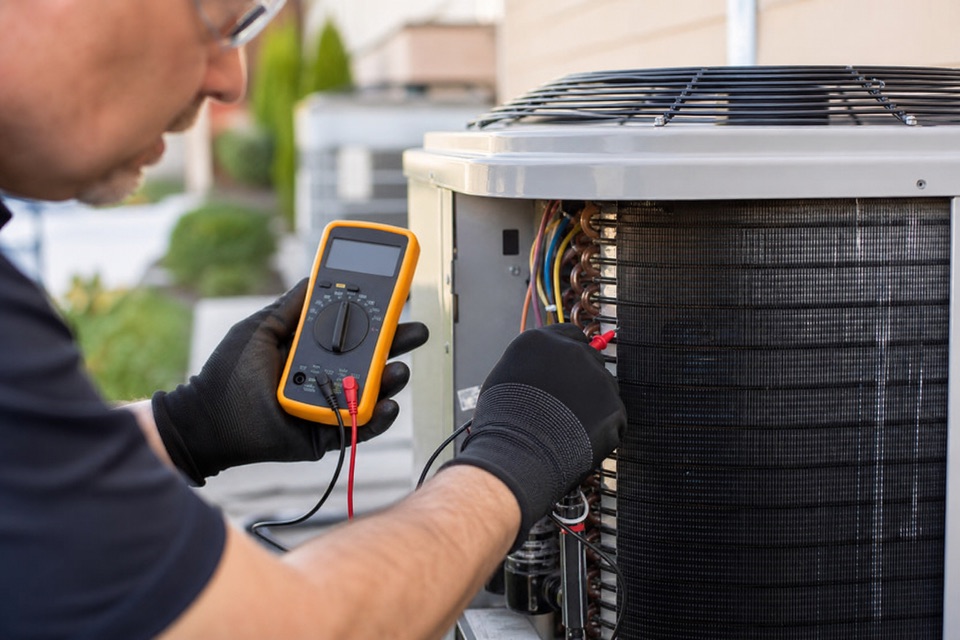
- True-RMS Multimeters: Technicians use high-end multimeters to test electrical loads safely. They can measure the microfarads of a capacitor to see if it is degrading, or check the amperage draw of a compressor to see if it is working too hard.
- Electronic Leak Detectors: Finding a micro-leak in a copper line set is like finding a needle in a haystack. Professionals use sensitive electronic "sniffers" that can detect refrigerant molecules in the air down to parts per million, allowing them to pinpoint and repair leaks that are invisible to the naked eye.
Preparing Your Cooling System for Seasonal Demands
The best way to handle an air conditioning breakdown is to prevent it from happening in the first place. According to the Department of Energy, routine maintenance can maintain up to 95 percent of an air conditioner's original efficiency and performance. By taking proactive measures, you can safeguard your system against the heavy demands of the summer heat.
Routine seasonal preparation involves more than just swapping a filter. It requires a comprehensive inspection of the system's baseline health. This includes cleaning the outdoor condenser coils to remove the dirt and pollen that accumulate over the winter, ensuring the condensate drain line is clear of algae to prevent indoor water damage, and verifying that all electrical connections remain tight after months of temperature expansion and contraction.
We always encourage our customers to address minor anomalies—like a strange rattle or a slight drop in cooling power—before they escalate into major failures during peak heat. Adhering to general professional service best practices for system longevity ensures that your air conditioner will be ready to perform exactly when you need it most.
Answers to Common Cooling and Troubleshooting Questions
Why is my AC running but not cooling?
If your system is running but blowing warm air, the most common culprit is a dirty air filter severely restricting airflow. It can also indicate that the outdoor compressor has failed to turn on due to a bad capacitor, or that the system has lost its refrigerant charge through a leak. Start by checking your thermostat settings and replacing your filter; if the issue persists, professional diagnostics are required.
How do you troubleshoot an air conditioner safely?
Safe troubleshooting is limited to checking external and accessible components. You should verify that the thermostat has power and is set correctly, ensure the circuit breaker has not tripped, and replace the indoor air filter. You can also gently clear away leaves and debris from the outside unit to ensure proper airflow. Never open the electrical panels or attempt to handle refrigerant lines.
When should I call a professional for AC repair?
You should call a professional the moment your system exhibits symptoms that basic troubleshooting cannot fix. This includes a system that short-cycles (turns on and off rapidly), produces grinding or screeching noises, freezes up at the indoor coil, or fails to blow cold air despite a clean filter and active power supply. Prompt professional attention prevents minor issues from destroying major components.
What happens to an air conditioning system if it sits unused all winter?
During months of inactivity, outdoor units are subjected to moisture, cold temperatures, and debris accumulation. This prolonged dormancy can cause fan motor bearings to dry out, electrical contactors to oxidize and fail, and pests to nest inside the electrical cabinet. These issues often lead to sudden component failure the first time the system is turned on in the spring or summer.
Why are EPA certifications required for handling AC refrigerant?
Refrigerants are heavily regulated chemicals that pose significant environmental hazards if released into the atmosphere, contributing to ozone depletion and global warming. Section 608 of the Clean Air Act legally requires technicians to be certified to ensure they have the training to recover, recycle, and handle these pressurized chemicals safely without venting them.
Can a dirty air filter cause an AC compressor to stop working?
Yes, a severely dirty air filter can eventually cause a compressor to fail. A clogged filter blocks airflow, causing the indoor evaporator coil to drop in temperature and freeze solid. When the coil freezes, liquid refrigerant can flow backward into the outdoor compressor—a condition known as "liquid slugging." Compressors are designed to pump gas, not liquid, and liquid slugging will destroy the internal valves.
Securing Peace of Mind with Reliable Cooling Solutions
Understanding the basics of your cooling system empowers you to make smart, safe decisions when the temperature rises. By knowing exactly when to troubleshoot an air filter or a tripped breaker, and when to step back and let a certified technician handle high-voltage components, you protect your home and your investment. Relying on standard industry practices and our trusted local expertise prevents costly mistakes and ensures your equipment operates efficiently for years to come. If your system is exhibiting complex symptoms or struggling to keep up with the heat, taking proactive steps today will secure your comfort for the rest of the season.
Related Articles
Ready to Get Started?
Whether you need a repair, maintenance, or a new installation, our expert team is here to help.