Why Covington Power Outages Demand Surge Protection for HVAC Systems
Trust Allred
When the grid comes back online after a fall storm, the sudden voltage spike can instantly destroy sensitive HVAC control boards. Proactive surge protection saves your system.
The Hidden Danger of Covington Grid Restorations
If you have ever wondered exactly why Covington power outages demand surge protection for HVAC systems, the answer usually reveals itself the moment the lights finally come back on. The house goes dark during a storm, the neighborhood waits for hours, and then the utility company re-energizes the lines. In that split second, a massive influx of electricity rushes back into your home's electrical panel. While your lamps and televisions might flicker and survive, the highly sensitive components inside your heating and cooling equipment take the full, brutal force of that voltage spike. The true danger to your climate control equipment is rarely the loss of power—it is the violent, uncontrolled return of it.
For comprehensive protection of your home's air conditioning systems, understanding the true threat of a grid restoration is the first critical step.
The Physics of a Grid Restoration Spike
When a localized grid goes down, the voltage drops to zero. As utility workers repair the fault and flip the switches to restore power to a neighborhood, the electricity does not gently trickle back into the wires. It surges forward in a massive wave to meet the sudden, simultaneous demand of hundreds of homes turning on at once. This creates an over-voltage event. The standard electrical current in a home is designed to flow at a steady, predictable rate. When a restoration spike hits, that current can momentarily jump far beyond the safe operating limits of your hardwired appliances. While this spike lasts only milliseconds, it carries enough destructive energy to instantly melt the delicate circuitry inside modern home appliances.
Why Tree Canopies Increase Localized Fluctuations
The Covington area grid infrastructure faces unique environmental challenges that make these events far more common than in other regions. King County is known for its beautiful, dense evergreen tree canopies. While these towering trees define the landscape, they also pose a constant threat to local power lines. When heavy winds roll through, our team at Allred Heating Cooling Electric sees firsthand how branches inevitably snap and fall across the wires. Utility systems use automatic devices called "reclosers" that briefly cut power when a branch touches a line, then automatically send a quick pulse of electricity to see if the branch has fallen away. If you have ever seen your lights blink off and on three or four times in rapid succession during a storm, you are witnessing this automated system at work. Each one of those rapid-fire on-and-off cycles sends a fresh, damaging voltage spike straight into your home's electrical panel.
Why Modern Variable-Speed Microprocessors are Highly Vulnerable
Many homeowners mistakenly believe that because their old furnace lasted twenty years without surge protection, their new system will be just as resilient. In our years of servicing Auburn and Covington homes, we've found this to be a dangerous misconception. The fundamental technology driving heating and cooling equipment has completely transformed over the last decade. Older systems were built with simple, heavy-duty mechanical relays. They were essentially large, dumb machines that could absorb minor electrical abuse without skipping a beat. Today's high-efficiency equipment operates entirely differently.
The Shift from Mechanical Relays to Microprocessors
Modern variable-speed HVAC control boards are essentially advanced computers. Instead of just turning on or off, a variable-speed unit constantly monitors indoor temperatures, humidity levels, and outdoor conditions, adjusting its motor speed in tiny increments to maximize comfort and minimize energy use. To perform these complex calculations, the system relies on highly sensitive microprocessors mounted on a central control board. These silicon chips are incredibly efficient, but they are also incredibly fragile when exposed to unstable electricity.
| System Type | Control Mechanism | Voltage Tolerance | Failure Result |
|---|---|---|---|
| Older Single-Stage Units | Mechanical contactors and relays | High tolerance for minor fluctuations | Individual part replacement |
| Modern Variable-Speed Units | Advanced silicon microprocessors | Fails at 10-15% above normal voltage | Catastrophic control board failure |
The 10-15% Over-Voltage Threshold
The microprocessors in a modern variable-speed unit are designed to operate within a very tight electrical tolerance. In fact, a voltage fluctuation just 10 to 15 percent above normal operating levels is often enough to permanently fry these delicate components. When a grid restoration sends a spike of 20, 30, or even 50 percent over normal voltage through the lines, the control board stands no chance.
When this happens, the damage is usually catastrophic. A fried control board renders the entire climate control system completely inoperable. The motors cannot spin, the compressor cannot engage, and the thermostat cannot communicate. At that point, you will need professional AC repair service from our technicians to diagnose the damage, order a proprietary replacement board from the manufacturer, and reprogram the new "brain" of your system.

Fall Storm Preparation: Timing Your System Defense
Timing is everything when it comes to defending your home's infrastructure. Early fall marks the beginning of the Pacific Northwest windstorm season, making it the most critical window for pre-heating-season storm prep. As the warm summer air gives way to heavy, fast-moving autumn weather fronts, the risk of tree-related power outages skyrockets. Waiting until the first major freeze to think about grid stability is a gamble that frequently leaves homeowners out in the cold.
The Shift in Weather Patterns
During the transition from late September into October, the region experiences a sharp increase in high-wind events. These storms batter the dense evergreen canopies, snapping branches that have dried out over the summer and sending them crashing into utility lines. Because you will soon be relying heavily on your heating system to keep your family warm through the winter, securing the equipment against these inevitable grid interruptions must be a priority before the severe cold sets in.
Steps to Secure Your System
Taking a proactive approach ensures that your equipment survives the turbulent fall weather. We recommend following this sequence for early fall pre-heating-season storm prep:
- Schedule a baseline electrical assessment: Have a professional evaluate the main electrical panel to ensure it can properly route excess voltage away from the house.
- Verify existing panel grounding: A surge protector cannot do its job if the home's grounding system is compromised or outdated.
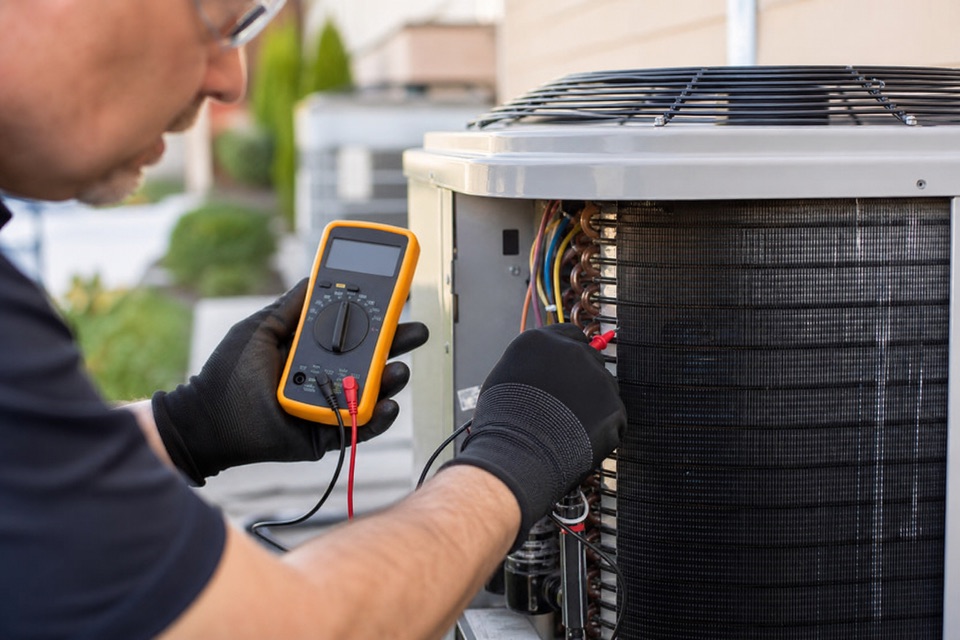
- Install dedicated disconnect defense: Have a licensed technician install a hardwired protection device directly at the outdoor unit's power supply box.
- Complete pre-season mechanical tuning: Booking your AC maintenance and tune-ups with our team during early fall allows a technician to clean the system, check electrical tolerances, and verify that all internal components are ready for the winter workload.
The Inadequacy of Standard Power Strips for Hardwired Equipment
When most people think of surge protection, they picture the plastic power strips sitting under their computer desk or behind their television. While those plug-in strips are perfectly fine for small consumer electronics, they are completely useless for defending major home appliances. Heating and cooling systems are hardwired directly into the home's electrical panel. There is no standard wall outlet to plug them into, which means they require a fundamentally different class of electrical defense.
Understanding Dedicated Disconnect Protection
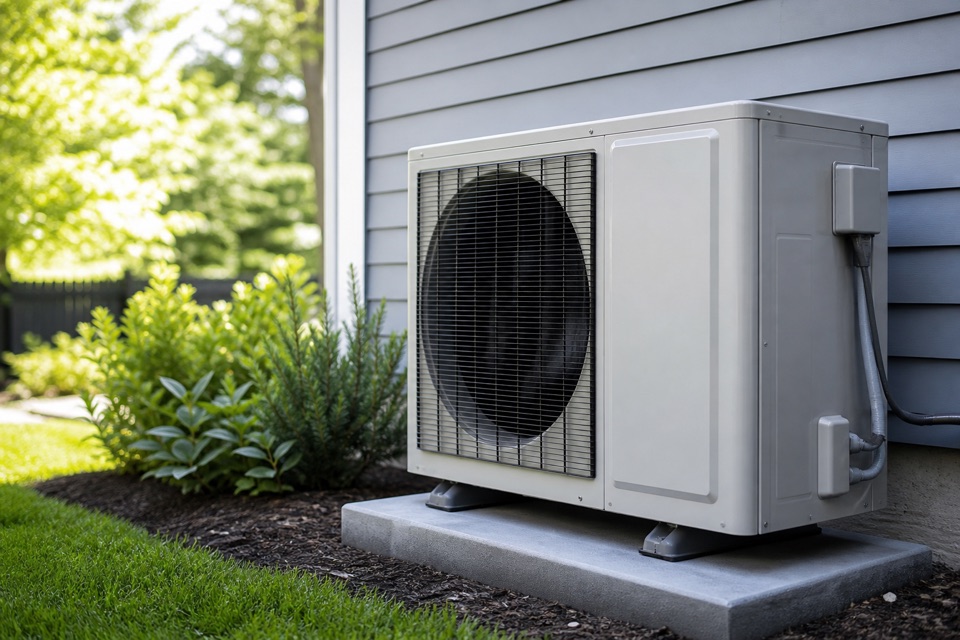
The National Electrical Manufacturers Association (NEMA) provides strict guidelines regarding whole-home and dedicated surge defense. For hardwired equipment, NEMA guidelines dictate the use of specialized devices that are wired directly into the electrical circuits. For an outdoor compressor or heat pump, this device is typically installed at the dedicated disconnect box—the small gray metal box mounted on the exterior wall next to the unit.
This specialized device acts as a heavy-duty electrical bouncer. It constantly monitors the voltage flowing from the main panel to the outdoor unit. The moment it detects a restoration spike traveling down the line, it instantly clamps down, diverting the destructive excess electricity straight into the earth via the home's grounding wire. This prevents the spike from ever reaching the sensitive variable-speed control board inside the unit.
Why DIY Electrical Work is Never the Answer
Because these devices must be integrated directly into high-voltage circuits, installation is never a do-it-yourself project. Opening a disconnect box or a main electrical panel exposes you to lethal amounts of electrical current. Furthermore, if a device is wired incorrectly, it will fail to shunt the voltage to ground, leaving the equipment completely unprotected while giving you a false sense of security. If you want to know exactly why your AC tripped the breaker during a recent storm, or if you need to upgrade your home's defenses, a licensed professional is the only safe option.
Comprehensive Defense: Bridging the Gap Between Electrical and HVAC
True electrical defense is not a single product; it is a layered strategy. A common pattern our dual-licensed technicians at Allred Heating Cooling Electric see in the Covington area involves homeowners who experience repeated, mysterious component failures over several seasons. One local homeowner we assisted relied on their heat pump through three years of fall windstorms and frequent outages, requiring consistent service and repairs to keep the system running. A comprehensive electrical and mechanical approach ensures that when a system faces years of grid stress, both the power supply and the equipment receive proper, ongoing attention.
The Two-Tiered Protection Strategy
To create an impenetrable defense against grid spikes, your home requires a two-tiered approach.
- Tier 1: The Main Panel. A whole-home protection device is installed directly at the main breaker box. This serves as the first line of defense, knocking down massive external surges from the utility grid before they can flood the home's internal wiring.
- Tier 2: The Dedicated Disconnect. A secondary device is installed at the heating and cooling unit itself. This catches any residual voltage that slips past the main panel, and it also protects against internal surges generated by other large appliances inside the home.
The Advantage of Dual-Licensed Expertise
Implementing this two-tiered strategy highlights a significant industry challenge: standard heating and cooling technicians are rarely licensed electricians. They can work on the equipment, but they cannot legally or safely upgrade your main electrical panel. Conversely, standard electricians can install panel protection, but they do not understand the intricate proprietary microprocessors inside a variable-speed air handler.
Working with a comprehensive Heating, Cooling, and Electric provider eliminates this blind spot. Having one unified team that holds both specialized licenses means the entire system—from the utility meter on the side of the house to the control board inside the furnace—is evaluated, protected, and serviced seamlessly. This dual expertise bridges the gap, ensuring that the electrical supply is stable and the mechanical equipment is fully shielded.
Recognizing the Signs of a Surged HVAC System
If a severe fall windstorm has recently rolled through the Covington area and your neighborhood just got its power back, you need to verify that your equipment survived the restoration spike. Damage to a modern variable-speed HVAC control board is not always immediately obvious. Sometimes the unit will appear completely dead; other times, it will exhibit erratic behavior that signals deep internal damage.
If you observe any of the following symptoms immediately after the grid is re-energized, leave the system turned off and call our team for emergency AC repair:
- Immediate breaker tripping: You reset the dedicated breaker for the unit in your main panel, but it instantly snaps back to the "off" position. This indicates a severe, dangerous electrical short inside the equipment.
- Unresponsive outdoor unit: The indoor thermostat is clearly calling for cooling or heating, and the indoor fan might even be blowing, but the outdoor compressor remains completely silent and still.
- Erratic clicking noises: You hear strange, rhythmic clicking sounds emanating from the indoor air handler or the outdoor unit. This is often the sound of a damaged relay on the control board failing to engage.
- Acrid electrical odors: You notice a distinct, sharp burning smell—similar to melting plastic or ozone—near the equipment. This is a definitive sign that a microprocessor or wire insulation has overheated and melted.
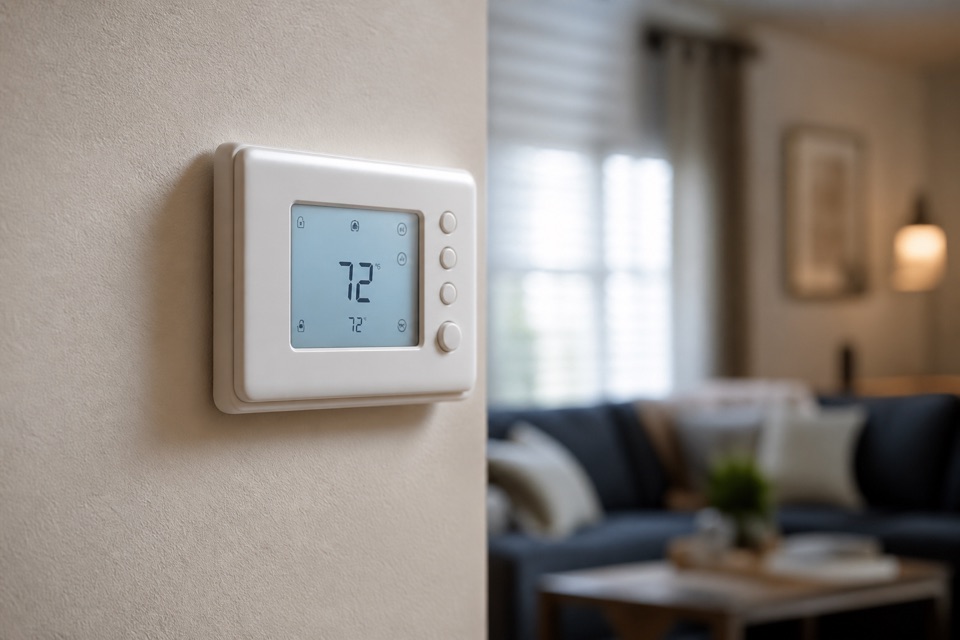
- Blank thermostat screen: The thermostat on your wall is completely blank and unresponsive, even after the house regains power. Because the thermostat draws its low-voltage power directly from the main control board, a fried board will often result in a dead thermostat.
Frequently Asked Questions
Can a power outage damage an HVAC control board?
The outage itself does not typically cause damage, as it simply drops the voltage to zero. The real damage occurs during the power restoration, when the utility company re-energizes the grid. This sudden influx of electricity creates a massive voltage spike that forces far too much current into the system. For modern equipment with sensitive microprocessors, that brief spike is more than enough to permanently fry the control board.
Why does power restoration cause a surge in Covington?
Covington's dense evergreen tree canopies frequently interfere with local power lines during heavy winds. When branches touch the lines, automated utility reclosers rapidly cut and restore power to clear the fault. Each time the system attempts to re-energize the neighborhood grid, it sends a powerful, uncontrolled wave of electricity into local homes, creating localized surges that overwhelm hardwired appliances.
Do I need a surge protector for my air conditioner or heat pump?
Yes, dedicated protection is highly recommended for any modern, high-efficiency climate control system. Unlike older units that used durable mechanical relays, today's air conditioners and heat pumps rely on fragile silicon microprocessors to regulate variable speeds. Without a dedicated device to shunt excess voltage to ground, a single grid fluctuation can destroy these expensive internal components.
What happens to a variable-speed HVAC unit when the power comes back on?
When the power returns, a variable-speed unit receives an immediate, heavy dose of electrical current. If the voltage exceeds the unit's tolerance by just 10 to 15 percent, the internal control board will overheat and short out. Once the board fails, the unit loses its ability to communicate with the thermostat, control the motor speeds, or operate the compressor, rendering the entire system useless.
Should I turn off my HVAC at the breaker during a power outage?
Yes, turning off the dedicated breaker is one of the safest manual steps you can take during an outage. By physically disconnecting the equipment from the home's electrical supply, you guarantee that the massive voltage spike associated with the grid restoration cannot reach the unit. Once the neighborhood power has been fully restored and stable for a few minutes, you can safely flip the breaker back on.
Is a whole-home surge protector enough, or do I need one at the HVAC disconnect?
A whole-home device at the main panel is an excellent first line of defense against massive external grid spikes, but it is rarely enough on its own. A secondary device installed directly at the equipment's disconnect box is necessary to catch any residual voltage that slips past the main panel. This two-tiered approach provides the most robust defense for highly sensitive variable-speed microprocessors.
Protecting Your Investment Before the Next Storm
Living with Covington's beautiful tree canopies means accepting the reality of frequent grid fluctuations and sudden power restorations. Don't leave your expensive variable-speed equipment vulnerable to the next major windstorm. Taking proactive steps now ensures your system stays safe, reliable, and ready to provide consistent comfort all winter long. Reach out to the experts at Allred Heating Cooling Electric to schedule a comprehensive electrical assessment and professional defense installation today. Additionally, ask us if any general federal tax credits or local utility incentive programs may apply to qualifying high-efficiency heat pump upgrades, but be sure to verify current programs with your utility provider or a tax professional.
Related Articles
Ready to Get Started?
Whether you need a repair, maintenance, or a new installation, our expert team is here to help.