
Common Code Compliance Issues When Upgrading Heat Pumps in Bellevue
Trust Allred
Bellevue's strict noise ordinances and property line setbacks can easily derail a fall heating upgrade. Discover how to choose the right equipment placement to pass municipal inspection.
The Unexpected Hurdles of Fall Heating Upgrades
Your old furnace is starting to show its age, and with the chill of the early fall pre-heating-season settling in, you know it is time for a change. Upgrading to a modern heat pump is a smart move for energy efficiency and year-round comfort, and qualifying installations may even be eligible for generic federal tax credits or local utility incentives. However, at Allred Heating Cooling Electric, our team frequently helps homeowners navigate the common code compliance issues when upgrading heat pumps in Bellevue. Selecting a new system is not just about calculating square footage and matching heating capacity. You also have to navigate strict municipal oversight regarding exactly what you can install and where it can sit on your property.
Many homeowners assume that if a unit is highly rated for efficiency, it is automatically a perfect fit for their home. The reality we see in the field is much more complex. Local regulations dictate strict rules about exterior equipment placement to preserve neighborhood tranquility and property boundaries. Before you schedule an installation, you must ensure your chosen equipment satisfies both your home's heating demands and the city's legal constraints. For comprehensive guidance on upgrading your system, exploring professional air conditioning and cooling services is a crucial first step in planning a compliant installation.
Failing to account for these regulations early in the fall planning phase can lead to frustrating delays. Municipal inspectors will not hesitate to red-tag a project that violates local ordinances, which can leave you without reliable heat just as the winter weather arrives. Understanding these rules upfront prevents costly revisions and ensures your new system is legally compliant from day one.
Decoding the Bellevue Noise Control Code (BCC 9.18)
In our experience servicing local neighborhoods, we know firsthand that the City of Bellevue takes neighborhood noise pollution very seriously. To maintain residential tranquility, the city enforces the Bellevue Noise Control Code (BCC 9.18), which places specific acoustic limitations on all residential mechanical equipment. The most critical factor our technicians explain to customers is how sound is actually measured. Inspectors do not measure the sound right next to your heat pump. Instead, compliance is determined by the decibel level measured at the receiving property line.
This means a heat pump that sounds whisper-quiet while standing in a manufacturer's showroom might still violate local codes if it is installed too close to your neighbor's fence. Sound travels, and depending on the acoustics of your side yard, the sound waves can bounce off exterior walls and amplify before crossing the property boundary. Residential noise limits typically cap between 45 to 55 dBA, depending on the specific zoning of your neighborhood and the time of day the equipment is operating. Adhering to these decibel (dB) rating limits is non-negotiable for a successful inspection.
Daytime vs. Nighttime Acoustic Thresholds
The noise limits in Bellevue are not static; they fluctuate based on the time of day. While daytime operation allows for a slightly higher decibel threshold, nighttime limits are significantly stricter. Because heat pumps operate differently than traditional furnaces—often running continuously at lower speeds to maintain an even temperature—they will inevitably run overnight during the winter.
- Daytime limits: Generally accommodate the standard operating noise of modern HVAC equipment, assuming normal ambient neighborhood sound.
- Nighttime limits: Drop significantly to protect sleeping residents. A unit that passes daytime sound tests might fail nighttime thresholds if it ramps up to maximum capacity during a cold snap.
- Continuous operation demands: Because your system will run overnight to combat dropping temperatures, we always advise selecting ultra-quiet equipment to avoid late-night noise complaints from neighbors.
Navigating Property Line Setbacks Under the Land Use Code
Beyond acoustic limitations, the Bellevue Land Use Code (LUC) strictly governs the physical placement of exterior mechanical equipment. Setbacks are the mandatory minimum distances required between your heat pump and your side or rear property lines. Within the Bellevue city limits, these setback regulations prevent homes from becoming structurally crowded and help mitigate the transfer of noise and vibration between closely built properties.
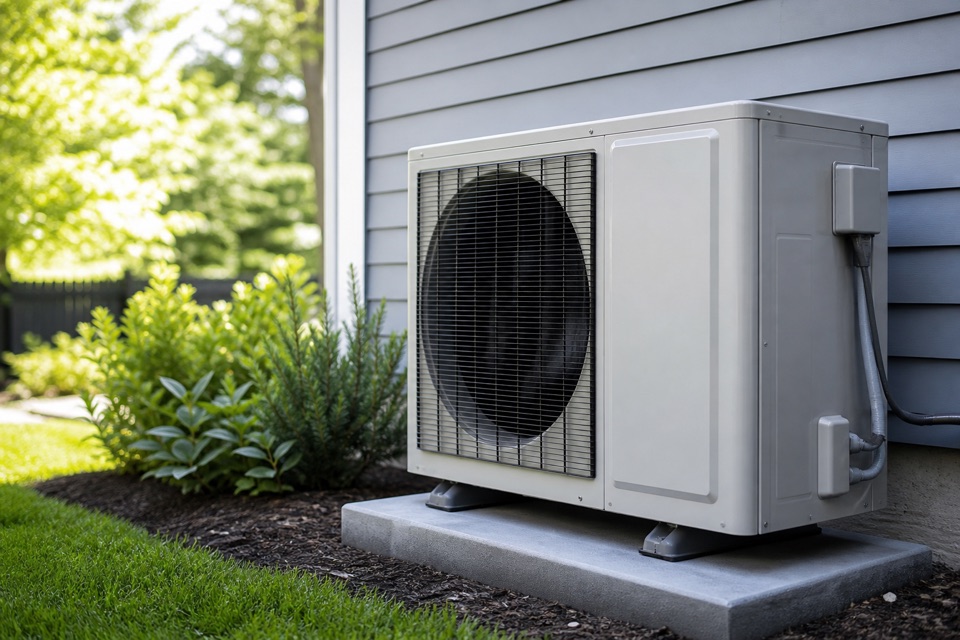
Standard side and rear property line setbacks dictate that your outdoor compressor cannot simply be dropped wherever it is most convenient for the electrical panel. Our installation crews frequently encounter zero-lot-line homes or particularly narrow side yards where finding a compliant location becomes a significant logistical challenge. Ignoring these setback rules is a fast track to a failed inspection. If an inspector determines your unit encroaches on the setback, you will face mandatory relocation orders, which involve moving electrical wiring, refrigerant lines, and pouring a new concrete pad. To avoid these expensive mistakes, partnering with experts for professional heat pump and AC installation in Bellevue ensures your unit is positioned perfectly the first time.
Creative Placement for Narrow Lots
When standard side-yard installation is geometrically impossible due to tight lot dimensions, our team will help you explore approved alternative placement strategies. This requires careful planning and, often, additional permitting.
- Rear yard relocation: Moving the unit to the backyard often provides more distance from property lines, though it requires longer refrigerant line sets.
- Acoustic barriers: In some cases, the city may allow a unit closer to the property line if a certified acoustic barrier is installed.
- Barrier permitting: Be aware that building a sound-dampening fence or wall around your unit usually requires its own separate structural permit and must not restrict the airflow required for the heat pump to function properly.

The Impact of Pacific Northwest Winters on Acoustic Compliance
The Problem: Even if a heat pump is mathematically compliant on paper, the unique weather patterns of the region can alter its real-world sound profile. Having prepped countless systems for the early fall transition, we know firsthand that Bellevue's damp Pacific Northwest winters require heat pumps to operate under challenging conditions. As the system extracts ambient heat from the cold outdoor air, the high moisture content in the air causes frost to rapidly accumulate on the outdoor coil.
The Cause: To prevent this ice buildup from suffocating the system, the heat pump must periodically enter a defrost cycle. During this cycle, the system's reversing valve shifts direction, temporarily turning the outdoor unit into a heater to melt the ice. This mechanical shift often produces a distinct "whoosh" sound. Furthermore, once the ice is melted, the compressor must quickly ramp up to high capacity to resume heating the home. This sudden surge in mechanical effort can temporarily spike the unit's decibel levels well above its standard operating volume.
The Solution: When calculating property line sound limits for municipal compliance, you cannot only look at the lowest operating decibel rating. You must factor in these peak-noise moments. We recommend selecting a system equipped with a sound-dampening compressor blanket and advanced swept-wing fan blades. This helps mitigate the acoustic spikes caused by frequent defrost cycles, ensuring you remain compliant even on the coldest, dampest nights of the year.
Matching Equipment Specifications to Lot Dimensions
Satisfying both your home's heating needs and Bellevue's legal constraints requires selecting the exact right piece of technology. Not all heat pumps are built the same, and their physical footprint and acoustic output vary wildly between generations and styles.
We highly recommend modern, variable-speed inverter compressors over older single-stage units because they offer significant acoustic benefits. Instead of slamming on at 100% capacity and generating a loud mechanical clunk, inverter systems ramp up slowly and run continuously at lower, quieter speeds. This makes them far easier to permit in neighborhoods with strict noise ordinances. To effectively match equipment to your lot, our team analyzes manufacturer sound data and applies it to the distance between your proposed installation site and the property line.
| Equipment Type | Acoustic Profile | Footprint & Placement Suitability |
|---|---|---|
| Single-Stage Heat Pump | Louder startup; operates only at 100% capacity. | Requires larger setbacks; difficult to permit on narrow lots due to high decibel output. |
| Variable-Speed Inverter | Ultra-quiet, gradual startup; runs continuously at low volume. | Easier to permit near property lines; ideal for strict nighttime noise regulations. |
| Side-Discharge Unit | Directs sound forward rather than upward; very quiet operation. | Slim profile fits into tight zero-lot-line spaces; excellent for narrow side yards. |
For multi-level homes, balancing comfort with exterior compliance might require specialized zoning solutions. Instead of one massive, loud unit trying to heat three floors, breaking the system up can reduce the exterior noise footprint. If you are navigating this specific architectural challenge, comparing single-zone vs. multi-zone mini-splits for tri-level homes can provide excellent alternative strategies that keep outdoor equipment small and quiet.
Securing Permits and Ensuring Long-Term Reliability
Navigating the administrative process of a heating upgrade is just as vital as the physical installation. The City of Bellevue requires comprehensive documentation before granting an HVAC permit. Attempting to bypass this process is a major liability that our team takes off your plate.
- Site Plan Submission: We provide a scaled drawing showing your property lines, the footprint of your home, and the exact proposed location of the heat pump to prove setback compliance.
- Acoustic Calculations: The application requires manufacturer specification sheets detailing the unit's sound ratings, alongside calculations proving the sound will dissipate to legal levels before crossing the property line.
- Timeline Management: Securing these permits takes time. Initiating this process with us in early fall is critical to ensure approval before winter weather makes installation difficult or impossible.
- Post-Installation Inspection: Once the unit is wired and running, a municipal inspector will visit the property to verify the physical placement matches the approved site plan.
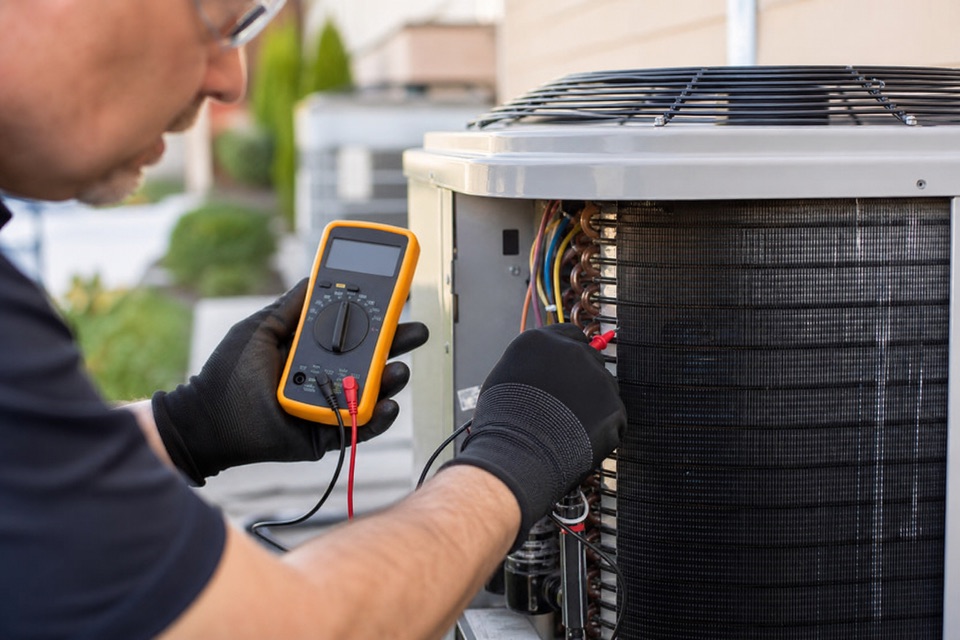
Even after a successful inspection, ongoing professional evaluation is critical. For instance, our technicians recently worked with a local homeowner over a three-year period to resolve multiple recurring issues with an aging heat pump. Through consistent, professional service and targeted repairs, we restored and stabilized the system's performance. This kind of ongoing maintenance is vital because as equipment ages, worn bearings and unbalanced fan blades can cause the unit to run louder, potentially pushing a once-compliant system over the legal noise limit. Routine AC and heat pump inspection testing ensures your equipment remains as quiet and efficient as the day it was installed. Allred Heating Cooling Electric's deep expertise in local Bellevue municipal codes ensures that your permitting process is seamless and your equipment remains compliant for years to come.
Partner with Local Code Experts for Your Heat Pump Upgrade
Upgrading your heating system in Bellevue presents a dual challenge: you must meet your family's rigorous winter heating demands while strictly adhering to complex noise and setback ordinances. Proper planning is the only way to prevent expensive legal hurdles, failed inspections, and the nightmare of relocating heavy mechanical equipment after the fact.
Do not leave your home's comfort and legal compliance to chance. By consulting with the experts at Allred Heating Cooling Electric, you ensure a smooth, fully permitted installation. Partnering with our local code specialists guarantees clear guidance on how these regulations impact your choice of equipment, helping you avoid fines and enjoy reliable, compliant warmth all winter long.
Frequently Asked Questions
What is the residential noise limit in Bellevue WA?
The residential noise limit in Bellevue typically ranges between 45 and 55 dBA, measured at the receiving property line. These limits fluctuate based on the specific zoning of your neighborhood and the time of day. Nighttime thresholds are significantly stricter to protect sleeping residents from continuous mechanical noise.
Do I need a permit to install a heat pump in Bellevue?
Yes, a mechanical permit is mandatory for installing or replacing a heat pump within the city limits. The permit application requires detailed site plans showing property lines and manufacturer acoustic data. This ensures the proposed installation meets all safety, setback, and noise regulations before work begins.
How close to the property line can a heat pump be installed?
The exact allowable distance depends on your specific property zoning and the decibel rating of the equipment. The Bellevue Land Use Code dictates minimum physical setbacks for all exterior mechanical equipment, often requiring several feet of clearance from side and rear property boundaries. If your lot is exceptionally narrow, alternative placement or acoustic barriers may be required.
Are there specific decibel limits for HVAC equipment running at night?
Yes, Bellevue enforces stricter acoustic thresholds during nighttime hours. Because heat pumps often run continuously overnight during cold weather, they must operate quietly enough to stay below these reduced limits. Equipment that passes daytime noise tests can still violate nighttime ordinances if it is too loud.
How does a heat pump's defrost cycle affect noise compliance?
During damp winter weather, a heat pump must periodically reverse its operation to melt frost off the outdoor coil. This defrost cycle causes the compressor to ramp up and the reversing valve to shift, creating temporary spikes in decibel levels. These peak-noise moments must be factored into your property line sound calculations to ensure full compliance.
What happens if my new heat pump fails a municipal noise inspection?
If an inspector determines your unit violates noise or setback ordinances, the project will be red-tagged. You will be legally required to rectify the violation, which usually involves physically relocating the equipment further from the property line or installing approved acoustic barriers. This is a costly process that highlights the importance of proper upfront planning with a qualified local contractor.
Related Articles
Ready to Get Started?
Whether you need a repair, maintenance, or a new installation, our expert team is here to help.