How Voltage Drops Affect Your Air Conditioner's Lifespan
Trust Allred
A burnt-out AC compressor isn't always a mechanical failure. Inconsistent power from an aging electrical panel can quietly destroy your cooling system, making an electrical upgrade critical.
The Hidden Threat to Your Cooling System: Debunking Mechanical Failure
Many homeowners believe that a burnt-out air conditioner is purely a mechanical failure or simply the result of old age. The reality is that, in our experience at Allred Heating Cooling Electric, understanding how voltage drops affect your air conditioner's lifespan often points to an entirely different culprit: your home's electrical infrastructure. When a compressor suddenly dies in the middle of summer, it is incredibly common to assume the equipment itself was faulty. However, our technicians frequently find that inconsistent power delivery from an aging or undersized electrical panel is the true underlying disease, while the fried compressor is merely a symptom.
Addressing the root electrical cause is absolutely critical before you invest in replacing expensive HVAC components. Without stable power, a brand-new cooling unit will simply suffer the exact same fate as the old one. If you want to protect your investment in air conditioning systems, you need to understand this vital relationship between mechanical performance and electrical supply. Doing so empowers you to make informed decisions about upgrading your infrastructure and securing professional AC repair that actually solves the core problem.
The compressor is the heart of your cooling system, responsible for pumping refrigerant through the lines to remove heat from your home. Because it is a heavy-duty mechanical component with moving parts, it is easy to blame mechanical wear and tear when it fails. But compressors are driven by powerful induction motors, and those motors are highly sensitive to the quality of the electricity feeding them. When the voltage supply wavers, drops, or stutters, the motor experiences immense stress that eventually destroys it from the inside out.
The Mechanics of Motor Failure: Why Low Voltage Forces High Amperage
To understand why an electrical panel issue can destroy an air conditioning unit, you have to look at the physics of how induction motors operate. The relationship between power (watts), voltage (volts), and electrical current (amps) is governed by Watt's Law. In simple terms, an air conditioner's compressor requires a specific, constant amount of total power (wattage) to do its job. Because the required wattage remains constant, voltage and amperage have an inverse relationship. If the voltage supplied to the motor drops, the motor is forced to pull significantly more current (amperage) to make up the difference and maintain its total power output.
This high amperage draw during voltage drops is highly destructive. As the current increases, so does the electrical resistance within the copper windings of the compressor motor. This resistance generates rapid, excessive heat. The copper windings inside the motor are coated with a thin layer of lacquer insulation designed to keep the electrical current flowing in the correct path. Under normal operating temperatures, this insulation lasts for decades. But when low voltage forces high amperage, the internal temperature of the motor skyrockets beyond its design limits.
Over time, this excessive heat literally bakes the lacquer insulation. The coating becomes brittle, degrades, and eventually melts away entirely. Once the bare copper wires touch each other or the metal casing of the compressor, an electrical short occurs. This is commonly referred to as a "burnout." The motor is destroyed, the compressor locks up, and the entire system ceases to function. It is a catastrophic failure that was entirely preventable with a stable power supply.
Manufacturer Tolerances and Voltage Imbalances
Most HVAC manufacturers engineer their equipment to operate within a specific, narrow window of electrical variance. Typically, the specification allows for a maximum voltage variance of plus or minus 10 percent from the nameplate rating printed on the unit. For a standard residential air conditioner rated at 230 volts, that means the absolute minimum safe operating voltage is around 207 volts.
When an aging electrical panel or an overburdened utility grid supplies power that dips below this 10 percent threshold, the equipment is operating outside of its safe tolerances. Every minute the compressor runs in this state, the wear and tear is drastically accelerated. Operating outside these tolerances does not just void manufacturer warranties; it actively strips years off the expected lifespan of the equipment.

Summer Grid Strain: How Brownouts Silently Damage Compressors
Over our years serving the Auburn area, our team has watched the Pacific Northwest climate shift, bringing intense, prolonged summer heatwaves. These extreme temperatures place immense stress on both local utility grids and the residential electrical panels of older homes. When thousands of air conditioners are running simultaneously at maximum capacity, the sheer demand for electricity can cause the voltage supplied by the utility grid to sag. These widespread voltage drops are commonly known as brownouts.
Unlike a blackout, where the power cuts off entirely, a brownout provides just enough electricity to keep your equipment trying to run, which is actually much more dangerous for induction motors. Older housing stock in the region often features aging 100-amp electrical panels that were originally installed when summers were milder and homes had far fewer electronic devices. Today, those same panels struggle to support modern cooling loads during peak heat. The voltage drops at the grid level are compounded by the bottlenecks within the home's outdated panel, creating a worst-case scenario for the air conditioner.
The damage caused by these events is cumulative. A compressor might survive several brownouts or periods of low voltage before finally giving out. The insulation degrades a little bit more during each high-heat event. We recently helped a local homeowner who experienced this firsthand when their air conditioner suddenly stopped working on the hottest day of the year. Our technician dispatched that evening and managed to get the system operational again, but the situation highlighted how heavy cooling demands can push a system right to the brink of failure. This cumulative damage often goes entirely unnoticed by the homeowner until the hottest day of the season, when the weakened insulation finally gives way and a catastrophic failure occurs.
Tripped Breakers and Blown Fuses: Spotting the True Culprit
Because the symptoms of an electrical bottleneck often mimic mechanical failures, homeowners frequently spend time and money replacing the wrong parts. It is vital to differentiate between an air conditioning unit that is simply old and an electrical panel that is inadequate for the job. Recognizing the warning signs early can save you from a complete compressor burnout.
Here are the most common symptoms our technicians see that indicate your cooling issues are actually rooted in your electrical system:
- Dimming lights: If the lights inside your home flicker or dim significantly every time the air conditioner kicks on, the system is pulling too much initial current, causing a temporary voltage drop across the entire house.
- Frequently tripped breakers: A circuit breaker is a safety device designed to cut power when the amperage exceeds safe limits. If your AC breaker keeps tripping, it is doing its job to prevent an electrical fire caused by high amperage draw.
- Blown fuses at the disconnect box: Similar to a breaker, the fuses outside near the condenser will blow if the compressor pulls too much current while trying to start under low voltage conditions.
- Repeated capacitor failures: Homeowners often experience the frustration of replacing blown capacitors or adding hard start kits, only to have the issue return weeks later. The capacitor is failing because it is being overworked by the motor's struggle for power.
During a recent installation of a new cooling system for a local customer, our team discovered that the main panel box was continuously tripping the breaker. Because we handle both HVAC and electrical work, we were able to fix the underlying panel error—and safely clear out some unexpected pests from the crawl space in the process—fully resolving the breaker issues and allowing the new AC to run safely. This perfectly illustrates why you must look beyond the AC unit itself when diagnosing power issues. If you are wondering why your AC tripped the breaker, the answer usually lies at the main panel.
| Symptom Observed | Likely Mechanical Cause | Likely Electrical Cause |
|---|---|---|
| System struggles to start | Failing compressor bearings | Low voltage supply / bad capacitor |
| Breaker trips immediately | Grounded or shorted compressor | Weak breaker / undersized panel |
| Lights dim when AC runs | Hard starting compressor | Overloaded main electrical service |
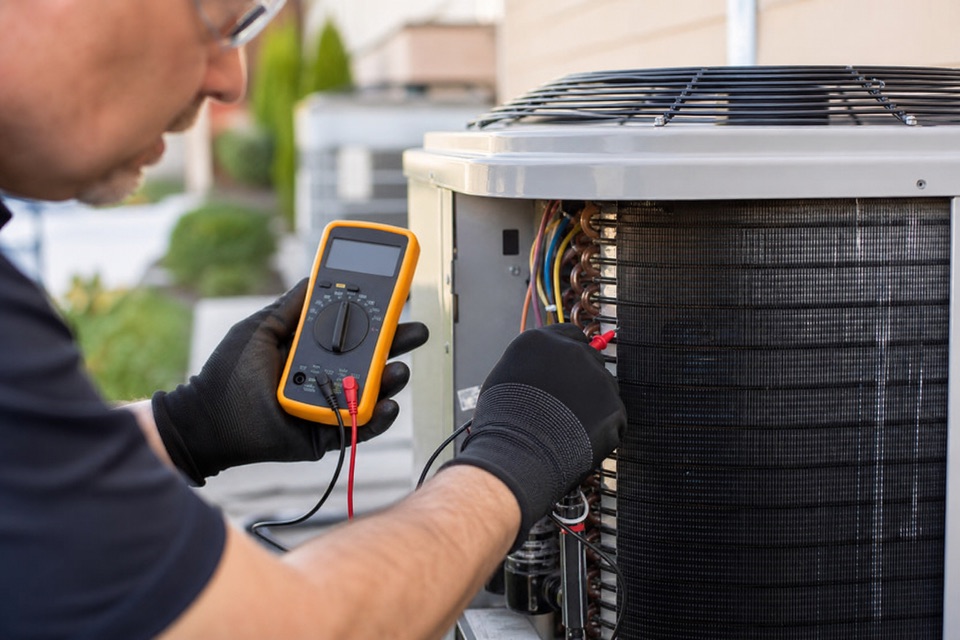
A strict word of caution: Never attempt DIY electrical diagnostics. Testing live voltage, measuring amperage draw at the compressor, or inspecting the buss bars inside a main electrical panel requires specialized training and protective equipment. Always rely on a licensed professional to safely trace these electrical faults.
Transitioning to Heating Season: Assessing Your Electrical Readiness
As summer draws to a close and we enter September, the electrical infrastructure of your home has just endured months of peak cooling strain. The early fall transition is a critical period for assessing the health of your system. The cumulative damage caused by summer brownouts, frequent cycling, and high amperage draw does not magically disappear when the weather cools down. Instead, that weakened infrastructure is handed off to the next major appliance: your heating system.
Heavy winter heating loads demand equally high performance from your electrical panel. If you utilize a heat pump, the compressor will continue to run throughout the winter to extract heat from the outside air. If temperatures drop severely, the system will rely on electric auxiliary heat strips, which pull an enormous amount of amperage. Similarly, a dedicated electric furnace requires a massive, stable flow of electricity to generate heat safely. If your electrical panel was struggling to supply 230 volts to your air conditioner in August, it will certainly struggle to power your heating elements in December.
At Allred Heating Cooling Electric, we highly recommend proactive electrical panel assessments during this seasonal shift. Ensuring the system is safe and capable of handling upcoming winter demands prevents unexpected outages during freezing weather. A thorough inspection will reveal if the breakers are weakened, if the wiring connections have vibrated loose from thermal expansion, or if the panel itself needs an upgrade to support modern loads. Connecting this assessment to your routine AC maintenance ensures that both the mechanical and electrical sides of your home comfort system are verified before the harsh weather arrives.
Bridging the Gap: Why Dual-Licensed Expertise Eliminates Guesswork
One of the most frustrating experiences for a homeowner is getting caught in the middle of a finger-pointing match between different trades. A common industry friction occurs when an HVAC technician diagnoses a fried compressor and tells the homeowner to "call an electrician" because the voltage seems low. The electrician arrives, checks the panel, and says the breaker tripped because the AC is pulling too much power, telling the homeowner to "call the HVAC guy back." This leaves you paying for multiple service calls without a clear resolution.
This is where the necessity of having a professional who understands both sides of the equation becomes clear. At Allred Heating Cooling Electric, our dual expertise in licensed HVAC and electrical services positions us uniquely to diagnose and resolve these complex crossover issues. Instead of juggling multiple contractors, you have a single source of truth capable of diagnosing both the symptom (the failed compressor) and the disease (the aging electrical panel).
Resolving the root cause prevents the new equipment from suffering the exact same fate as the old unit. If an electrical upgrade is required, it can be seamlessly integrated into the plan for your AC replacement. This comprehensive approach eliminates the guesswork, ensures your new equipment operates exactly within manufacturer tolerances, and provides the peace of mind that comes from knowing the entire infrastructure is safe, stable, and ready for the years ahead.
Frequently Asked Questions About AC Voltage and Amperage
Can low voltage damage an air conditioner?
Yes, low voltage is one of the leading causes of premature air conditioner failure. When the voltage drops, the compressor motor must draw higher amperage to maintain its required power output. This excessive current generates intense internal heat that bakes the motor's protective insulation. Over time, this degradation leads directly to electrical shorts and total compressor burnout.
What happens if AC voltage is too low?
If the AC voltage is too low, the system will struggle to start, often resulting in a loud humming or buzzing noise from the outdoor unit. The motor will pull excessive current, which will quickly cause the internal thermal overload switch to trip, shutting the system down temporarily. If the system manages to run on low voltage, it will overheat, significantly reducing the lifespan of the internal components and likely tripping the circuit breaker at the main panel.
Why is my AC compressor drawing too many amps?
An AC compressor usually draws too many amps because it is starved for voltage, forcing it to compensate by pulling more current. Alternatively, it can pull high amps if the compressor bearings are failing mechanically, creating physical resistance that the motor must work harder to overcome. A failing run capacitor can also cause high amperage draw by failing to provide the necessary electrical phase shift to keep the motor spinning efficiently.
Will a brownout damage my AC?
A brownout can absolutely damage your AC, and it is often more harmful than a complete blackout. During a brownout, the utility grid supplies reduced voltage, meaning the air conditioner attempts to run without adequate power. This forces the heavy-duty induction motors in the compressor and blower to overwork, overheat, and suffer permanent insulation damage that drastically shortens their operational life.
How can I tell if my electrical panel is too small for my AC?
The most obvious signs that your electrical panel is too small include lights dimming when the AC turns on, breakers tripping frequently, and a main panel rating of only 100 amps in a home with modern electrical appliances. If you live in an older home and have added a new central air system, heat pump, or electric vehicle charger, a licensed electrician should perform a load calculation to determine if a panel upgrade is required.
Does a hard start kit fix low voltage problems?
No, a hard start kit does not fix the root cause of low voltage problems. A hard start kit is a capacitor and relay combination designed to give an aging compressor an extra jolt of electricity to overcome mechanical friction during startup. While it can temporarily help a struggling compressor get running, it cannot correct a persistent voltage drop from an inadequate electrical panel or utility grid strain.
Protect Your Home's Infrastructure Before Winter Arrives
Recurring air conditioning failures, blown fuses, and tripped breakers are rarely just bad luck—they are often a blaring warning sign of an aging electrical panel struggling to keep up. Recognizing that mechanical breakdowns are frequently tied to electrical bottlenecks empowers you to seek the right professional help rather than paying for temporary band-aids. Before the heavy electrical loads of the winter heating season arrive, it is wise to schedule a comprehensive evaluation of your home's power infrastructure. By addressing the root cause with professional AC repair and licensed electrical expertise, you can ensure your system runs efficiently, safely, and reliably for years to come.
Related Articles
Ready to Get Started?
Whether you need a repair, maintenance, or a new installation, our expert team is here to help.