Are HVAC Maintenance Plans Worth It? Diagnosing Uneven Cooling and Airflow Issues
Trust Allred
Why Is the Second Floor Always Hotter Than the Rest of the House?
Why does it feel like you are walking into an oven the moment you reach the top of the stairs, and how can applying local service expertise and area tips help you permanently resolve this home comfort issue? In our years of serving the community, the team at Trust All Red has found that diagnosing persistent uneven cooling and temperature disparities between the upper and lower floors of a multi-story home is one of the most common challenges homeowners face. Your air conditioner might be running continuously, yet the thermostat on the main floor reads a comfortable 72°F while the upstairs bedrooms are hovering near 80°F. This frustrating imbalance rarely resolves itself and typically points to an underlying mechanical limitation in how your ductwork distributes conditioned air.
The core decision point: When you notice this significant temperature gap, you need to determine whether the imbalance can be fixed with simple duct damper adjustments or if your home requires a secondary zoning system installation. Uncovering the true root cause of these hot spots always starts with a professional diagnostic evaluation. Rather than guessing which vents to open or close, our trained technicians use specialized tools to measure exactly how air is moving through your home. This level of testing is frequently performed during our routine seasonal upkeep, transforming a basic service visit into a comprehensive system analysis.
If you are ready to address these persistent hot spots, exploring professional air conditioning services and scheduling an AC maintenance and tune-up is the first step toward lasting comfort.
Understanding the Physics of Residential Airflow and Heat Rise
To fix uneven cooling, you first need a clear, objective understanding of the airflow dynamics and residential HVAC load distribution inside your home. As we frequently explain to our customers, the temperature differences you feel are not random; they are the direct result of thermal physics interacting with your home's architecture. During the peak summer cooling season, these physical forces compound, putting immense strain on your central cooling equipment.
The primary physical factors driving uneven cooling include:
- The Stack Effect (Convection): Heat naturally rises. In a multi-story home, the warmer, less dense air constantly drifts upward toward the second floor and attic. Simultaneously, the cooler, denser air sinks to the basement or main floor. This natural convection cycle creates a continuous thermal load that your air conditioning system must fight against.
- Solar Radiant Heat: Your roof absorbs a massive amount of solar radiation during the hottest months. Even with proper attic insulation, this radiant heat eventually transfers downward through the ceiling joists and into the upper bedrooms. The second floor essentially becomes trapped between the rising heat from downstairs and the pressing heat from the roof.
- Static Pressure Limitations: Standard single-zone HVAC systems operate with a single blower motor that pushes air through a branching network of ducts. By the time that conditioned air travels from the basement or utility closet all the way up to the furthest duct runs on the second floor, it loses velocity. The system often lacks the required static pressure to deliver an adequate volume of cold air to overcome the massive heat load upstairs.
When a single-zone system fails to push enough air upstairs to counteract the stack effect and solar heat gain, the result is a persistently hot second floor, no matter how low you set the downstairs thermostat.

How HVAC Maintenance Plans Serve as a Diagnostic Tool
Many homeowners view annual HVAC maintenance as little more than a glorified filter change and a quick wipe-down of the outdoor cabinet. However, a professional maintenance plan serves a much deeper purpose: it acts as an active diagnostic vehicle for identifying and resolving airflow issues before they lead to catastrophic system failure. Comprehensive maintenance involves rigorous testing of the system's mechanical performance.
During a high-quality service visit, our technicians perform several diagnostic checks that directly impact your home's cooling balance:
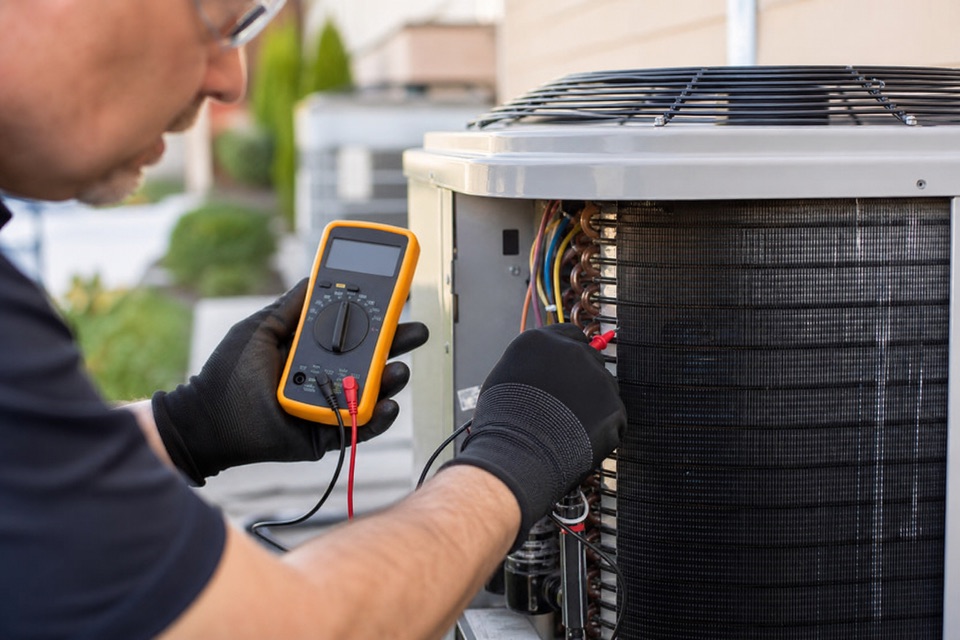
- Measuring static pressure: Technicians use specialized gauges to test the resistance to airflow within the ductwork, ensuring the blower motor is pushing enough air to reach the second floor.
- Identifying duct leaks: If conditioned air is escaping into the attic or walls before it reaches the bedroom vents, the system will never cool the upstairs properly.
- Testing temperature differentials: By measuring the temperature drop across the evaporator coil, professionals can confirm whether the system is removing enough heat and humidity from the air.
- Evaluating blower performance: A dirty blower wheel or a failing motor will drastically reduce the volume of air moving through the house, exacerbating hot spots.
Routine visits provide an essential opportunity to catch missed maintenance items that previous contractors might have overlooked. For example, during a recent spring tune-up in the local area, our Trust All Red technicians were called to service an existing furnace that had not been properly maintained by a previous company. By performing a thorough diagnostic check rather than a simple surface cleaning, our team pointed out several critical missed items, corrected the airflow restrictions, and earned repeat business by preventing a major breakdown. This proactive approach prevents long-term system strain and keeps your home comfortable year-round.
Simple Damper Adjustments vs. Secondary Zoning Systems
Once the diagnostic testing is complete, you will reach a critical decision point: navigating the choice between minor mechanical adjustments and major system upgrades. Not all uneven cooling requires a brand-new air conditioning unit. In many cases, the solution depends on the severity of the airflow restriction and the architectural layout of the home.
Manual dampers are static metal levers installed inside the ductwork, usually near the main supply plenum attached to the indoor unit. These levers allow you to direct airflow seasonally. By partially closing the dampers that feed the main floor, you force more cold air up to the second floor during the summer. In the winter, the process is reversed to push more heat downstairs. When our team properly adjusts manual dampers, they can often resolve mild temperature imbalances.
However, ASHRAE Standard 55 outlines specific thermal environmental conditions for human occupancy, and a single-zone system in a large multi-story home frequently struggles to meet these standards without dynamic balancing. If your ductwork is drastically undersized, or if the thermal load on the second floor is simply too high, manual dampers will not solve the problem. In these scenarios, the objective mechanical signs point toward needing a full zoning system (which uses motorized dampers and multiple thermostats) or a secondary, dedicated AC unit for the upstairs.
| Solution Type | How It Works | Ideal Application | Cost & Complexity |
|---|---|---|---|
| Manual Damper Adjustment | Adjusting physical levers in the ductwork to redirect seasonal airflow. | Homes with accessible ductwork and mild temperature differences (2-4 degrees). | Low cost; typically included or easily added during routine maintenance. |
| Motorized Zoning System | Installing automated dampers controlled by multiple thermostats for dynamic balancing. | Larger homes where temperatures fluctuate drastically throughout the day. | Moderate to high complexity; requires ductwork modifications and electrical wiring. |
| Secondary AC / Mini-Split | Adding a dedicated cooling unit exclusively for the second floor or master suite. | Older homes lacking adequate ductwork to the upper levels, or extreme heat loads. | High upfront investment; provides the ultimate targeted comfort control. |
To determine which solution fits your home's unique footprint, scheduling a professional AC inspection and testing appointment will provide the concrete data needed to make an informed decision.
Navigating the Regional Climate Challenge
Airflow and cooling challenges do not exist in a vacuum; they are heavily influenced by the specific regional climate outside your walls. In our extensive experience working in the Pacific Northwest, particularly around the Seattle and Auburn areas, our team sees firsthand how the climate context plays a massive role in how residential HVAC systems perform. Historically, older local HVAC systems we encounter in this region were designed primarily for heating. Homes were built with ductwork optimized to push warm air throughout the house to combat the long, damp, chilly winters.
Because heat naturally rises, these older, heating-optimized single-zone systems worked reasonably well during the winter months. However, as the region experiences increasingly hot summers, the flaws in these legacy designs are fully exposed. A duct system that perfectly distributes heat in January will almost certainly struggle to push heavy, dense cold air up to the second floor in July.
This dramatic transition from damp winters to hot summers demands year-round preventative maintenance and precise seasonal airflow balancing. You cannot simply leave your HVAC system in the same configuration all year and expect optimal performance. The critical nature of seasonal damper adjustments becomes obvious when the first major heatwave hits. By proactively adjusting the airflow distribution in the spring, we prepare the system to handle the summer cooling load efficiently, preventing your upper floors from becoming unlivable.
What to Expect During a Professional Airflow Diagnostic Visit
Empowering yourself with knowledge about your HVAC system is the best way to ensure you receive quality service. When one of our professionals arrives to diagnose uneven cooling, they follow a structured, objective process rather than immediately quoting you for a new air conditioner. At Trust All Red, we are committed to transparent, professional service, operating on the principle that a good maintenance plan is only as reliable as the technicians performing the tune-ups. Our focus must always be on diagnosing the root cause rather than just selling equipment.
Here are the standard diagnostic steps a professional uses to resolve uneven cooling:
- Visual inspection of the ductwork layout: The technician will examine the accessible ductwork in the basement, crawlspace, or attic to identify crushed runs, disconnected joints, or structural limitations that choke off airflow.
- Temperature differential testing: Using digital thermometers, the technician will measure the air temperature coming out of the supply registers on different floors and compare it to the return air temperature. This confirms exactly how much cooling capacity is being lost in transit.
- Evaluation of filter sizing and condition: A highly restrictive air filter (like a dense pleated model) can severely drop the static pressure. The technician will verify that the filter matches the blower motor's capabilities.
- Static pressure and blower motor evaluation: Using a manometer, the technician checks the operating pressure of the system. They will also measure the electrical amp draw of the blower motor to ensure it is operating at full capacity.
This thorough approach yields real results. In a recent spring service call, a homeowner requested routine furnace maintenance from our team. Because our technician performed an effective, detail-oriented tune-up—focusing on genuine diagnostics—the system was properly calibrated to handle the upcoming cooling season without unnecessary upselling. Understanding why annual HVAC maintenance is important helps you recognize the immense value of having these diagnostic steps performed regularly.
Frequently Asked Questions About Airflow and HVAC Maintenance
Why is my second floor so hot when the AC is on?
Your second floor stays hot primarily due to the stack effect and the intense thermal load from your roof. As hot air naturally rises through your home, it accumulates upstairs, while the radiant heat from the sun beats down on your attic and ceiling. Standard single-zone blowers often lack the static pressure required to push enough dense, cold air all the way up to those distant second-floor vents to overcome this trapped heat.
How do you balance airflow in a two-story house?
Balancing airflow typically involves adjusting manual dampers located at the main supply plenum near your indoor unit. By partially restricting the airflow to the cooler main floor, you force more conditioned air to travel up to the second floor. Additionally, checking register grilles to ensure they are fully open and verifying that large return vents are completely unobstructed will help equalize the pressure and temperature throughout the home.
Are HVAC maintenance plans worth it for uneven cooling?
Yes, HVAC maintenance plans are absolutely worth it because they provide regular diagnostic baseline testing for your ductwork and blower performance. A thorough maintenance visit goes beyond cleaning; it helps technicians catch static pressure drops, duct leaks, and blower motor degradation before these issues cause uneven cooling or lead to expensive, premature system failure.
What is the difference between manual dampers and a zoning system?
Manual dampers are static metal levers installed inside the ductwork that must be adjusted by hand to redirect airflow seasonally. In contrast, a true zoning system uses motorized dampers wired to a central control panel and multiple thermostats. This allows the system to provide dynamic balancing, automatically opening and closing specific duct runs to maintain exact temperatures in different areas of the house simultaneously.
Will an HVAC tune-up fix uneven cooling?
An HVAC tune-up can fix uneven cooling if the root cause is a dirty blower wheel, a severely clogged air filter, or an improperly set manual damper. However, if your home's ductwork is fundamentally undersized or the equipment lacks the capacity for the square footage, a tune-up will successfully diagnose the issue, but further mechanical modifications—like adding a zoning system—will be needed to fully resolve the hot spots.
How do professionals measure static pressure in residential ducts?
Professionals measure static pressure using a highly sensitive digital tool called a manometer to read the resistance to airflow inside the ductwork. By drilling small test ports into the supply and return plenums, the technician can compare the actual operating pressure against the manufacturer's specifications. This data reveals if the ductwork is too restrictive or if the blower motor is failing.
Can a dirty air filter cause hot spots upstairs?
Yes, a dirty air filter is one of the most common causes of reduced airflow and hot spots on upper floors. When a filter becomes clogged with dust and debris, it acts like a wall, severely dropping the static pressure within the system. Without enough pressure, the blower motor simply cannot push the heavy, conditioned air far enough up the ductwork to reach the second-story bedrooms.
Take Control of Your Home's Cooling Comfort
Living with a sweltering second floor is not a requirement of homeownership. Understanding your HVAC system's airflow limitations and the physical forces driving heat upward is the first critical step to resolving those frustrating hot spots. Whether the solution involves a simple seasonal damper adjustment, a thorough cleaning of the blower motor, or upgrading to a dedicated zoning system, the path to comfort relies on accurate data.
By summarizing the value of having standard diagnostic steps performed by a professional, it becomes clear that routine maintenance is your best defense against uneven cooling. Do not settle for guesswork or temporary fixes. Encourage yourself to get clear, technically accurate answers from our local experts at Trust All Red rather than living with uneven cooling. A comprehensive diagnostic approach will provide the exact steps needed to restore balance and efficiency to your entire home.
Related Articles
Ready to Get Started?
Whether you need a repair, maintenance, or a new installation, our expert team is here to help.