Does Homeowners Insurance Cover Emergency Furnace Repairs?
Trust Allred
A sudden furnace breakdown can leave you freezing and panicked. Understand how adjusters separate sudden accidental damage from standard wear-and-tear before you risk filing a doomed claim.
Will My Insurance Rescue Me From a Dead Heating System This Fall?
Is your house freezing, leaving you wondering: does homeowners insurance cover emergency furnace repairs? You wake up on the first chilly night of the early fall transition, go to adjust the thermostat, and hear absolutely nothing from your vents. The system is completely unresponsive. Panic quickly sets in as you realize you might be facing a massive, unexpected repair right before the freezing winter weather fully arrives in the Auburn WA area. Your first instinct is to pull out your homeowners insurance policy folder. Will your standard coverage step in to bail you out of this sudden breakdown?
The short answer is that it depends entirely on the root cause of the equipment failure. The insurance industry draws a very strict, non-negotiable line between sudden accidental damage and standard wear-and-tear failures. Knowing exactly where your broken heating equipment falls on that spectrum is the crucial first step to figuring out your financial options. Before you pick up the phone to file a formal claim with your agent, you need a crystal-clear, professional diagnosis. If you are dealing with a sudden mechanical failure, securing an Auburn HVAC repair professional is your safest first move to document the exact cause of the problem and prevent further damage to your home.
The Baseline Rule: Mechanical Breakdown vs. Covered Perils
To understand what your insurance will pay for, you first have to understand how standard homeowners policies—often referred to as HO-3 policies—are structured. Standard insurance policies specifically exclude mechanical breakdowns, age-related part failures, and cumulative wear-and-tear. If a blower motor simply burns out after fifteen years of heavy use, your insurance company views that as a normal part of homeownership, not an insurable event.
On the flip side, insurance is designed to protect you from a "covered peril." In the insurance industry, a covered peril is defined as an unexpected, external event that causes sudden, direct physical damage to your property. If an outside force destroys your furnace, you likely have a valid claim. If the furnace destroys itself through age or friction, you do not.
Furthermore, neglecting routine maintenance almost always voids any chance of an insurance payout, even if the situation seems borderline. Adjusters look for proof that the system was cared for. For instance, one local homeowner recently avoided major operational issues by simply scheduling a professional tune-up for their furnace, ensuring it was cleaned, inspected, and running efficiently at a reasonable cost. Having that kind of ongoing service record proves to an insurance adjuster that you were doing your part to maintain the equipment.
Why Age and Neglect Are Never Covered
Insurance is fundamentally designed to act as a financial safety net for sudden accidents, not inevitable realities. Every mechanical system has a finite lifespan. A heating system operating for decades without proper service records will always be viewed as a maintenance failure.
If a claims adjuster discovers that a furnace failed because filters were never changed, causing the system to overheat and crack, the claim will be swiftly denied. The burden of proof is always on the homeowner to show that the damage was sudden and accidental, which is why knowing when to replace your aging HVAC system is much safer than hoping an insurance policy will cover a unit that is simply past its prime.

Real Examples of Sudden and Accidental Furnace Damage
If age and wear are excluded, what actually counts as a covered peril? Understanding these specific scenarios can help you determine if you should proceed with a claim. Here are the most common examples of sudden and accidental damage that standard homeowners insurance typically covers:
- Fire and smoke damage: If a house fire breaks out and the flames or intense heat destroy your heating equipment, the replacement cost is generally covered under your dwelling protection.
- Direct lightning strikes: A lightning strike that hits your home directly and fries the internal wiring of your HVAC system is a classic example of a sudden, covered peril.
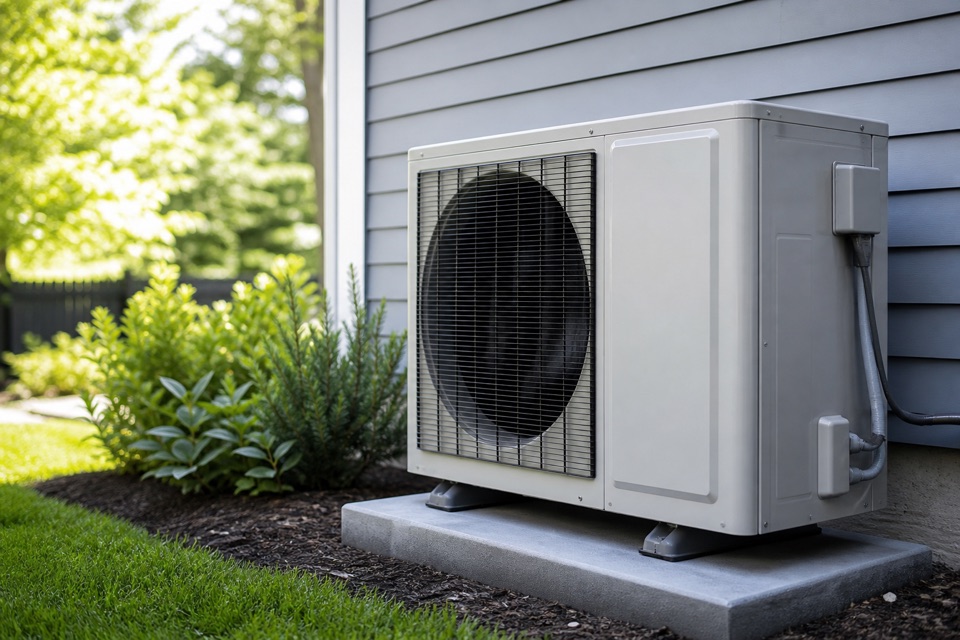
- Falling trees and heavy branches: During the Pacific Northwest early fall transition and windstorms, it is incredibly common for heavy branches or entirely uprooted trees to crash into homes. If a falling tree crushes an exterior heat pump unit or severs the critical gas and electrical lines leading to your furnace, insurance usually covers the damage.
- Sudden, massive power surges: While a slow electrical degradation over time isn't covered, a massive, documented power surge—often caused by those same fall windstorms knocking down power lines—that instantly fries internal electrical components and control boards can qualify for a claim.
In all of these scenarios, the damage is external, sudden, and entirely out of the homeowner's control. There is a clear "before" and "after" directly tied to a specific, documentable event.
The Danger of Guessing: Why You Shouldn't Rush to File a Claim
When the house is cold, it is tempting to immediately call your insurance agent and open a claim, hoping for the best. However, rushing into the claims process without knowing the exact cause of your breakdown carries significant financial risks.
First, filing a claim for an old, worn-out part will result in a swift and definitive denial from the insurance adjuster. If they send an inspector out and find that the blower motor just died of old age, you get zero financial help. Worse, even denied claims go on your Comprehensive Loss Underwriting Exchange (CLUE) report. Having a claim on your record—even one that paid out nothing—can unnecessarily raise your future premium rates or make it harder to switch insurance providers later.
This is why it is absolutely critical to have a licensed professional identify hidden issues rather than assuming a recent storm caused the failure. For example, one local customer had a furnace suddenly quit working in the spring. Rather than guessing the cause, they called for a professional inspection. The technician discovered a severely cracked heat exchanger—a dangerous wear-and-tear issue that posed a severe health risk. The technician safely shut down the compromised system, thoroughly checked everything, and replaced the unit. Because they got a professional diagnosis, the homeowner avoided carbon monoxide poisoning and even experienced improved sinus and allergy problems afterward. Had they just assumed a storm caused the outage and filed a claim, the insurance company would have denied it due to the wear-and-tear crack, leaving the homeowner with a denied claim on their record and a dangerous furnace still in the home.
How Proper HVAC Documentation Makes or Breaks Your Claim
If your heating system failure truly is the result of a covered peril, winning your insurance claim comes down to one thing: irrefutable documentation. Insurance adjusters are not HVAC technicians; they require concrete proof of the cause of failure, which only a licensed, certified technician can provide.
Here is exactly how proper documentation should be handled to ensure your claim is processed smoothly:
- Initial Professional Assessment: A technician must physically inspect the unit to rule out standard wear-and-tear failures.
- Detailed Written Diagnostic Report: The technician must provide a written report that clearly distinguishes between a sudden external event (like a power surge) and slowly aging electrical components. It must state the exact point of failure.
- Photographic Evidence: The report should be accompanied by clear photos of the damage, such as scorch marks on a control board from a lightning strike, or a crushed exterior intake pipe from a fallen branch.
- Maintenance History Verification: Providing your past service invoices proves to the adjuster that the system was in good working order before the sudden peril occurred.
Honest, transparent assessments protect homeowners from committing accidental insurance fraud by claiming a worn-out part was storm damage. Working with a trustworthy local contractor like Allred Heating Cooling Electric means you get honest diagnostics and meticulous paperwork. This ensures homeowners have the exact documentation needed for adjusters if the damage is genuinely covered, while providing clear, transparent repair options if it is simply standard wear-and-tear. Whether you need a full replacement or just furnace repair in Medina, having a documented paper trail is your best protection.
Homeowners Insurance vs. Home Warranties: Understanding the Difference
One of the most common sources of confusion for homeowners is the difference between homeowners insurance and a home warranty. They are completely different financial products that cover completely different types of breakdowns.
| Feature | Homeowners Insurance | Home Warranty |
|---|---|---|
| Primary Purpose | Covers unexpected external perils and disasters (fire, wind, trees). | Covers mechanical breakdowns and standard age-related failures. |
| Wear and Tear | Strictly excluded. Claims will be denied. | Typically covered, provided the unit was maintained. |
| Deductibles | Usually much higher (often a percentage of home value). | Usually a lower, flat-rate service call fee. |
| Maintenance Proof | Required to prove the item didn't fail due to neglect. | Required to ensure the contract remains valid. |
Home warranties are specifically designed to cover the mechanical breakdowns and age-related failures that standard insurance policies exclude. If your furnace's inducer motor burns out after ten years of normal use, a home warranty might cover the replacement, whereas homeowners insurance definitely will not. Whether you are dealing with a winter heating failure or need emergency AC repair in Auburn during the summer, home warranties generally step in for the internal, mechanical failures that insurance ignores. However, both products typically require proof of ongoing, professional maintenance to honor a payout.
Safety First: Immediate Steps When Your Heating System Fails
When your heating system dies unexpectedly, your immediate priority shouldn't be paperwork—it should be safety. Before you call an insurance agent or even a technician, there are a few critical steps you should take to protect your home and your family.
- Check the basics first: Before panicking, check your thermostat settings. Ensure it is set to "Heat" and that the batteries are fresh. Next, check your main electrical breaker panel to see if a circuit simply tripped.
- Document visible damage immediately: If you see obvious external damage—like a fallen branch resting on an exhaust pipe, scorch marks near the unit, or standing water—take clear photos immediately. Do not clean it up or move debris until you have photographic evidence for a potential insurance claim.
- Never attempt DIY electrical or gas repairs: Opening up a furnace to tinker with gas valves, limit switches, or high-voltage wiring is incredibly dangerous. Furthermore, unauthorized DIY repairs will instantly void your manufacturer's warranty and give an insurance adjuster immediate grounds to deny a claim.
- Call for professional troubleshooting: Reach out to a licensed technician for emergency service. For example, one customer recently called for help on a Saturday morning expecting to wait all weekend. The technician first offered safe phone troubleshooting to rule out basic thermostat issues, and when that failed, they came directly to the house, getting the furnace up and running within an hour of arrival. Professional intervention is always faster and safer than guessing.
Frequently Asked Questions About Furnace Insurance Claims
Does home insurance cover a broken furnace?
Standard homeowners insurance only covers a broken furnace if the damage was caused by a sudden, covered peril like a fire, lightning strike, or falling tree. It strictly does not cover furnaces that break down due to mechanical wear-and-tear, old age, or lack of routine maintenance. If a part simply wears out from normal use, you will have to pay for the repair out of pocket.
What is considered sudden and accidental damage to a furnace?
Sudden and accidental damage refers to immediate, physical destruction caused by an external force rather than internal mechanical degradation. Examples include a windstorm blowing a heavy branch into your exterior HVAC components, a massive power surge frying the circuit board, or a burst pipe flooding the basement and submerging the heating unit. The damage must be traceable to a specific, unexpected event.
How do I prove my furnace was damaged by a covered peril?
You prove damage by providing your insurance adjuster with a detailed, written diagnostic report from a licensed HVAC technician. The technician must explicitly state the cause of the failure in their report. You should also provide clear photographs of the damage immediately after it occurred, along with past maintenance records showing the system was in good condition prior to the event.
Will homeowners insurance pay for a new furnace?
Homeowners insurance will only pay for a complete furnace replacement if a covered peril completely destroyed the existing unit beyond repair, such as in a house fire or a severe lightning strike. Even then, the payout is subject to your policy's deductible and coverage limits. They will not buy you a new furnace just because your current one is old and inefficient.
Does home insurance cover wear and tear?
No, standard homeowners insurance explicitly excludes coverage for standard wear and tear. Insurance is a safety net for accidents, not a maintenance plan for aging home appliances. Protecting yourself from the costs of normal wear and tear requires investing in regular preventative maintenance or purchasing a separate home warranty plan.
Can a power surge from a fall storm ruin a furnace control board?
Yes, a massive power surge caused by a fall windstorm or lightning strike can easily overload and ruin a furnace's sensitive electronic control board. Because this is a sudden, external event, damage from a documented power surge is frequently eligible for an insurance claim, provided a licensed technician can verify the surge was the definitive cause of the failure.
Get the Honest Diagnostics You Need Before Calling Your Agent
Facing a sudden heating breakdown is stressful, but rushing to file an insurance claim without all the facts can make the situation much worse. Don't guess the cause of your breakdown and risk a denied claim that unnecessarily raises your future insurance premiums. Instead, get a definitive, documented answer from a licensed professional to protect your home and your wallet.
Before you call your agent, schedule an inspection today to understand your true options, whether you are dealing with a genuinely insurable event or a standard mechanical repair. For honest diagnostics and trustworthy Auburn HVAC repair, rely on a team that will provide the exact documentation you need to move forward with confidence.
Ready to Get Started?
Whether you need a repair, maintenance, or a new installation, our expert team is here to help.