Are HVAC Maintenance Plans Worth It? Preventing Spring-to-Summer Cooling Failures
Trust Allred
The Hidden Stress of the Spring-to-Summer Transition on Residential Cooling
At Trust All Red, we receive countless calls every spring when a homeowner's thermostat is set to cool, but the air blowing from their vents feels lukewarm at best—a clear warning sign that checking off your air conditioning systems seasonal home maintenance checklist is critical before the real heat arrives. The transition from heating to cooling season places an immense, often invisible burden on your residential cooling equipment. After sitting completely dormant for months, the mechanical components inside your air conditioner or heat pump are suddenly expected to perform at maximum capacity on the very first hot day of the year. This sudden demand is where our team typically sees neglected systems break down.
To prevent these early-season failures, scheduling professional AC maintenance and tune-up services is the most effective intervention. Many homeowners face a distinct decision point during the spring-to-summer transition: rely on a quick DIY filter change and hope for the best, or invest in a comprehensive professional tune-up. While changing your filter is a great starting point, modern air conditioning systems require precise calibration to handle sudden, heavy cooling loads efficiently.
A professional maintenance plan is not simply an optional upgrade or a routine upsell. It is a necessary technical intervention designed to prevent premature compressor failures and electrical burnouts. When an air conditioner sits idle, lubricating oils settle, electrical contacts gather dust and moisture, and refrigerant pressures can shift. Forcing a system to start under these compromised conditions creates severe mechanical stress. By addressing these hidden issues proactively, you ensure your equipment is technically prepared to handle the grueling cooling season ahead.
How Damp Winter Climates Accelerate Mechanical Wear
The environmental factors that degrade your cooling components do their worst work while the system sits entirely unused. In our years of servicing homes across the local area, our technicians at Trust All Red have seen firsthand how the damp, chilly Washington winters specifically accelerate oxidation on outdoor electrical components. Months of continuous rain, fog, and high humidity create a localized environment inside your outdoor condenser cabinet where moisture constantly accumulates and struggles to dry out. This persistent dampness takes a heavy toll on the exposed metals and electrical connections essential for your system's operation.
The problem: Condensation forms on critical electrical parts, leading to micro-corrosion and organic growth inside the unit.
The cause: Damp winter air interacting with dormant, unheated metal components allows moisture to settle on contactors, capacitors, and wiring terminals.
The solution: Professional chemical cleaning and electrical testing during the spring-to-summer transition to remove oxidation before the system is forced to run under a heavy load.
The Impact of Moisture on Electrical Components
Moisture is the natural enemy of high-voltage electrical components. Over a long, wet winter, condensation settles on the electrical contactor—the high-voltage switch that turns your compressor on and off. The copper and brass contacts begin to pit and oxidize. When you finally call for cooling in the spring, this oxidation creates electrical resistance. The contactor may stick, buzz, or fail to deliver the proper voltage to the compressor.
Similarly, capacitors—which store the electrical energy needed to jump-start the compressor—are highly sensitive to temperature fluctuations and moisture. Corroded wiring terminals can cause electrical arcing, which generates intense heat and melts connections. Because these winter-induced issues remain completely hidden inside the outdoor cabinet, they cannot be resolved by indoor maintenance alone. The system might sound fine for a few minutes, but as it runs continuously during the first hot day, those compromised electrical connections will overheat and fail, leaving you without cooling when you need it most.
DIY vs. Professional Care: Why Basic Filter Changes Aren't Enough
There is a strict, safety-first delineation between the maintenance tasks a homeowner should handle and the technical work that requires a licensed professional. Acknowledging the importance of homeowner upkeep is vital. Clearing away leaves, branches, and debris from around the outdoor unit ensures proper airflow, while checking your thermostat settings verifies basic communication with the system. However, these steps only scratch the surface of true seasonal readiness.
According to the U.S. Department of Energy, replacing a dirty, clogged filter with a clean one can lower an air conditioner's energy consumption by 5% to 15%. This is a significant efficiency gain and one of the most essential spring maintenance tasks for your cooling system. Yet, relying solely on a new filter creates a dangerous illusion of readiness. A clean filter does absolutely nothing to fix a failing capacitor, correct a low refrigerant charge, or clean an impacted evaporator coil.
Safe Seasonal Maintenance You Can Do Yourself
To maintain a safe boundary, homeowners should focus exclusively on external, non-technical upkeep. Internal system cleaning, high-voltage testing, and refrigerant handling must always be left to certified technicians.
- Filter replacement: Check your indoor air filters monthly and replace them every 30 to 90 days to protect the blower motor from excess strain.
- Exterior debris removal: Keep a two-foot clearance around the outdoor condenser. Remove tall grass, fallen branches, and accumulated dirt to allow the fan to pull air freely.
- Vent unblocking: Walk through your home and ensure all supply and return registers are open and unblocked by rugs, furniture, or curtains.
- Visual inspections: Look for standing water around the indoor unit or unusual icing on the outdoor refrigerant lines, which signal the need for immediate professional help.
| Maintenance Task | DIY or Professional? | Why It Matters |
|---|---|---|
| Air Filter Replacement | DIY | Protects indoor airflow and reduces energy consumption by up to 15%. |
| Outdoor Unit Clearance | DIY | Ensures the condenser coil can efficiently release heat absorbed from the home. |
| Electrical Amperage Testing | Professional Only | Identifies failing capacitors and sticking contactors before they burn out the compressor. |
| Refrigerant Level Calibration | Professional Only | Requires EPA certification; improper levels cause system freezing and catastrophic failure. |

The Anatomy of a First-Heatwave AC Failure
The phenomenon known as the "first heatwave failure" is a predictable pattern our dispatchers and technicians at Trust All Red prepare for every year. When the first truly hot days of the spring-to-summer transition arrive, emergency call volumes spike dramatically. This is rarely a coincidence. Systems that have been sitting idle are suddenly commanded to run for six, eight, or ten hours straight. If the internal components have not been tested and lubricated, this sudden, heavy cooling load causes weak links in the mechanical chain to snap.
The problem: The air conditioner completely shuts down or blows warm air on the first 85-degree day of the year.
The cause: A minor, preventable issue—such as a weakened dual-run capacitor or a sticking contactor—forces the compressor to pull excessive electrical current to start.
The solution: Proactive component testing during the spring prevents the need for unexpected AC repair service when temperatures peak.
Compressor Strain and Refrigerant Flow
The compressor is the heart of your cooling system, responsible for pumping refrigerant between the indoor and outdoor coils. When an AC unit wakes up from winter dormancy, the compressor faces immense physical strain. If the refrigerant levels are even slightly off—perhaps due to a microscopic leak that developed over the winter—the compressor is forced to run hotter and longer to achieve the same cooling effect.
Improper refrigerant flow alters the pressure dynamics inside the copper lines. If the pressure is too low, the indoor evaporator coil can literally freeze into a block of solid ice, blocking all airflow. If the pressure is too high, the compressor overheats and triggers its internal thermal overload switch, shutting the system down completely to prevent a fire hazard. Only a professional technician has the gauges, sensors, and training to measure and adjust these critical pressures accurately. A minor adjustment in the spring prevents a catastrophic, highly expensive compressor replacement in July.
What Comprehensive HVAC Maintenance Plans Actually Cover
Demystifying the professional maintenance process helps clarify why these visits are so valuable. A true tune-up goes far beyond a visual glance and a filter swap. It is a rigorous, multi-point diagnostic process designed to test, clean, and calibrate the system back to factory specifications. This thorough servicing catches missed items from previous years or periods of neglect, ensuring the system operates safely.
For example, during routine spring maintenance visits, our team frequently discovers issues that prior contractors overlooked. In one recent instance during a spring tune-up, our technicians found several critical maintenance items that had been completely missed for years. By taking detailed pictures of the impacted components and properly servicing the unit, we restored the system's airflow and earned the homeowner's long-term trust. This level of detail is what separates a basic check from a comprehensive tune-up.
- Electrical Connection Verification: Technicians tighten all high-voltage connections and inspect wires for signs of melting or rodent damage that occurred over the winter.
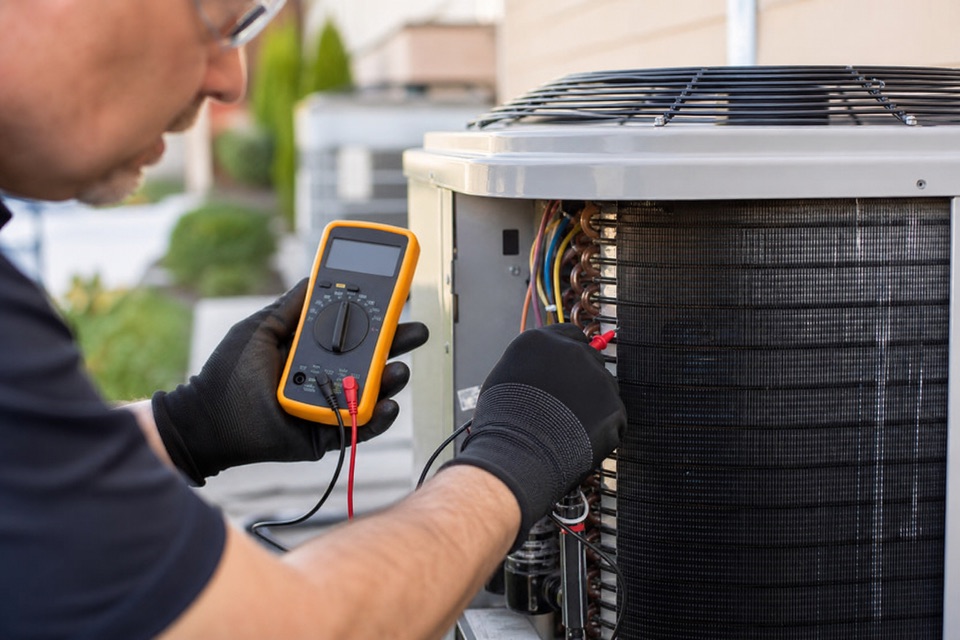
- Amperage and Voltage Testing: Using a multimeter, the technician measures the exact electrical draw of the compressor and fan motors to ensure they are not overworking.
- Contactor Health Inspection: The contactor is checked for pitting and oxidation to ensure clean electrical transfer without sticking or buzzing.
- Coil Cleaning and Restoration: Both the indoor evaporator coil and the outdoor condenser coil are cleaned to remove insulating layers of dust and grime, restoring optimal heat transfer capabilities.
- Condensate Drain Flushing: The drain line that removes humidity from your home is flushed and treated to prevent algae clogs and subsequent water damage to your ceilings or floors.
Restoring Efficiency and Expanding Lifespan
The financial return on a maintenance plan extends well beyond breakdown prevention. According to ENERGY STAR data, routine maintenance helps an HVAC system maintain up to 95% of its original efficiency throughout its entire lifespan. When coils are clean and electrical components are functioning smoothly, the system requires less electricity to cool your home. This professional calibration translates directly to reduced daily operating strain, lower monthly utility bills, and a system that lasts years longer than a neglected counterpart. Scheduling routine AC inspection and testing is the mechanism that secures this efficiency.
Escaping the Emergency Repair Queue During Peak Heat
The reality of the HVAC industry is that local companies become completely overwhelmed during the first major heatwave of the year. When hundreds of neglected systems fail simultaneously across the region, wait times for emergency repairs can stretch into days. Being stuck in a sweltering house while waiting for a technician is a highly stressful experience, especially for households with children, elderly family members, or pets.
The true value of an annual maintenance plan is avoiding this emergency queue entirely through proactive care. Maintenance plans are often misunderstood as simple discount clubs for parts and labor. In reality, they are a comprehensive strategy for uninterrupted home comfort. Our proactive care approach at Trust All Red is specifically designed with one goal in mind: to prevent you from ever needing to utilize our 24/7 emergency services. By catching the weak capacitor or the low refrigerant charge in April or May, we solve the problem on your schedule, long before the system fails under the stress of a July afternoon.
The transition from heating to cooling is the absolute ideal time to secure this technical intervention. The weather is still mild enough that your home remains comfortable during the hour or two the technician has the system turned off for testing. By acting proactively, you bypass the panic of the first heatwave and guarantee that your equipment is ready to perform.
Taking the Next Step for Reliable Summer Cooling
Surviving the shift from heating to cooling requires much more than just a new air filter and a quick spray of the garden hose. Modern air conditioners are complex pieces of thermodynamic equipment that demand precise electrical and mechanical calibration to operate safely and efficiently. The stress of the spring-to-summer transition will expose any weaknesses that developed while the system sat dormant over the damp winter months.
There is profound peace of mind that comes from knowing your electrical connections are tight, your refrigerant levels are optimized, and your mechanical components have been professionally verified. Instead of crossing your fingers the first time you switch the thermostat to "cool," you can enjoy the season with confidence. If you haven't yet verified the health of your system, now is the time to explore professional maintenance options and secure your home's comfort before the extreme heat arrives.
Frequently Asked Questions
What is included in an HVAC maintenance plan?
An HVAC maintenance plan includes comprehensive seasonal tune-ups, priority scheduling, and thorough mechanical inspections. Technicians will clean the condenser and evaporator coils, test electrical components like capacitors and contactors, flush the condensate drain line, and verify refrigerant pressures. These plans are designed to restore the system to factory specifications, ensuring it runs efficiently and safely while catching minor wear and tear before it causes a major breakdown.
How do I prepare my HVAC for summer?
Preparing your HVAC for summer requires a combination of basic homeowner tasks and professional technical servicing. You should start by replacing your indoor air filter, clearing at least two feet of debris away from the outdoor condenser unit, and ensuring all indoor air vents are fully open. Once the basic DIY steps are complete, scheduling a professional tune-up is critical to test the high-voltage electrical components and calibrate the refrigerant levels for the heavy cooling season.
Is an annual HVAC maintenance plan worth it?
Yes, an annual HVAC maintenance plan is highly worth the investment because it prevents expensive emergency breakdowns and lowers monthly utility costs. According to ENERGY STAR, routine maintenance helps a system retain up to 95% of its original efficiency over its lifespan. Furthermore, the cost of a proactive tune-up is significantly less than the cost of replacing a burned-out compressor or paying for emergency after-hours repair services during a major heatwave.
What is a seasonal HVAC tune-up?
A seasonal HVAC tune-up is a preventative service visit performed by a licensed technician during the transition periods of spring and fall. During a spring tune-up, the focus is entirely on preparing the cooling components to handle heavy summer heat after months of winter dormancy. The technician cleans away winter debris, tests the electrical draw of the motors, and lubricates moving parts to ensure the system can handle continuous operation without overheating.
Why do AC units frequently fail on the first hot day of the year?
AC units frequently fail on the first hot day because the mechanical components face sudden, immense stress after sitting dormant for months. Over the winter, lubricating oils settle, electrical contactors oxidize, and minor refrigerant leaks can go unnoticed. When the system is suddenly forced to run for several hours straight to combat a heatwave, these hidden weaknesses cause components like capacitors or compressors to overheat and fail completely.
What seasonal HVAC maintenance can I safely do myself?
You can safely handle exterior cleaning and basic airflow management without needing a professional license. This includes replacing your indoor air filters every 30 to 90 days, keeping the outdoor condenser unit free of leaves and tall grass, and ensuring furniture isn't blocking your indoor supply registers. However, you should never attempt to test high-voltage electrical parts, clean internal coils, or handle refrigerant, as these tasks require specialized training and carry significant safety risks.
Related Articles
Ready to Get Started?
Whether you need a repair, maintenance, or a new installation, our expert team is here to help.