Are HVAC Maintenance Plans Worth It? How Service History Drives Repair vs. Replace Decisions
Trust Allred
Weighing the True Cost of Immediate Repairs Against Long-Term Reliability
Are you constantly worrying about your aging heating and cooling system breaking down, searching for objective options comparisons for homeowners right before peak summer or winter extremes hit? That strange noise from your furnace or the sudden lack of cold air from your AC never happens at a convenient time. You are immediately faced with a frustrating concrete problem: comparing the long-term costs and benefits of repairing an aging HVAC unit versus investing in a full system replacement.
At Trust All Red, we find that the core decision point always comes down to whether the immediate, seemingly lower cost of repairing an older system outweighs the long-term efficiency, safety, and reliability benefits of a brand-new installation. Many homeowners rely on arbitrary cost-based rules or gut feelings to make this choice. However, our team recommends an objective, technical evaluation to truly understand what is happening inside your ductwork and equipment.
The technical factors you must weigh include:
- Baseline efficiency loss: How much harder is your system working to produce the same temperature?
- Component fatigue: Are critical parts like the motor or compressor nearing the end of their mechanical lifespan?
- Refrigerant compatibility: Does your system use outdated chemicals that are no longer legally manufactured?
To start building a baseline for your system's health, exploring AC maintenance and tune up plans and scheduling a professional AC repair service can provide the hard data you need to make the right choice.
Why Documented Maintenance History is the Ultimate Decision Tool
An annual maintenance plan creates a transparent, ongoing record of system wear, component degradation, and efficiency drops. Without this data, you are essentially flying blind when a breakdown occurs. A documented history removes the guesswork from deciding when an older system is no longer financially viable to keep running.
Our technicians at Trust All Red recently responded to a local homeowner who needed service on a 20-plus-year-old furnace that had zero prior service records. Because the unit lacked a documented history, predicting how it would handle peak summer or winter extremes was incredibly difficult. Fortunately, our technician performed a thorough verification and deep cleaning, confirming the old furnace was still operating safely for the time being. However, a pattern we see often is that most neglected systems do not fare so well. Evaluating a system with no service records makes it nearly impossible to predict future catastrophic breakdowns.
When you have a paper trail of your system's performance, you can see exactly when it starts consuming more electricity or requiring more frequent part replacements. This is why keeping up with routine AC maintenance in Auburn serves as the baseline for gathering necessary data. It allows you to evaluate if a proposed repair is merely a temporary bandage or a lasting solution that will keep your home comfortable for years to come.
The 15-Year Rule: When Does System Age Dictate Replacement?
The average lifespan of a residential HVAC system is 15 to 20 years, and this is heavily dependent on how consistently it receives routine maintenance. Once a system crosses that 15-year threshold, its internal components have endured thousands of hours of thermal stress, vibration, and friction. Even if it is still running, it is likely doing so at a fraction of its original efficiency.
In 2023, the Department of Energy (DOE) introduced strict new SEER2 (Seasonal Energy Efficiency Ratio 2) standards. These updated testing protocols accurately reflect real-world operating conditions. Because of these regulations, new units offer significantly higher baseline efficiency compared to 15-year-old models. Upgrading to a modern system leads to substantially lower energy bills, especially when your equipment runs continuously during peak summer or winter extremes.
Many people cite the "50 percent rule"—suggesting that if a repair costs half as much as a new system, you should replace it. We consider this rule deeply flawed because it ignores technical reality. Instead of focusing on arbitrary cost percentages, focus on the technical gap between your aging unit's degraded performance and modern SEER2 standards.
| System Metric | 15+ Year Old System | Modern SEER2 System |
|---|---|---|
| Energy Efficiency | Degraded performance; high utility draw | Optimized to strict DOE standards |
| Reliability | High risk of breakdown during heavy use | Consistent, predictable performance |
| Repair Viability | Parts often obsolete or expensive | Fully supported by manufacturer warranties |
| Environmental Impact | Often uses phased-out refrigerants | Uses modern, eco-friendly refrigerants |

Refrigerant Phase-Outs: How the R-22 Factor Forces Your Hand
Environmental regulations have functionally rendered older HVAC systems obsolete, shifting the repair-versus-replace conversation from a choice to a requirement. The Environmental Protection Agency (EPA) has officially phased out R-22 refrigerant (commonly known as Freon). It is no longer legal to manufacture or import R-22 in the United States.
Because the supply is strictly limited to reclaimed or previously stockpiled quantities, recharging an older system has become prohibitively expensive. If your older air conditioner still uses R-22 and develops a leak during peak summer or winter extremes, replacement is often the only technically sound option.
Why R-22 systems fail the repair test:
- Skyrocketing material costs: The price per pound of R-22 continues to climb as supplies dwindle.
- The leak remains: Recharging a system does not fix the underlying leak; the expensive refrigerant will eventually escape again.
- Incompatible oils: You cannot simply drop modern refrigerants into an R-22 system, as the compressor oils are chemically incompatible.
Current systems utilize modern, environmentally friendly refrigerants like R-410A or newer A2L variants. These chemicals operate at different pressures and require entirely different equipment. Refrigerant type is a hard technical boundary in the decision framework—if your system uses R-22 and suffers a major leak, replacing the unit is the smartest financial move.
Safety Risks and Major Component Failures
Some breakdowns shift the decision immediately from a simple repair to an urgent replacement. Catastrophic failures of major components carry high replacement costs and, more importantly, severe safety implications for your family.
The Problem: Heat Exchanger and Compressor Failures
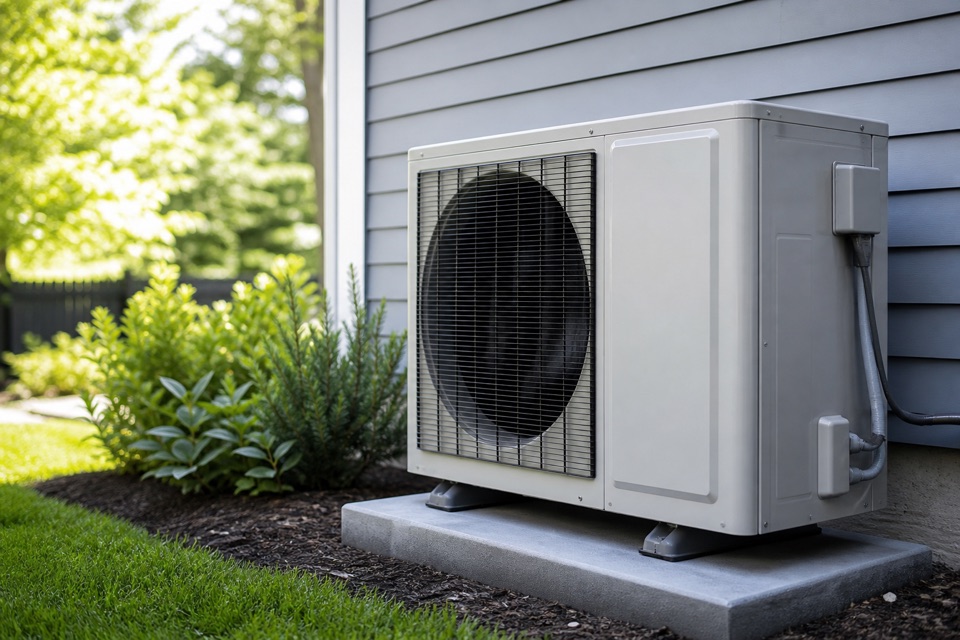
The heat exchanger in your furnace and the compressor in your air conditioner are the hearts of your HVAC system. A cracked heat exchanger poses severe carbon monoxide risks, especially when the furnace is pushed to its limits during peak summer or winter extremes. Similarly, a seized compressor means the entire cooling cycle halts, and replacing it often costs almost as much as a new condenser unit.
The Cause: Thermal Stress and Neglect
Years of expanding and contracting cause metal heat exchangers to stress and eventually crack. Compressors burn out from electrical issues, low refrigerant levels, or simply old age. A local homeowner reached out to Trust All Red this past spring when their furnace quit working, creating a situation with dangerous carbon monoxide levels. Our technician initially got the furnace running, but a deeper inspection revealed severely cracked heat exchangers. The decision shifted immediately from a basic repair to a full system replacement.
The Solution: Comprehensive Testing and Replacement
Routine AC inspection and testing can identify these fatal flaws before they become dangerous. In the scenario above, getting a new, safe unit installed not only removed the carbon monoxide threat, but it also noticeably improved the family's sinus and allergy problems. Resolving major component failures through replacement improves overall home safety and indoor air quality.
How Regional Climate Stress Accelerates HVAC Wear
In our experience serving the local area, your local environment plays a massive role in how quickly your heating and cooling equipment ages. The damp, chilly winters and increasingly warm summers of the Pacific Northwest accelerate wear on aging heat pumps and air conditioners. Moisture, salt, and temperature swings all contribute to metal corrosion and electrical wear.
Continuous operation during peak summer or winter extremes forces aging systems to run longer cycles just to maintain the temperature on your thermostat. This constant running means moving parts wear down faster and electrical contacts degrade quicker. Efficiency drops become much more noticeable—and much more costly—when systems are fighting against severe external temperatures.
Older systems are significantly more likely to fail when they are needed most due to this accumulated environmental stress. The insulation on wiring becomes brittle, and the fins on outdoor coils become damaged or corroded, reducing heat transfer. A new system is built to handle these modern climate demands with greater resilience, utilizing advanced materials and smarter defrost cycles to combat regional weather patterns.
Evaluating the Impact of Annual Maintenance Plans on System Reliability
Proactive care is the single best way to prevent premature replacement. Annual HVAC maintenance plans offer substantial financial and practical benefits by extending the viable life of your system. When a professional regularly calibrates your equipment, they catch minor friction points before they destroy major components.
Keeping up with essential spring maintenance tasks for your cooling system prevents minor issues from cascading into major failures. A dirty filter leads to restricted airflow, which freezes the evaporator coil, which eventually burns out the compressor. A simple tune-up stops that chain reaction in its tracks.
Key benefits of a documented maintenance plan:
- Objective data tracking: Technicians record voltage, amp draw, and static pressure year over year.
- Warranty protection: Most manufacturers require proof of annual service to honor parts warranties.
- Priority scheduling: Plan members typically receive faster service during busy seasons.
Working with our team at Trust All Red provides a clear, hidden-fee-free maintenance history, helping you make an objective, data-driven replacement decision without fear of hidden agendas. Transparent maintenance plans are an investment in predictable comfort, ensuring your home remains safe and temperate during peak summer or winter extremes.
Answering Common Homeowner Questions About HVAC Maintenance and Replacement
When is an HVAC system too old to repair?
Systems over 15 years old, especially those utilizing phased-out R-22 refrigerant, are generally considered past their viable repair window. At this stage, internal components degrade rapidly, and the efficiency drop-off costs you significantly on monthly energy bills. If your unit experiences frequent breakdowns during peak summer or winter extremes, repairing it is likely just a temporary bandage. A professional evaluation of its SEER rating and service history will confirm if replacement is the better financial choice.
How do I know if my HVAC compressor is failing?
Technical signs of a failing compressor include hard starting, unusual grinding noises, and a distinct lack of cooling power at the vents. You might also notice your outdoor unit vibrating excessively or frequently tripping the circuit breaker. Because the compressor is the engine of the cooling cycle, compressor failure in an older unit often necessitates a full system replacement. Replacing just the compressor in a decade-old system is rarely cost-effective.
Does a new HVAC system improve home efficiency?
Yes, upgrading to a system that meets modern SEER2 standards significantly reduces energy consumption compared to a decade-old unit. Modern variable-speed motors and advanced coil designs transfer heat much more effectively than older, single-stage models. Over time, the long-term utility savings offset a large portion of the installation cost, particularly when running the system heavily during peak summer or winter extremes.
What is the 50 percent rule for HVAC replacement, and is it accurate?
The 50 percent rule suggests that if a repair costs half the price of a new system, you should replace the unit instead. While easy to remember, it is a flawed metric because it ignores technical reality. You should advise your decisions using technical criteria like refrigerant type, SEER2 ratings, and the overall age of the unit instead of arbitrary cost percentages. A repair that costs 30 percent of a new system is still a bad investment if the unit uses obsolete R-22.
Are HVAC maintenance plans worth the annual cost?
Yes, maintenance plans consistently pay for themselves by preventing catastrophic breakdowns and maintaining factory efficiency levels. Regular cleanings reduce the workload on the blower motor and compressor, extending their operational lifespan. Furthermore, the documented service history provides the exact data needed to make informed future replacement decisions before peak summer or winter extremes arrive.
Making an Objective, Data-Driven Choice for Your Home
Evaluating whether to repair or replace your HVAC system requires a clear, technically accurate framework based on system age, baseline efficiency, and refrigerant type. Relying on guesswork or outdated rules of thumb often leads to wasted money on units that are functionally obsolete. By tracking your system's health through a documented maintenance plan, you gain the objective data needed to make the smartest financial decision.
Do not wait until peak summer or winter extremes to find out your system can no longer keep up with the weather. Proactive planning gives you time to review your options without the pressure of an emergency breakdown. Reach out to our experts at Trust All Red to review your maintenance history and discuss which path makes the most sense for your property. Taking action now ensures you have a clear, technically accurate framework to evaluate your current system's viability and make an objective financial decision.
Ready to Get Started?
Whether you need a repair, maintenance, or a new installation, our expert team is here to help.