Addressing Salt Air Corrosion on Heat Pump Outdoor Units in Burien
Trust Allred
When late-summer heat pushes your system to the limit, coastal moisture might be eating away at your condenser coil. Here is how specialized marine coatings prevent premature equipment failure.
The Hidden Impact of Puget Sound on Your Home's Climate Control
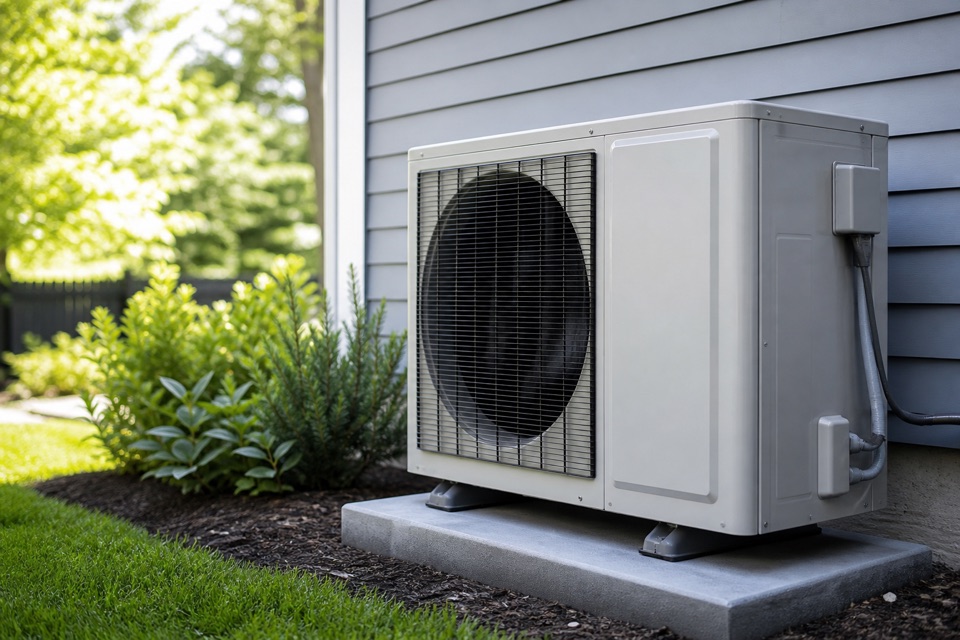
Your heat pump is running nonstop, but the house still feels warm. You walk outside to check the unit, only to find the metal fins flaking away and covered in a chalky white residue. At Allred Heating Cooling Electric, our team sees this exact scenario play out every late summer. When you find your system struggling to keep up with the August heat, addressing salt air corrosion on heat pump outdoor units in Burien becomes a sudden, critical priority. That strange, powdery deterioration isn't just cosmetic wear and tear; it is an active chemical reaction eating away at the very components responsible for transferring heat out of your home.
If you need immediate help evaluating a deteriorating system, exploring professional air conditioning services with our experienced technicians is the fastest way to get your climate control back on track before the back-to-school transition begins.
Homeowners living near the Puget Sound face a unique environmental challenge. The cool, damp marine layer that rolls in off the water is vastly different from the hot, tropical humidity found on the southern coasts. Here, persistent moisture combines with elevated airborne salinity to create a harsh microclimate that attacks metal components relentlessly. Standard, out-of-the-box heat pumps simply lack sufficient marine protection to survive these conditions long-term.
Because the Pacific Northwest climate is often mild for much of the year, accelerated rust and corrosion frequently go entirely unnoticed during the winter and spring. The system continues to operate, slowly losing efficiency as the aluminum fins degrade. It isn't until the late-summer cooling season arrives, demanding peak performance from your equipment, that the compromised coils finally fail to extract enough heat. At this juncture, homeowners face a stark decision point: you must proactively choose specific protective coatings and strategic clearance adjustments to protect your investment and prevent premature failure.
Why Standard Heat Pumps Struggle in Marine Environments
In our years of serving the Auburn and Burien areas, we've found that many homeowners mistakenly believe that unless their property sits directly on the beach, salt air isn't a threat. The reality of coastal physics tells a different story. Marine aerosols and microscopic salt particles are easily carried by prevailing winds, traveling several miles inland. This means properties located well beyond the immediate shoreline in Burien coastal areas are still heavily subjected to corrosive salt air.
To keep your system resilient against these invisible threats, regular Burien AC maintenance and tune-up services are essential for catching early signs of degradation.
The compounding effect of regional weather: What makes the Puget Sound region uniquely destructive to HVAC equipment is the persistent Pacific Northwest drizzle. In hotter, drier coastal climates, outdoor units eventually dry out in the sun. In western Washington, the constant dampness prevents outdoor units from fully drying out for months at a time. This continuous moisture keeps the salt active, drastically accelerating the rusting process.
The Science of Galvanic Corrosion on HVAC Coils
To understand why standard heat pumps fail so quickly here, you have to look at how they are built. Our installation teams frequently pull out old, traditional condenser coils constructed using two dissimilar metals: copper tubes and aluminum fins. This combination is highly efficient for transferring heat, but it creates a massive vulnerability when exposed to salt.
The chemical breakdown: Galvanic corrosion occurs when two different metals are in electrical contact while surrounded by an electrolyte. Saltwater is a highly conductive electrolyte. When salty marine moisture coats the copper and aluminum, it triggers a rapid electron transfer. The aluminum acts as a sacrificial anode, meaning it literally dissolves to protect the copper. The result is severe metal pitting, flaking, and the eventual disintegration of the fins.
| Environmental Factor | Standard Inland Climate | Puget Sound Marine Climate |
|---|---|---|
| Airborne Salinity | Negligible to none | High, carried miles inland by wind |
| Moisture Retention | Units dry completely between rain events | Persistent dampness prevents complete drying |
| Primary Coil Threat | Dust, pollen, and debris buildup | Galvanic corrosion and metal disintegration |
| ASHRAE Degradation Risk | Low (standard factory finishes suffice) | Severe (requires marine-grade intervention) |
Identifying Salt Air Degradation Before System Failure
Connecting the technical science of galvanic corrosion to the tangible symptoms your heat pump exhibits is the best way to catch problems early. The damage usually accumulates quietly during the damp winter and spring months. By the time the late-summer cooling season hits and kids are heading back to school, the system has lost a significant percentage of its heat transfer capability.
If you notice your system exhibiting any of these symptoms, scheduling an AC repair service in Burien with our team is the most reliable way to secure a professional diagnostic.
Here are the primary indicators our technicians look for when evaluating an outdoor unit succumbing to salt air degradation:
- Chalky white powder on the fins: Before the aluminum fins turn brown with rust or physically break off, they will often develop a powdery white coating. This is aluminum oxide, the direct byproduct of galvanic corrosion.
- Brittle or crumbling metal: Run your finger lightly over the exterior fins (when the unit is powered off). If the metal bends easily, flakes away, or crumbles into dust, the structural integrity of the coil has been severely compromised.
- Rust spotting on the cabinet: While the internal coils are the most critical, the painted outer steel cabinet will also show signs of marine wear. Look for bubbling paint or orange rust spots around the base pan and screw holes.
- Continuous running without cooling: If your thermostat is set to 70 degrees, but the house stays at 76 degrees while the heat pump runs continuously, the system is failing to transfer heat. Corroded fins lose their surface area, effectively suffocating the unit's ability to cool your home.
- Unusually high energy bills: Because a corroded system has to work twice as hard to achieve half the results, you will often see a sharp, unexplained spike in your electricity usage during peak cooling months.
The danger of waiting: A system running constantly with degraded coils isn't just failing to cool your home; it is putting immense strain on the compressor. Addressing these visual and operational symptoms early can save the compressor from total failure.
Strategic Airflow and Clearances for Coastal Condensers
When our crews at Allred Heating Cooling Electric install a heat pump in a marine environment, we know that standard factory clearance guidelines are often insufficient. Providing authoritative, strategic placement is one of the most effective ways to mitigate the effects of salt air. The goal is to manage moisture effectively, ensuring the unit can breathe and shed corrosive elements.
In Burien coastal areas, where western exposure to the Puget Sound brings frequent overcast conditions and heavy marine moisture, rapid drying clearances are vital. If a unit is tucked too closely into a corner, surrounded by dense shrubs, or blocked by a solid fence, the damp, salty air becomes trapped around the condenser. This stagnant microclimate accelerates rust exponentially. Expanding the clearance zone allows prevailing winds to carry the moisture away rather than letting it pool around the metal cabinet.
The Role of Rain Washing
One of the most misunderstood aspects of coastal HVAC placement is the role of natural precipitation. We often hear homeowners assume they should build a roof or overhang above their heat pump to protect it from the rain. In a salt air environment, this is actually counterproductive.
Natural dilution: Unobstructed exposure to fresh rainwater serves as a natural rinse cycle for your condenser coils. Heavy Pacific Northwest rain helps wash away the microscopic salt deposits that accumulate on the fins during dry, windy days. When you block the rain with an artificial overhang, you prevent this natural washing process. However, the overhang does nothing to stop the wind-blown marine humidity from reaching the unit. The result is a heat pump that gets coated in salt but never gets rinsed by the rain, leading to rapid, unchecked corrosion.

Professional Anti-Corrosion Treatments for Marine Air
Because standard factory finishes are designed for average inland climates, they offer minimal resistance to the aggressive electrolytes found in coastal air. To truly protect your investment, specific professional-grade protective coatings are required.
If your current system is already failing due to severe rust, upgrading to a properly treated unit through professional AC installation and replacement can drastically extend the lifespan of your next system in this harsh microclimate.
OEM vs. Aftermarket coatings: The most effective defense against galvanic corrosion is a marine-grade OEM (Original Equipment Manufacturer) coating applied at the factory. These specialized polymer or epoxy treatments envelop the copper tubes and aluminum fins in a microscopic protective barrier. This barrier physically prevents the salt moisture from making electrical contact with the dissimilar metals, stopping galvanic corrosion before it can start.
The necessity of professional application: It is critical to understand that applying anti-corrosion treatments is strictly a professional-level intervention. You cannot simply spray a hardware store rust inhibitor onto your heat pump coils. Heat pumps rely on precise thermal conductivity. If an incorrect coating is applied, or if a coating is applied too thickly, it acts as an insulator. This traps the heat inside the coils, completely ruining the unit's heat transfer efficiency and forcing the compressor to overwork until it dies. Licensed HVAC professionals like our team at Allred Heating Cooling Electric possess the expertise to recommend and source units with the exact micromillimeter coating thickness required to stop rust without sacrificing energy efficiency.
Proactive HVAC Strategies for Puget Sound Properties
Surviving the coastal Washington climate requires more than just a good coating; it demands a proactive, tailored maintenance strategy. A standard inland tune-up once a year is rarely enough to keep a marine-exposed heat pump operating at peak efficiency.
Tailored coastal maintenance: A proactive schedule we recommend in the Puget Sound region includes professional fresh-water rinsing and specialized chemical coil cleaning. Our technicians use specific, non-acidic coil cleaners designed to neutralize salt deposits without eating away at the aluminum fins. This deep cleaning is especially critical just before the late-summer cooling season, ensuring the system can handle the heaviest thermal loads of the year without suffocating under a blanket of salt and oxidation.
Ignoring minor operational changes is one of the biggest mistakes coastal homeowners make. A slight dip in cooling power or a new vibration might seem trivial, but they are often the first signs that corrosion has begun to impact the fan motor or compressor. If you hear something unusual, decoding weird AC noises early can prevent catastrophic failure once corrosion sets in.
The value of consistent care: Navigating a harsh microclimate is much easier when you have a multi-year relationship with a local expert who understands the specific environmental stresses on your equipment. For example, our team recently helped a local homeowner who experienced multiple ongoing issues with a heat pump over three consecutive fall seasons. By providing consistent, targeted service and repairs for their aging equipment, our technicians were able to keep the system running reliably, managing the environmental wear and tear effectively over time. This level of proactive care is what separates a heat pump that lasts five years from one that lasts fifteen.
Frequently Asked Questions About Coastal HVAC Protection
How do I protect my outside AC unit or heat pump from salt air?
The most effective protection combines professional marine coatings with strategic installation clearances. Our licensed technicians can source units with factory-applied polymer or epoxy treatments that block salt electrolytes from touching the metal. Additionally, ensuring the unit has wide clearances allows prevailing winds to dry the system and permits natural rain to wash away accumulated salt.
How far inland does salt air affect HVAC systems in Washington?
Salt air and marine aerosols can easily travel up to five miles inland, depending on prevailing winds and elevation. In Burien coastal areas, properties well beyond the immediate waterfront are still heavily exposed to airborne salinity. If you live anywhere within this coastal zone, your HVAC equipment should be treated as a marine installation.
Does salt air ruin heat pumps?
Yes, salt air acts as a highly conductive electrolyte that triggers galvanic corrosion between the copper and aluminum components of a heat pump. Without proper marine-grade protection, this chemical reaction causes the metal fins to pit, turn to powder, and disintegrate. This severely restricts the unit's ability to transfer heat and frequently leads to premature compressor failure.
Why is my outdoor heat pump rusting so quickly?
Rapid rusting in coastal Washington is usually caused by the combination of high airborne salinity and the persistent dampness of the Pacific Northwest climate. Because the unit rarely dries out completely during the winter and spring, the saltwater remains active on the metal surfaces for extended periods. This continuous exposure accelerates the oxidation and corrosion process far beyond what is seen in drier inland climates.
Can I apply an anti-corrosion coating to my heat pump myself?
No, applying anti-corrosion coatings requires licensed professional expertise to ensure the system's efficiency is not destroyed. Heat pump coils require precise thermal conductivity to function. If a homeowner applies a hardware store spray or paints the coils, we often see the coating act as an insulator, trapping heat inside the system and causing the compressor to overheat and fail.
Securing the Lifespan of Your Heat Pump in Washington's Coastal Climate
Understanding exactly how the marine environment impacts your equipment is the first and most crucial step to protecting your investment. The combination of airborne salt and persistent moisture creates a uniquely destructive microclimate for bare metal, but it does not mean you have to accept premature system failure as an inevitability.
Professional solutions are highly effective when implemented correctly. From selecting units with factory-applied marine coatings to establishing proper rain-washing clearances, there are proven strategies to defend your system against the elements. If you live in Burien coastal areas and are concerned about the visible wear on your outdoor unit, do not wait for it to fail on the hottest day of the year. Reach out to our local microclimate experts at Allred Heating Cooling Electric to have your system evaluated, ensuring you have the right protections in place to secure the lifespan of your heat pump for years to come. Additionally, upgrading to a qualifying, high-efficiency, marine-treated heat pump may make you eligible for generally available federal tax credits or local utility incentive programs—just be sure to verify current offerings with your utility provider or tax professional.
Ready to Get Started?
Whether you need a repair, maintenance, or a new installation, our expert team is here to help.