The Science of Static Pressure in Residential Duct Systems
Trust Allred
Upgrading to a thick air filter this fall could accidentally suffocate your furnace. Mathematical static pressure readings pinpoint the exact cause of airflow resistance before the blower motor fails.
When Fall Preparation Leads to Unexpected System Failure
You upgrade your furnace filter, close the windows, and turn on the heat for the first time this season, only to find that the science of static pressure in residential duct systems has completely shut down your equipment. Your furnace is running nonstop, but the house still feels chilly, or worse, the system repeatedly shuts off after just a few minutes of operation. Our team at Allred Heating Cooling Electric sees this frustrating reality for many homeowners as the seasons change.
To keep your home comfortable and protect your equipment, understanding airflow physics is just as important as knowing when to call for help with your residential cooling systems or heating equipment.
As Auburn WA area homes button up for the wet, chilly winters, homeowners naturally focus on indoor air quality and heat retention. The standard preparation routine usually involves buying the thickest, highest-rated air filter available at the hardware store. While the intention is to trap dust and allergens, this sudden change often introduces severe mechanical strain on the HVAC system. The blower motor, which has been pushing air freely all summer, suddenly hits a massive wall of resistance.
This creates a critical decision point for homeowners: do you keep guessing at the cause of the system strain, replacing parts as they break, or do you use mathematical diagnostics to find the exact bottleneck? Airflow physics apply universally across all forced-air equipment. Whether you are running a gas furnace, a heat pump, or an air conditioner, the system requires a specific volume of air to function without destroying itself. When that airflow is restricted, premature blower motor failure is almost always the final result.
Understanding the 'Blood Pressure' of Your HVAC System
To understand why a furnace blower motor fails, you have to understand the concept of static pressure. In the simplest terms, static pressure is the resistance to airflow within a heating and cooling system. The blower motor pushes air out through the supply ducts and pulls air in through the return ducts. Every twist, turn, filter, and vent in that pathway creates resistance.
Think of static pressure in your ductwork exactly like blood pressure in the human body. Your heart is designed to pump blood against a normal level of vascular resistance. If your arteries become clogged or restricted, your blood pressure spikes, and your heart has to work dangerously hard to maintain circulation. In your HVAC system, the blower motor is the "heart." When ductwork is restricted, the system's "blood pressure" skyrockets, forcing the motor to overwork until it eventually burns out.
When our technicians at Allred Heating Cooling Electric evaluate a struggling system, we measure this resistance using a highly specific metric: Total External Static Pressure (TESP) measured in inches of water column (in. w.c.). This measurement represents the amount of pressure required to push a column of water up by one inch. Residential HVAC systems are meticulously engineered to operate within a specific maximum resistance limit, which is typically 0.5 inches of water column.
When a system operates within this 0.5 in. w.c. limit, the blower motor runs efficiently, quietly, and reliably. However, when restrictions push the static pressure above this design limit, the consequences are severe. Exceeding this limit can reduce total airflow by over 20%. This crippling reduction in airflow starves the system, ruins energy efficiency, and sets the stage for catastrophic mechanical failure.

The Hidden Culprits: High-MERV Filters and Duct Restrictions
High static pressure doesn't happen by accident. It is almost always the result of physical barriers within the ductwork. Some of these barriers are accidentally introduced by homeowners trying to improve their air quality, while others are hidden structural issues that have been slowly degrading over time. In our experience servicing homes throughout the Auburn area, identifying these culprits during September pre-heating season tune-ups is the most effective way to prevent mid-winter breakdowns.
The Filter Paradox
The most common cause of spiked static pressure we encounter on early fall service calls is what industry professionals call the filter paradox. Homeowners understandably want the cleanest air possible, so they purchase filters with a high Minimum Efficiency Reporting Value (MERV). Filters rated MERV 13 or higher are excellent at trapping microscopic particles, but they achieve this by weaving the filter media incredibly tight.
This tight weave acts as a physical wall against airflow. A single high-efficiency pleated filter can sometimes consume more than half of the system's allowable 0.5 in. w.c. static pressure limit. If your filter is taking up 0.3 in. w.c. of resistance, that leaves only 0.2 in. w.c. for the entire rest of the duct system, which is mathematically impossible for most homes. The trade-off between indoor air quality and mechanical airflow resistance is a delicate balance. We always advise that a system must be specifically designed and modified to handle high-MERV filters without choking the blower motor.
Structural Bottlenecks
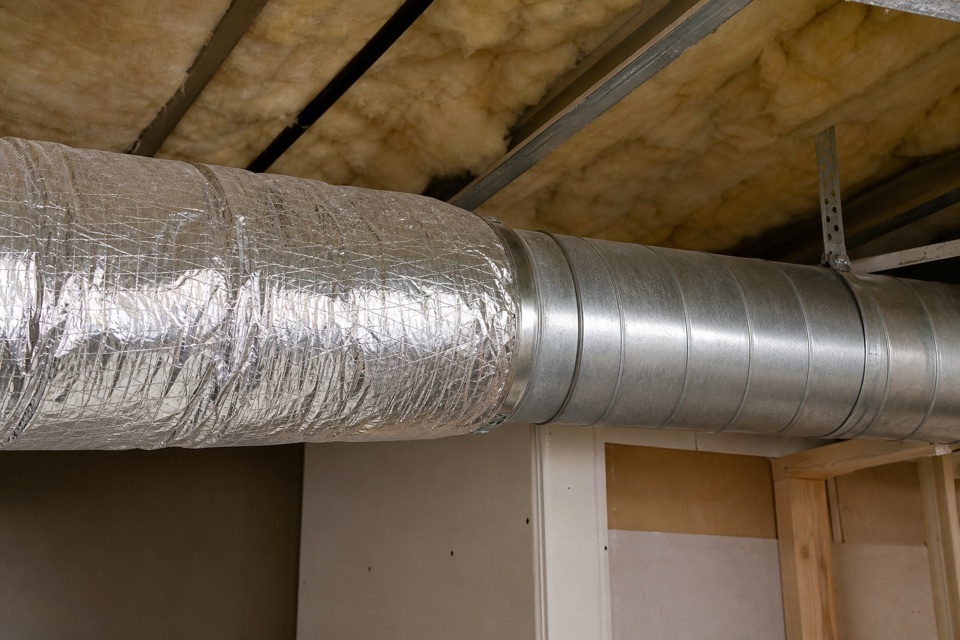
While filters are a visible culprit, structural bottlenecks inside the walls, attics, and crawlspaces silently choke your system's ability to breathe. Flexible ductwork (flex duct) is notorious for this. Over time, poorly supported flex ducts can sag, kink, or become crushed by stored attic items. A crushed return duct is the equivalent of trying to breathe in through a pinched straw.
Undersized return air pathways are another major structural issue. Many older homes were built with adequate supply vents to push air into the rooms, but severely undersized return grilles to pull the air back to the furnace. If the system cannot pull enough air in, it cannot push enough air out, leading to a massive pressure imbalance. Catching these structural flaws is exactly why routine AC maintenance and pre-season furnace checks are so critical before the heavy usage months begin.
Recognizing the Symptoms of Excessive Static Pressure
Your HVAC system will usually give you warning signs before the blower motor completely fails. Recognizing these symptoms early can mean the difference between a minor duct adjustment and a massive repair bill. Excessive static pressure manifests in several highly recognizable ways.
Common warning signs of high static pressure include:
- Furnace short-cycling: The system repeatedly shuts off after just one brief heating cycle. This happens because restricted airflow fails to pull heat away from the furnace heat exchanger, causing the internal temperature to spike and tripping the safety limiter switch.
- Hot and cold spots: Inadequate air distribution means the rooms furthest from the blower motor never receive enough conditioned air, leaving them uncomfortably cold in the winter.
- Loud rushing or whistling noises: When a massive volume of air is forced through a tiny, restricted opening (like a dirty filter or an undersized return grille), it creates a high-velocity whistling sound.
- Unusually high energy bills: As the system struggles to move air, modern ECM (Electronically Commutated Motor) blowers will automatically ramp up their RPMs to compensate, consuming significantly more electricity in the process.
Our team sees these patterns frequently when homeowners are caught off guard by early cold snaps. For example, we recently responded to a local homeowner during the winter with newborn twins in the house. Their furnace repeatedly shut off after completing just one heating cycle, leaving the home dangerously cold. Our technician identified the problem as a tripped limiter switch—a direct symptom of an airflow restriction causing the furnace to overheat. We diagnosed the root cause, replaced the damaged limiter switch, and restored safe, reliable heat for a reduced labor cost.
These symptoms indicate severe, ongoing strain on the blower motor. If you are constantly decoding your AC's weird noises or resetting a short-cycling furnace, your system is crying out for an airflow evaluation.
The Danger of the 'Guess and Replace' Approach
When a blower motor burns out or a furnace repeatedly overheats, the standard response from inexperienced technicians is to simply replace the broken part. This "guess and replace" approach is one of the most dangerous and expensive mistakes in the HVAC industry. If a blower motor died because a crushed duct was forcing it to operate at 0.9 in. w.c. of static pressure, putting a brand-new motor into that exact same restricted duct system guarantees a repeat failure.
Many people attempt to judge airflow by simply putting their hand over a vent and "feeling" the air. This subjective method is entirely inaccurate. Human skin cannot detect the difference between 0.4 and 0.8 inches of water column, yet that mathematical difference is enough to destroy an expensive ECM blower motor.
Missing important diagnostic steps leaves the true bottleneck completely unresolved. We see the fallout of this guesswork constantly. In one instance, our team was called in for a second opinion after a previous contractor had serviced a homeowner's older furnace but missed critical underlying issues. Our technicians properly serviced the unit, pointed out the specific missed items regarding the system's airflow and mechanical health, and even took pictures to document the actual restrictions. This level of thoroughness earned the homeowner's repeat business because we solved the actual problem, rather than just treating the symptom.
| Diagnostic Approach | Methodology | Long-Term Result |
|---|---|---|
| Subjective Guessing | Feeling vents with a hand, replacing broken parts without checking ductwork. | Repeat motor failures, ongoing short-cycling, wasted money. |
| Mathematical Diagnostics | Using a manometer to measure exact TESP in inches of water column. | Pinpointed restrictions, permanent solutions, protected equipment lifespan. |
Transitioning away from guesswork requires data. If your system is failing, you need professional AC repair service that relies on actual measurement rather than assumptions.
Mathematical Diagnostics: Solving the Airflow Puzzle
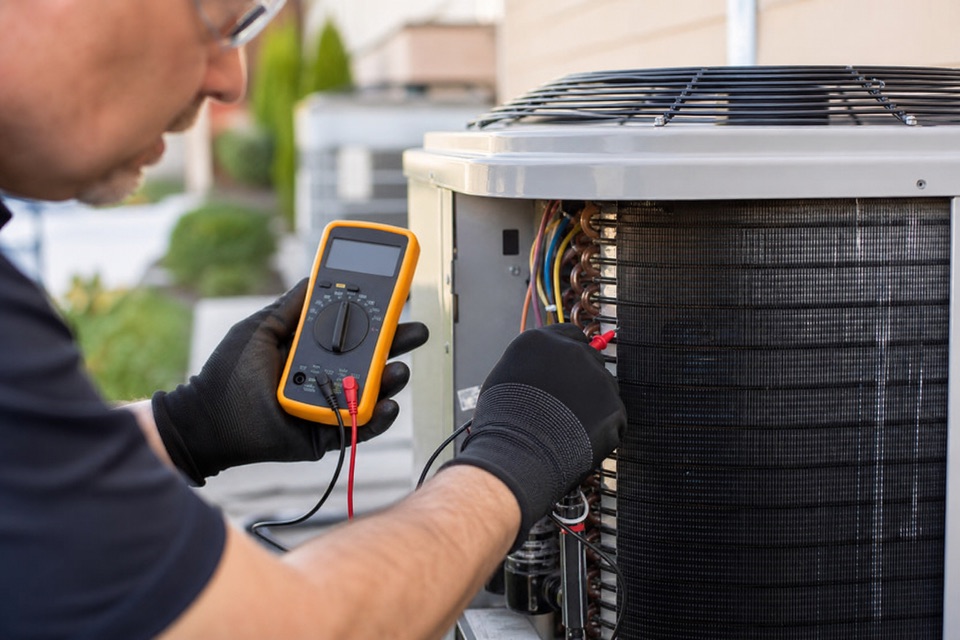
So, how do professionals actually measure and resolve static pressure issues? They use mathematics and specialized tools. The primary diagnostic instrument is called a digital manometer. This highly sensitive tool measures exact static pressure readings in inches of water column, providing a clear, undeniable picture of the system's internal resistance.
The professional mathematical diagnostic process typically involves:
- Taking a baseline reading: Technicians insert static pressure probes into the ductwork just before the air enters the equipment and just after it leaves. This provides the Total External Static Pressure (TESP).
- Isolating the pressure drop: If the TESP is dangerously high (e.g., 0.8 in. w.c.), the technician will take individual readings across specific components. They will measure the pressure drop across the air filter, the indoor coil, the supply trunk, and the return trunk.
- Pinpointing the exact bottleneck: By looking at the math, the technician can definitively say, "Your filter is causing 60% of the resistance," or "Your return duct is severely undersized and choking the system."
This level of testing requires specialized tools and training, making it impossible—and dangerous—to attempt as a DIY project. Drilling into ductwork near sensitive evaporator coils or heat exchangers without professional knowledge can cause severe damage to the equipment.
This is where true professional service stands out. Our technicians at Allred Heating Cooling Electric rely exclusively on mathematical diagnostics and exact static pressure readings rather than guessing, ensuring accurate identification of the root cause. By relying on hard data rather than assumptions, we can recommend precise, permanent solutions. Whether that means enlarging a return drop, replacing a crushed section of flex duct, or recommending a different MERV rating for your filter, data-driven AC inspection and testing prevents the endless cycle of broken parts.
Frequently Asked Questions About HVAC Static Pressure
What is static pressure in an HVAC system?
Static pressure is the resistance to airflow within your heating and cooling ductwork. You can think of it as the "blood pressure" of your HVAC system. When resistance is too high due to dirty filters or crushed ducts, the blower motor must work much harder to push air through the home, leading to poor efficiency and premature failure.
What is a normal static pressure reading for a furnace?
For most residential furnaces and air handlers, the system is engineered to operate at a maximum Total External Static Pressure (TESP) of 0.5 inches of water column (in. w.c.). Operating consistently above this mathematical limit will drastically reduce airflow and strain the internal components.
How do you fix high static pressure in ductwork?
Fixing high static pressure requires identifying the specific bottleneck. Common solutions include replacing highly restrictive pleated filters with lower-MERV alternatives, repairing crushed or kinked flexible ductwork, enlarging undersized return air grilles, or opening closed supply vents to allow air to flow freely.
Can high MERV filters cause high static pressure?
Yes, high-MERV filters are one of the leading causes of high static pressure. Filters rated MERV 13 or higher have an incredibly tight weave to trap microscopic particles, which acts as a physical wall against airflow. If your system was not designed for this level of filtration, it will choke the blower motor.
Why do furnace blower motors keep burning out?
Furnace blower motors repeatedly burn out when they are forced to operate against excessive static pressure. Modern ECM motors will automatically increase their speed to try and overcome duct restrictions, causing them to overheat and fail prematurely. Replacing the motor without fixing the airflow restriction guarantees another burnout.
Is it safe to test my HVAC static pressure myself?
No, testing static pressure is not a safe DIY project. It requires a digital manometer, specialized static pressure probes, and the professional knowledge of exactly where to drill test holes in the ductwork. Drilling in the wrong spot can easily puncture a refrigerant coil or damage a furnace heat exchanger.
Stop Guessing and Start Measuring Your System's Health
Understanding airflow physics is the absolute key to maintaining a long-lasting, highly efficient HVAC system. When your system struggles to heat your home or repeatedly shuts down, throwing new parts at the machine is a waste of resources. The invisible "blood pressure" of your ductwork controls the fate of your equipment.
Exact mathematical testing is the only definitive way to solve recurring blower motor issues and furnace short-cycling. If you are tired of temporary band-aids and want a first-principles understanding of why your system is struggling, seek out professional, data-driven insights. Protecting your equipment starts with stopping the guesswork and measuring the actual health of your airflow.
Ready to Get Started?
Whether you need a repair, maintenance, or a new installation, our expert team is here to help.